

Should You Get a Second Opinion for Shoulder Surgery?
A shoulder surgery second opinion can be one of the most important steps you take before committing to a procedure — or after a treatment that has not delivered the relief you expected. At Varma Shoulder Institute, we regularly see patients from Clermont, Orlando, and across Central Florida who arrive with unresolved shoulder pain, conflicting diagnoses, or lingering doubts about a recommended surgery. Our goal is to give you a clear, honest evaluation so you can move forward with confidence.
Shoulder conditions range from straightforward rotator cuff strains to complex multi-structure injuries requiring surgical expertise. When a diagnosis feels incomplete — or when a recommended treatment has not worked — getting a specialist’s perspective is not a sign of distrust. It is a responsible step toward better care. The sections below walk through the most common situations where a second opinion adds real value.
When a Shoulder Surgery Second Opinion Makes Sense
There is no single threshold that makes a second opinion necessary, but several situations consistently point toward one. If you have been told you need shoulder surgery and you are not sure why, a second evaluation can clarify the reasoning. If you have completed a full course of physical therapy and injections without meaningful improvement, a specialist review may reveal a structural problem that conservative care cannot address. If you received a diagnosis from a general orthopedist rather than a shoulder-focused surgeon, the nuances of your imaging may warrant a closer look.
Patients who have been told they do not need surgery but continue to experience significant pain and functional loss also benefit from a second opinion. Sometimes the right intervention — whether surgical or non-surgical — simply has not been identified yet. Schedule a shoulder surgery second opinion at Varma Shoulder Institute to get a clear picture of what is actually happening in your shoulder.
According to the American Academy of Orthopaedic Surgeons, shoulder pain has many potential causes, and accurate diagnosis is the foundation of effective treatment.
Common Reasons Shoulder Treatment Fails
Understanding why a previous treatment did not work is often the most valuable part of a second opinion visit. Several patterns appear frequently in patients who arrive at our practice after unsuccessful care elsewhere.
- Incomplete imaging: A standard X-ray may miss soft-tissue injuries such as partial rotator cuff tears or labral damage. MRI is often essential for a complete picture.
- Misidentified pain source: Shoulder pain can originate from the acromioclavicular joint, the biceps tendon, the labrum, or the glenohumeral joint — and each requires a different treatment approach.
- Premature or delayed surgery: Operating before exhausting appropriate conservative care — or waiting too long when structural damage is progressing — can both lead to poor outcomes.
- Inadequate physical therapy: Therapy that is not specific to the diagnosed condition may fail to restore the strength and mechanics needed for recovery.
- Underlying systemic conditions: Inflammatory arthritis or other systemic issues can mimic mechanical shoulder problems and require a different treatment pathway entirely.
What a Shoulder Specialist Reviews During a Second Opinion
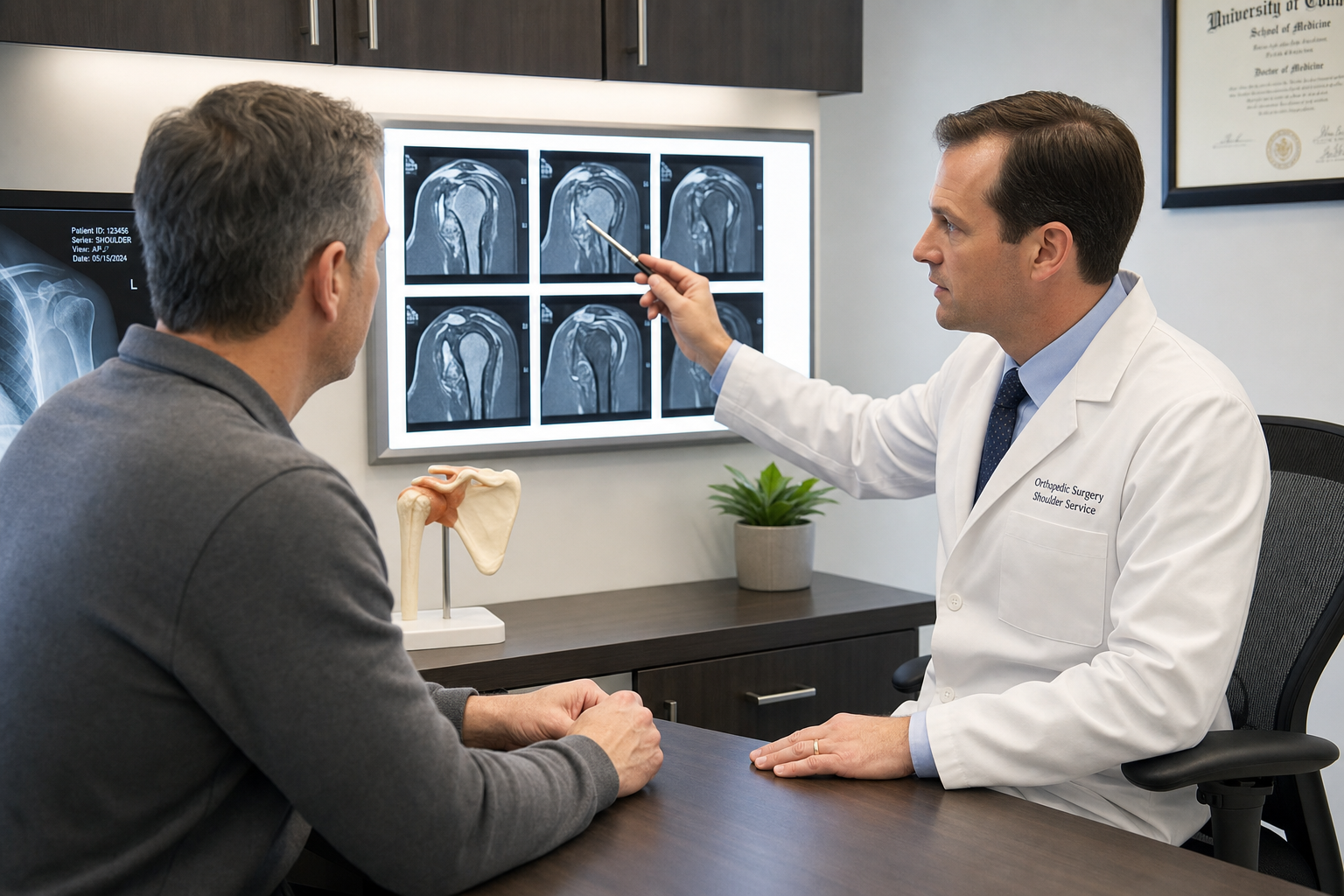
A comprehensive second opinion at a dedicated shoulder practice goes well beyond a quick chart review. At Varma Shoulder Institute, our evaluation typically includes a detailed physical examination of shoulder range of motion, strength, and stability; a review of all prior imaging including X-rays and MRI; a discussion of your symptom history, prior treatments, and functional goals; and, when indicated, new imaging if existing studies are outdated or of insufficient quality.
Double-fellowship-trained shoulder surgeon Dr. Amit Varma — who completed fellowships at the Rothman Institute under Dr. Michael Ciccotti and at the Andrews Institute under Dr. James Andrews — brings subspecialty-level expertise to every evaluation. That depth of training matters when the diagnosis is complex or when a prior surgical recommendation needs to be validated or reconsidered.
For patients considering rotator cuff repair, the AAOS patient guide on rotator cuff tears provides helpful background on how tears are classified and when surgery is typically recommended.
Signs Your Diagnosis or Surgery Recommendation Should Be Rechecked
Not every shoulder diagnosis requires a second look, but certain warning signs suggest the current plan deserves scrutiny. Consider seeking a specialist evaluation if any of the following apply to your situation:
- Your pain has not improved after six or more weeks of structured physical therapy.
- You were told your imaging is “normal” but your symptoms are significant and worsening.
- You received a surgical recommendation without a trial of conservative treatment first.
- Your surgeon does not specialize in shoulder surgery and sees a broad range of orthopedic conditions.
- You are being recommended for a complex procedure such as reverse shoulder replacement or revision surgery without a clear explanation of why simpler options are not appropriate.
Non-Surgical vs Surgical Options After Failed Treatment
A second opinion does not automatically lead to surgery. In many cases, a fresh evaluation identifies a non-surgical pathway that was not previously explored — or confirms that surgery is indeed the right next step. The distinction matters enormously for your recovery timeline and long-term shoulder function.
Non-surgical options that may be reconsidered or introduced after a second opinion include targeted physical therapy with a shoulder-specific protocol, corticosteroid or PRP injections, activity modification, and bracing. When structural damage is confirmed and conservative care has been exhausted, surgical options such as shoulder arthroscopy, rotator cuff repair, or shoulder replacement may be recommended.
At Varma Shoulder Institute, we take a conservative-first approach whenever appropriate, and we explain the reasoning behind every recommendation so you can make an informed decision about your care.
What to Bring to Your Second Opinion Appointment
The quality of a second opinion depends heavily on the information available to the reviewing surgeon. To make the most of your visit, gather the following before your appointment:
- All imaging studies on disc or via a digital transfer link (X-rays, MRI, CT scans)
- Radiology reports for each imaging study
- Operative reports if you have had prior shoulder surgery
- Physical therapy discharge summaries or progress notes
- A list of all medications and injections you have received for your shoulder
- Your insurance card and a photo ID
- A written summary of your symptoms, when they started, and what makes them better or worse
Our team will review everything you bring and request any additional studies needed to complete the evaluation. Contact our Clermont shoulder team before your appointment if you have questions about transferring records.
What Happens If You Already Had Shoulder Surgery
Patients who have undergone shoulder surgery and are still experiencing pain, stiffness, or instability are among those who benefit most from a specialist second opinion. Post-surgical shoulder problems can stem from incomplete healing, hardware complications, a missed secondary diagnosis, or the need for revision surgery.
Revision shoulder surgery is technically demanding and requires a surgeon with specific experience in complex shoulder reconstruction. Dr. Varma, as Chief of Surgery at South Lake Hospital and a double-fellowship-trained specialist, evaluates post-surgical shoulder cases regularly and can determine whether additional intervention is warranted or whether a structured rehabilitation program is the appropriate path forward.
For patients considering shoulder replacement or revision of a prior replacement, the AAOS guide to shoulder joint replacement offers useful context on what the procedure involves and when it is indicated.
How to Choose the Right Shoulder Surgeon in Clermont and Central Florida
When your shoulder health is at stake, subspecialty training and focused clinical experience are the most important factors in choosing a surgeon. A fellowship-trained shoulder specialist has completed advanced training beyond general orthopedic residency, specifically in the diagnosis and surgical treatment of shoulder and elbow conditions.
Varma Shoulder Institute provides second opinion consultations, rotator cuff repair, shoulder arthroscopy, total and reverse shoulder replacement, revision surgery, PRP injections, and non-surgical shoulder care for patients throughout Clermont, Orlando, and Central Florida. Same-week appointments are available, and second opinion consultations are typically scheduled within 48 hours. We accept Aetna, Cigna, Florida Blue/BCBS, UnitedHealthcare, Medicare, Tricare, and self-pay.
The next step is straightforward: schedule a consultation with our team and let us give you the clarity you need to move forward. The American Shoulder and Elbow Surgeons recognizes fellowship-trained specialists as the standard of care for complex shoulder conditions.
A Closer Look: When a Second Opinion Changes Everything
This type of scenario is not unusual. Complex shoulder conditions often benefit from a second set of expert eyes, particularly when the recommended intervention is significant or irreversible.
Common Mistakes Patients Make When Seeking a Second Opinion
- Waiting too long: Delaying a second opinion while structural damage progresses can narrow your treatment options. If something feels wrong, act sooner rather than later.
- Not bringing prior records: Arriving without imaging or surgical reports forces the reviewing surgeon to work with incomplete information, reducing the value of the visit.
- Seeing another generalist: A second opinion from another general orthopedist may not add the subspecialty perspective needed for a complex shoulder case. Seek a fellowship-trained shoulder specialist.
- Assuming surgery is always the answer — or never the answer: Both extremes can lead to poor outcomes. A thorough evaluation should guide the decision, not assumptions.
- Ignoring red-flag symptoms: Sudden severe pain, inability to lift the arm, or signs of infection after surgery require prompt evaluation, not a scheduled second opinion weeks away. Call (352) 404-8956 immediately if you are experiencing acute symptoms.
What to Do Next
If you are living with unresolved shoulder pain, questioning a surgical recommendation, or recovering from a procedure that has not delivered the results you expected, the most productive next step is a focused evaluation with a shoulder specialist. At Varma Shoulder Institute, we are here to give you honest answers — whether that means confirming a prior recommendation, identifying a missed diagnosis, or outlining a new treatment plan tailored to your goals.
Call us at (352) 404-8956 or use our online scheduling to request your consultation. Same-week appointments are available, and second opinion visits are typically confirmed within 48 hours.
Frequently Asked Questions
How do I know if I need a shoulder surgery second opinion?
If your shoulder pain has not improved after conservative treatment, if you are uncertain about a surgical recommendation, or if a prior shoulder procedure did not resolve your symptoms, a second opinion is a reasonable and often valuable step. A fellowship-trained shoulder specialist can review your imaging and examination findings to confirm or revise the current plan.
Will my insurance cover a shoulder surgery second opinion?
Many insurance plans cover second opinion consultations, particularly before elective surgery. Coverage varies by plan, so it is best to verify your benefits directly with your carrier and with Varma Shoulder Institute before scheduling. VSI accepts Aetna, Cigna, Florida Blue/BCBS, UnitedHealthcare, Medicare, Tricare, and self-pay.
How quickly can I get a second opinion at Varma Shoulder Institute?
Varma Shoulder Institute typically schedules second opinion consultations within 48 hours of your request. Same-week appointments are available for most patients. Call (352) 404-8956 or request an appointment online to get started.
What should I bring to a shoulder second opinion appointment?
Bring all prior imaging on disc or via digital transfer, radiology reports, operative reports if applicable, physical therapy notes, a list of treatments and injections received, and your insurance information. The more complete your records, the more thorough the evaluation can be.
Can I get a second opinion after I have already had shoulder surgery?
Yes. Post-surgical second opinions are common and often critical when pain, stiffness, or instability persists after a procedure. Dr. Varma evaluates post-surgical shoulder cases regularly and can determine whether revision surgery or a structured rehabilitation program is the appropriate next step.
Does getting a second opinion mean I distrust my current doctor?
Not at all. Seeking a second opinion is a standard and widely encouraged practice before any significant surgical procedure. Most surgeons support the process because it leads to better-informed patients and more confident treatment decisions.
Is Dr. Varma qualified to provide a shoulder surgery second opinion?
Yes. Dr. Amit Varma is double-fellowship-trained in shoulder and elbow surgery, having completed fellowships at the Rothman Institute and the Andrews Institute. He serves as Chief of Surgery at South Lake Hospital and has over 10 years of experience treating complex shoulder conditions throughout Clermont and Central Florida.
Update Log
- October 1, 2026: Published.
- October 1, 2026: Corrected the article’s publication-date labels.