

Failed Shoulder Replacement Symptoms: When to Seek a Revision Evaluation
Recognizing failed shoulder replacement symptoms early can make a meaningful difference in your recovery and long-term function. At Varma Shoulder Institute, we evaluate patients throughout Clermont and Central Florida who are experiencing new or worsening pain, instability, or stiffness after a shoulder replacement — and we help them understand whether revision surgery or another intervention is the right path forward.
Shoulder replacement surgery — whether total, partial, or reverse — can restore significant function and relieve arthritis pain. But like any implant, shoulder prostheses can develop problems over time or, in some cases, shortly after surgery. Understanding what is normal and what is not is the first step toward getting the right care.
Normal vs. Abnormal Pain After Shoulder Replacement
Mild soreness, swelling, and stiffness in the weeks immediately following shoulder arthroplasty are expected parts of healing. Most patients experience gradual improvement over three to six months as the soft tissues recover and physical therapy progresses. Pain that follows this trajectory — steadily decreasing with activity and therapy — is generally not a cause for alarm.
However, pain that plateaus without improvement, suddenly worsens after a period of feeling better, or is accompanied by new symptoms such as instability or grinding warrants prompt attention. According to OrthoInfo from the American Academy of Orthopaedic Surgeons, patients who notice a significant change in their shoulder function after replacement should contact their surgeon for evaluation. At Varma Shoulder Institute, we take these concerns seriously and offer timely appointments so patients are never left waiting with unanswered questions about their implant.
Warning Signs of Implant Failure, Loosening, or Instability
Certain symptoms are consistent with shoulder replacement failure and should not be dismissed or attributed solely to normal healing. These include:
- Persistent or worsening pain that does not respond to rest, medication, or physical therapy
- A sensation of looseness or instability — feeling as though the shoulder could “give way” or is not tracking properly
- Clicking, clunking, or grinding sounds or sensations with movement
- Significant loss of range of motion that was previously improving
- Visible swelling or warmth around the shoulder joint
- Fever, redness, or wound drainage — potential signs of periprosthetic infection
- Sudden sharp pain after a fall or impact — possible periprosthetic fracture
If you are experiencing one or more of these signs of failed shoulder replacement, scheduling a shoulder revision evaluation at Varma Shoulder Institute is the appropriate next step. Early intervention typically leads to better outcomes than waiting until symptoms become severe.
Why Shoulder Replacements Fail
Understanding the underlying causes of shoulder replacement failure helps patients recognize their own symptoms in context. The most common failure mechanisms include:
- Component loosening: Over time, the bond between the implant and bone can weaken, particularly at the glenoid (socket) component. This is one of the most frequently cited reasons for revision shoulder arthroplasty.
- Rotator cuff failure: In total shoulder replacement, the rotator cuff must remain intact for the implant to function properly. Tears or progressive degeneration of the cuff after surgery can lead to instability and pain. This is one reason reverse shoulder replacement was developed — it does not rely on the rotator cuff for stability.
- Periprosthetic infection: Infection around the implant is a serious complication that can occur early or years after surgery. It often presents with pain, swelling, warmth, and systemic symptoms such as fever.
- Instability and dislocation: The shoulder can become unstable if soft tissue balance is disrupted or if the implant components are not properly positioned. Reverse shoulder replacement complications can include dislocation, particularly in the early postoperative period.
- Periprosthetic fracture: A fracture of the bone around the implant, often triggered by a fall or trauma, can cause sudden severe pain and loss of function.
- Implant wear: Polyethylene components can wear over time, generating debris that may cause bone loss (osteolysis) and loosening.
The AAOS notes that shoulder replacement is generally a durable procedure, but like all joint replacements, it carries a risk of long-term complications that may require revision surgery.
How a Shoulder Specialist Evaluates a Painful Replacement
When a patient presents with failed shoulder replacement symptoms, a thorough evaluation is essential before any treatment decisions are made. At Varma Shoulder Institute, our evaluation process typically includes:
- Detailed history: When did symptoms begin? How have they changed? What was the original diagnosis and surgical approach?
- Physical examination: Assessing range of motion, strength, stability, and areas of tenderness around the implant.
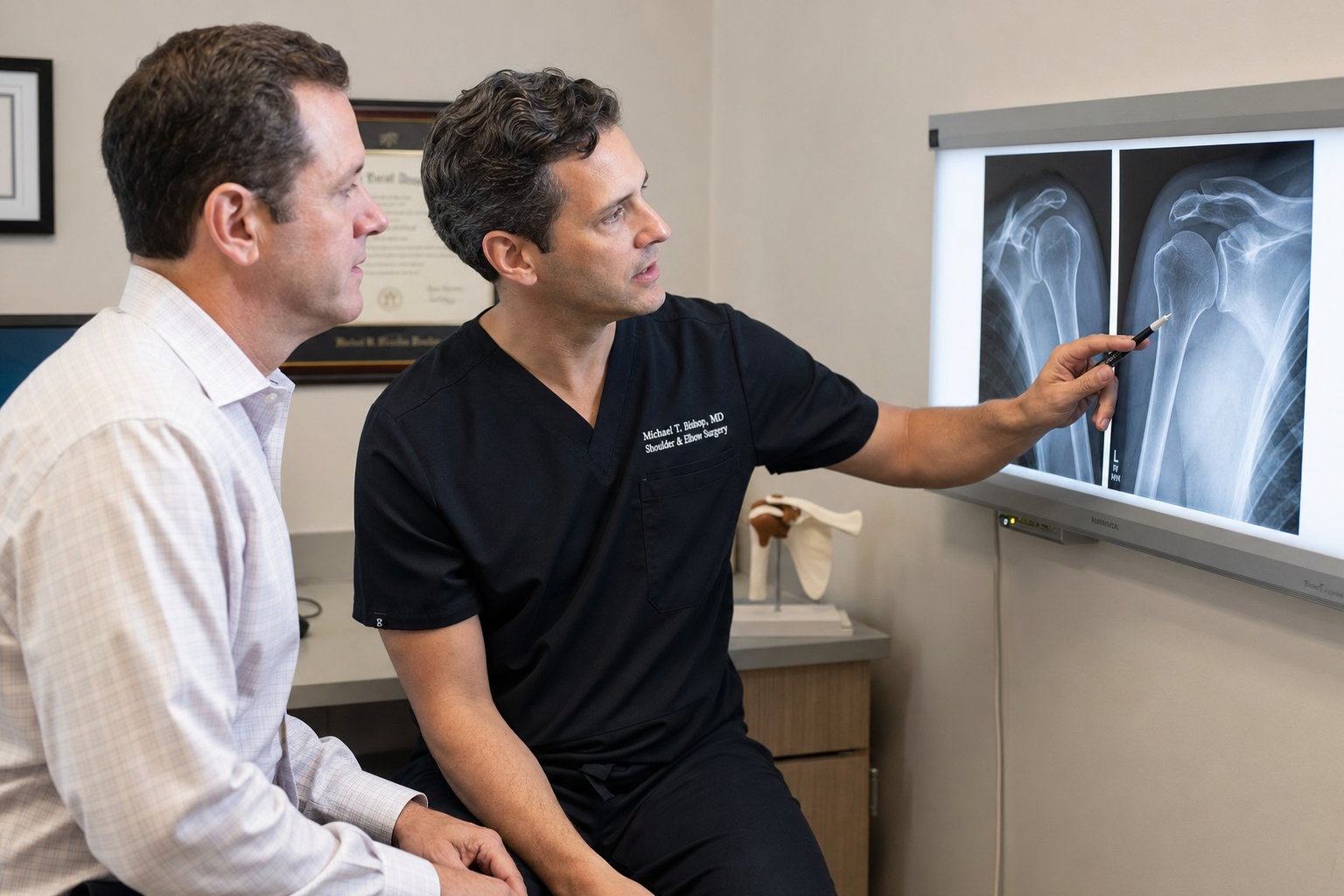
- Imaging: X-rays are the first step and can reveal loosening, component positioning, bone loss, or fracture. CT scans or MRI may be ordered for more detailed assessment of soft tissue or bone involvement.
- Laboratory testing: If infection is suspected, blood tests including inflammatory markers (ESR, CRP) and joint aspiration may be performed.
Double-fellowship-trained shoulder surgeon Dr. Amit Varma — who completed advanced training at the Rothman Institute under Dr. Michael Ciccotti and the Andrews Institute under Dr. James Andrews — brings specialized expertise to the evaluation and management of complex shoulder replacement problems. His training in revision shoulder arthroplasty allows for a precise, individualized assessment of each patient’s situation.
When a Second Opinion or Revision Review Makes Sense
If you have been told your shoulder replacement looks “fine” on imaging but you are still experiencing significant pain or functional limitation, a second opinion is entirely appropriate. Patients sometimes feel hesitant to seek another perspective, but a second evaluation can either provide reassurance or uncover a problem that warrants treatment.
Varma Shoulder Institute offers shoulder surgery second opinions with a turnaround of 48 hours or less in many cases. We review prior imaging, operative reports, and your current symptoms to give you a clear, honest assessment of where things stand and what options are available.
A second opinion is especially worth pursuing if you are experiencing any of the warning signs listed above, if your original surgeon has not been able to identify a cause for your ongoing symptoms, or if revision surgery has been recommended and you want to confirm that recommendation before proceeding.
Treatment Options for Failed Shoulder Replacement
Treatment depends entirely on the underlying cause of failure. Not every patient with failed shoulder replacement symptoms requires revision surgery. Options may include:
- Physical therapy and activity modification: For mild stiffness or soft tissue irritation without structural failure, a targeted therapy program may be sufficient.
- Medication management: Anti-inflammatory medications or corticosteroid injections may help manage pain while the cause is being investigated.
- Revision shoulder arthroplasty: When structural failure — such as component loosening, instability, or significant wear — is confirmed, revision surgery to replace or reposition components is often necessary. In some cases, converting a total shoulder replacement to a reverse shoulder replacement is the most appropriate solution, particularly when rotator cuff integrity has been compromised.
- Infection treatment: Periprosthetic infection typically requires a staged surgical approach, including implant removal, antibiotic therapy, and eventual reimplantation.
- Fracture management: Periprosthetic fractures may require surgical fixation or revision depending on the fracture pattern and implant stability.
The American Shoulder and Elbow Surgeons recognize revision shoulder arthroplasty as a technically demanding procedure that is best performed by surgeons with specialized training in complex shoulder reconstruction. At Varma Shoulder Institute, we provide revision shoulder arthroplasty for patients throughout Clermont, Orlando, and Central Florida, with same-week consultation appointments available for those with urgent concerns.
Preparing for Your Revision Consultation in Clermont
Coming prepared to your revision evaluation helps our team give you the most accurate assessment possible. Before your appointment, gather the following:
- Operative reports from your original shoulder replacement surgery
- Any prior imaging (X-rays, CT scans, MRI) on disc or digital format
- A list of current medications and any treatments you have tried for your symptoms
- A written summary of your symptoms — when they started, what makes them better or worse, and how they have changed over time
- Your insurance card and any referral documentation if required by your plan
Varma Shoulder Institute accepts Aetna, Cigna, Florida Blue/BCBS, UnitedHealthcare, Medicare, Tricare, and self-pay. Our team will work with you to understand your coverage and coordinate your care efficiently from the first visit.
Common Mistakes Patients Make After Shoulder Replacement
Patients experiencing shoulder replacement failure symptoms sometimes make decisions that delay appropriate care. The most common mistakes include:
- Attributing all pain to “normal aging”: While some discomfort is expected early in recovery, persistent or worsening pain after shoulder arthroplasty is not something to simply accept. It deserves evaluation.
- Waiting too long to report new symptoms: Loosening, infection, and instability tend to worsen over time. Early evaluation almost always leads to more treatment options and better outcomes.
- Avoiding a second opinion out of loyalty to the original surgeon: Seeking a second opinion is a standard part of informed medical decision-making, particularly for complex revision scenarios. It is not a criticism of your original surgeon — it is an investment in your own health.
- Self-managing with over-the-counter medications indefinitely: Pain relievers can mask symptoms without addressing the underlying structural problem. If your pain requires ongoing medication to manage, that is a signal to seek evaluation.
- Skipping physical therapy after revision surgery: Revision shoulder arthroplasty requires a dedicated rehabilitation program. Skipping or shortcutting therapy significantly reduces the likelihood of a good functional outcome.
For additional context on shoulder replacement and its potential complications, the peer-reviewed literature available through PubMed provides ongoing research on revision rates, failure mechanisms, and outcomes in shoulder arthroplasty.
Frequently Asked Questions
How do I know if my shoulder replacement is failing?
Common signs of shoulder replacement failure include persistent or worsening pain that does not improve with rest or therapy, a feeling of looseness or instability in the joint, clicking or grinding sensations, and signs of infection such as fever or redness. If you are experiencing any of these symptoms, schedule an evaluation with a fellowship-trained shoulder surgeon promptly.
Is it normal to still have pain two years after shoulder replacement?
Most patients experience significant pain relief within six to twelve months of shoulder replacement. Ongoing or worsening pain two or more years after surgery is not typical and warrants evaluation for potential implant loosening, rotator cuff failure, or other complications.
What causes a shoulder replacement to loosen?
Shoulder implant loosening can result from normal wear over time, bone loss (osteolysis) from implant debris, infection, or mechanical stress on the implant. The glenoid component is most commonly affected in total shoulder replacement. Imaging and clinical evaluation are needed to confirm loosening and determine the appropriate treatment.
Can a failed shoulder replacement be fixed?
Yes, in many cases revision shoulder arthroplasty can address the underlying cause of failure and restore function. The specific approach depends on the failure mechanism — loosening, infection, instability, or fracture each require a different strategy. Dr. Varma at Varma Shoulder Institute evaluates each patient individually to determine the most appropriate treatment plan.
When should I get a second opinion after shoulder replacement?
A second opinion is appropriate any time you have unresolved pain or functional problems after shoulder replacement, especially if your current surgeon has not identified a clear cause or if revision surgery has been recommended. Varma Shoulder Institute provides second opinions with evaluations often available within 48 hours.
What is the difference between total shoulder replacement and reverse shoulder replacement?
In a total shoulder replacement, the ball and socket are replaced in their anatomic positions, and the procedure relies on an intact rotator cuff. In a reverse shoulder replacement, the ball and socket positions are switched, allowing the deltoid muscle to power the arm — making it suitable for patients with significant rotator cuff damage. Reverse shoulder replacement is also commonly used in revision surgery when the rotator cuff is no longer functional.
Does Varma Shoulder Institute accept insurance for revision shoulder surgery consultations?
Yes. Varma Shoulder Institute accepts Aetna, Cigna, Florida Blue/BCBS, UnitedHealthcare, Medicare, Tricare, and self-pay. We recommend verifying your specific benefits with your insurance carrier and our office prior to your appointment. Call (352) 404-8956 for assistance.
Update Log
- May 2026: Article published covering failed shoulder replacement symptoms, common causes of implant failure, evaluation process, and revision treatment options at Varma Shoulder Institute in Clermont, Florida.