

Medicare Coverage for Shoulder Replacement in Florida
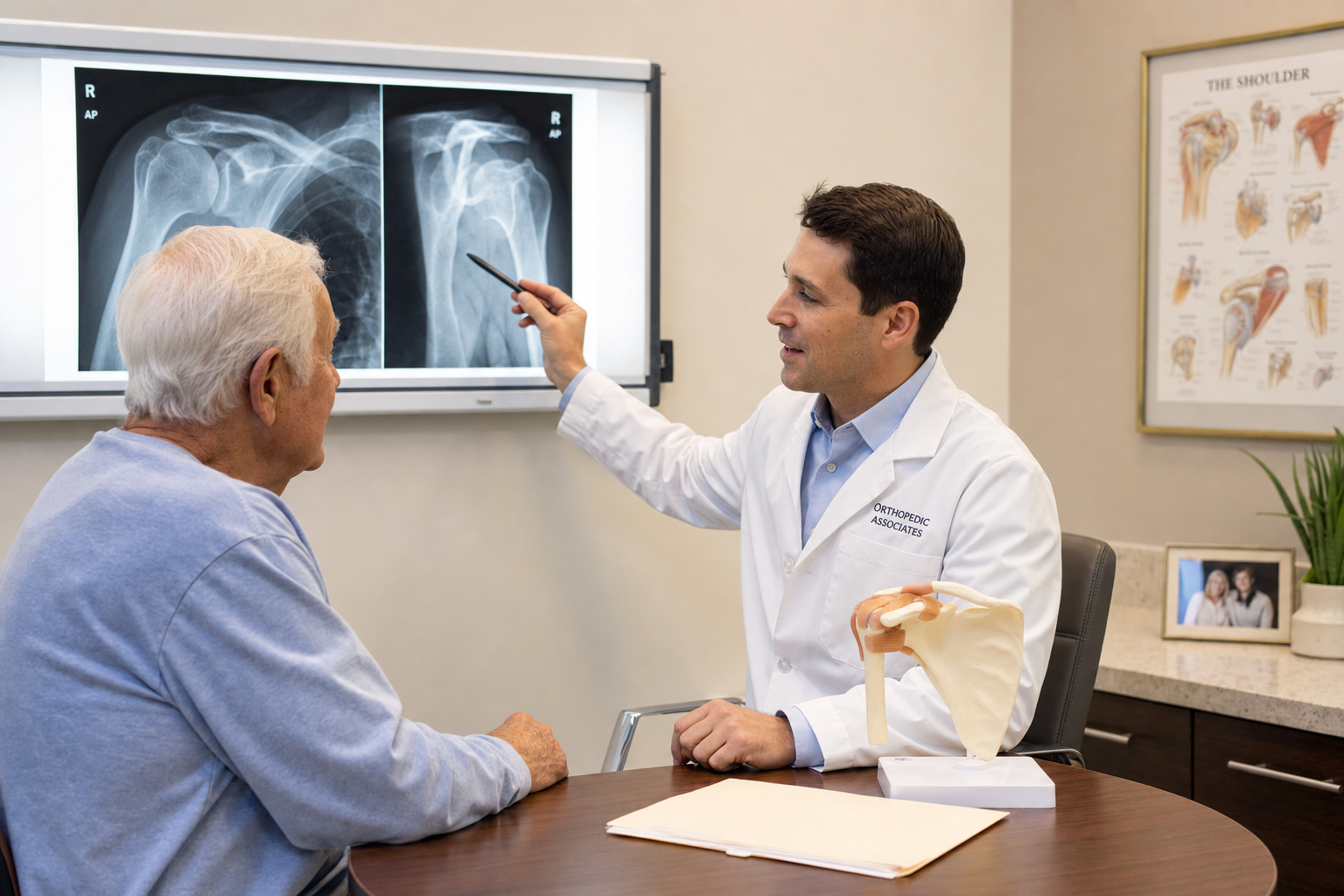
Understanding Medicare coverage for shoulder replacement in Florida is one of the first questions patients ask when their shoulder pain reaches the point where surgery becomes a serious option. At Varma Shoulder Institute in Clermont, we help Medicare patients navigate coverage questions so they can focus on getting better, not on paperwork. This guide explains what Medicare typically covers, what costs may remain, and how to take the next step toward lasting shoulder relief.
Insurance coverage and out-of-pocket costs vary by plan and individual circumstance. Verify benefits directly with your insurance carrier and Varma Shoulder Institute before scheduling treatment.
Medicare coverage rules for orthopedic surgery can feel complicated, but the core principle is straightforward: if your shoulder replacement is medically necessary and performed by a Medicare-participating provider, Medicare will generally cover a significant portion of the cost. The sections below walk through each piece of that equation in plain language.
What Medicare Usually Covers for Shoulder Replacement
Medicare is divided into parts, and shoulder replacement surgery typically involves more than one. Medicare Part A covers inpatient hospital services — meaning if your surgery requires an overnight hospital stay, Part A pays for the facility fee, nursing care, and related hospital services after you meet your inpatient deductible. Medicare Part B covers outpatient services, including surgeon fees, pre-operative evaluations, anesthesia, and outpatient surgical facility fees when the procedure is performed in an ambulatory surgery center or outpatient hospital setting.
As shoulder replacement surgery is increasingly performed on an outpatient basis for appropriate candidates, Part B coverage has become especially relevant. For a deeper overview of what shoulder replacement involves clinically, the AAOS OrthoInfo guide to shoulder joint replacement is a reliable patient-education resource. To confirm how your specific Medicare plan applies to your situation, contact our Clermont shoulder team — we assist patients with insurance verification before their consultation.
Which Shoulder Replacement Procedures May Be Covered
Medicare does not limit coverage to a single type of shoulder replacement. Both total shoulder arthroplasty (replacing the ball and socket with anatomic implants) and reverse total shoulder replacement (which reverses the ball-and-socket geometry, often used when the rotator cuff is severely damaged) are recognized procedures that Medicare covers when medically necessary.
The choice between total and reverse shoulder replacement depends on your anatomy, rotator cuff integrity, and the degree of arthritis present — not on which procedure Medicare prefers. At Varma Shoulder Institute, we perform both procedures and select the approach based on what will give each patient the best long-term outcome. You can learn more about your options by visiting our shoulder consultation page and requesting a same-week appointment.
Eligibility, Medical Necessity, and Pre-Surgery Requirements
Medicare requires that shoulder replacement surgery be medically necessary — meaning it must be appropriate and needed to treat a diagnosed condition, not elective or cosmetic. To establish medical necessity, your orthopedic surgeon typically documents:
- A confirmed diagnosis (e.g., severe glenohumeral osteoarthritis, avascular necrosis, irreparable rotator cuff tear with arthropathy)
- Imaging evidence — X-rays and often MRI — showing the extent of joint damage
- A record of conservative treatments tried and failed, such as physical therapy, corticosteroid injections, or anti-inflammatory medications
- Functional limitations that affect daily activities
Medicare does not require a specific number of weeks of conservative treatment, but the documentation of prior non-surgical care strengthens the medical necessity case. For background on shoulder arthritis and when surgery becomes appropriate, see the AAOS overview of shoulder arthritis.
What Costs Medicare Patients in Florida May Still Owe
Even with Medicare coverage, patients are responsible for certain out-of-pocket costs. Under Original Medicare, these typically include:
- Part A inpatient deductible — applies per benefit period for inpatient hospital stays
- Part B deductible — an annual deductible that applies before Part B pays
- Part B coinsurance — typically 20% of the Medicare-approved amount for surgeon and outpatient facility fees after the deductible is met
- Medigap / supplemental insurance — if you carry a Medicare supplement policy, it may cover some or all of the 20% coinsurance
For authoritative information on what Medicare covers for joint replacement, Medicare.gov’s shoulder replacement coverage page is the official government source. Our team at Varma Shoulder Institute can also help you understand your expected costs before you commit to surgery.
Original Medicare vs Medicare Advantage for Shoulder Surgery
If you are enrolled in a Medicare Advantage (Part C) plan rather than Original Medicare, your coverage for shoulder replacement is provided through a private insurer that contracts with Medicare. Advantage plans must cover at least what Original Medicare covers, but they often have different cost-sharing structures, network requirements, and prior authorization rules.
Key differences to be aware of:
- Network restrictions: Medicare Advantage plans typically require you to use in-network providers. Confirm that your surgeon and surgical facility are in-network before scheduling.
- Prior authorization: Many Advantage plans require pre-approval for shoulder replacement surgery. Your surgeon’s office typically handles this process.
- Cost-sharing: Copays and out-of-pocket maximums vary widely by plan. Some Advantage plans may result in lower out-of-pocket costs than Original Medicare; others may be higher depending on the plan design.
The Centers for Medicare and Medicaid Services (CMS) provides regulatory guidance on Medicare Advantage plan requirements. When in doubt, call your plan directly and ask specifically about shoulder replacement (CPT codes for total and reverse shoulder arthroplasty) to get accurate benefit information.
Choosing a Shoulder Specialist in Clermont, Florida
For Medicare patients in Central Florida, finding a shoulder surgeon who participates in Medicare and has subspecialty training in shoulder replacement is essential. Varma Shoulder Institute provides total and reverse shoulder replacement for patients throughout Clermont, Orlando, and the greater Central Florida region, with same-week consultation appointments available.
Our practice is led by double-fellowship-trained shoulder and elbow surgeon Dr. Amit Varma, who completed advanced fellowships at the Rothman Institute under Dr. Michael Ciccotti and at the Andrews Institute under Dr. James Andrews — two of the most respected orthopedic training programs in the country. Dr. Varma also serves as Chief of Surgery at South Lake Hospital. We accept Original Medicare as well as many Medicare Advantage plans, and our team verifies insurance benefits before your first appointment so there are no surprises.
Questions to Ask Before Scheduling Shoulder Replacement
Before committing to shoulder replacement surgery, Medicare patients should feel confident asking their surgeon and insurance carrier the following questions:
- Is this surgeon a Medicare-participating provider?
- Will this procedure require prior authorization from my plan?
- Is the surgical facility (hospital or ASC) in my Medicare Advantage network?
- What is my expected out-of-pocket cost after Medicare pays?
- Does my condition meet Medicare’s medical necessity criteria?
- What type of shoulder replacement — total or reverse — is recommended for my anatomy?
- What does post-surgical physical therapy involve, and is it covered?
At Varma Shoulder Institute, we encourage patients to bring these questions to their consultation. Our team walks through each one so you leave with a clear picture of your surgical plan and financial responsibility.
When to Schedule a Consultation for Shoulder Pain
Many Medicare patients wait longer than necessary before seeking a surgical evaluation, often because they assume surgery is a last resort or that Medicare will not cover it. In reality, an early consultation helps establish the documentation trail that supports medical necessity — and it gives you and your surgeon time to exhaust conservative options before surgery if appropriate.
Consider scheduling a consultation at Varma Shoulder Institute if you are experiencing:
- Persistent shoulder pain that limits daily activities despite medication or injections
- Significant loss of shoulder range of motion
- Shoulder pain that disrupts sleep consistently
- A prior diagnosis of shoulder arthritis, rotator cuff arthropathy, or avascular necrosis
- A previous shoulder surgery that has not provided lasting relief
For more information on shoulder conditions that may lead to replacement, the AAOS guide to common shoulder problems is a helpful starting point.
Frequently Asked Questions
Does Medicare cover shoulder replacement surgery?
Yes. Medicare Part A covers inpatient hospital costs and Part B covers surgeon and outpatient facility fees for shoulder replacement when the procedure is deemed medically necessary. Patients are still responsible for deductibles and coinsurance.
Does Medicare cover reverse shoulder replacement?
Yes. Reverse total shoulder replacement is a recognized procedure covered by Medicare when medically necessary — typically for patients with severe rotator cuff damage combined with arthritis. The same medical necessity documentation requirements apply as for total shoulder replacement.
What does “medically necessary” mean for Medicare shoulder surgery approval?
Medical necessity means the surgery is appropriate and required to treat a diagnosed condition, supported by imaging, a confirmed diagnosis, and documentation that conservative treatments have been tried without adequate relief. Your surgeon’s office prepares this documentation.
How much will I owe out of pocket for shoulder replacement under Medicare?
Out-of-pocket costs depend on whether you have Original Medicare or a Medicare Advantage plan, whether you carry a Medigap supplement, and your specific plan’s deductibles and coinsurance. Under Original Medicare, you typically owe 20% of the Medicare-approved amount for Part B services after your deductible. Contact your plan and Varma Shoulder Institute to get an estimate specific to your situation.
Do I need a referral to see a shoulder specialist under Medicare?
Original Medicare does not require a referral to see a specialist. However, some Medicare Advantage plans do require a referral or prior authorization. Check with your specific plan before scheduling.
Does Medicare cover physical therapy after shoulder replacement?
Yes. Medicare Part B covers outpatient physical therapy following shoulder replacement when it is medically necessary and provided by a Medicare-participating therapist. Therapy is a critical part of recovery and is typically included in the post-surgical plan at Varma Shoulder Institute.
How do I schedule a shoulder replacement consultation with Dr. Varma?
Call Varma Shoulder Institute at (352) 404-8956 or visit our website to request a same-week appointment. Dr. Varma and our team accept Medicare and will verify your insurance benefits before your visit so you know what to expect.
Update Log
- May 2026: Article reviewed and updated to reflect current Medicare Part A and Part B coverage structures for shoulder replacement, including outpatient joint replacement trends and Medicare Advantage prior authorization guidance.