

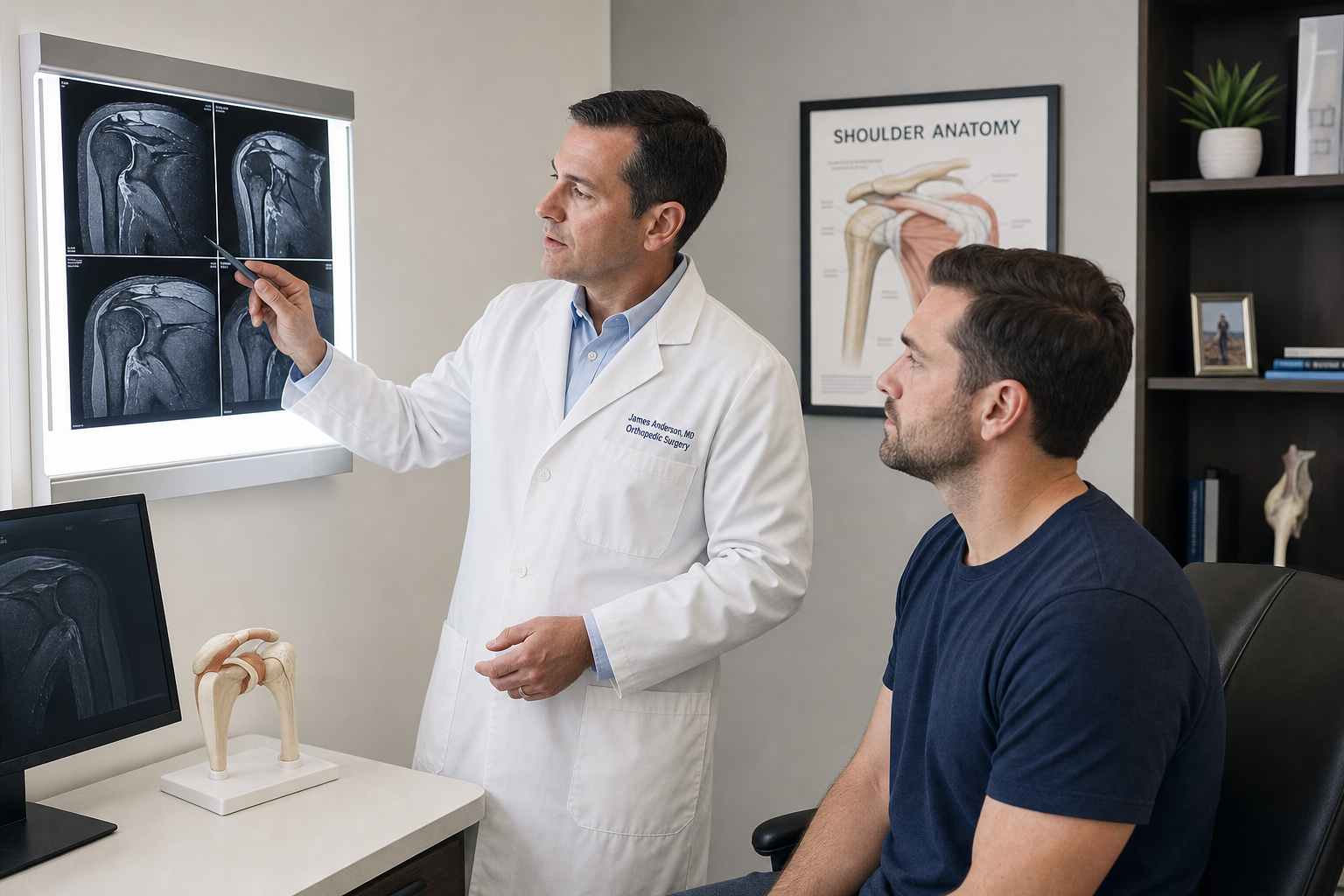
When Shoulder Pain Needs a Specialist in Clermont
Knowing when shoulder pain needs a specialist can make the difference between a full recovery and a condition that worsens over time. At Varma Shoulder Institute in Clermont, Florida, we evaluate patients every week who waited months before seeking expert care — often making treatment more complex than it needed to be. If your shoulder pain is limiting daily life, this guide will help you recognize the signs that it is time to see a shoulder-focused orthopedic surgeon.
Shoulder pain is one of the most common musculoskeletal complaints in adults, yet many people underestimate how quickly a treatable condition can progress without proper care. Understanding the difference between a minor muscle strain and a structural problem — such as a rotator cuff tear or labral injury — requires a trained eye and the right diagnostic tools. The sections below walk through the most important signals that your shoulder pain has moved beyond the “wait and see” stage.
How to Tell if Shoulder Pain Is More Than a Minor Strain
A minor muscle strain from overexertion typically improves within one to two weeks with rest, ice, and gentle movement. When pain persists beyond that window — or returns repeatedly — it is a sign that something structural may be involved. Common structural problems include rotator cuff tears, shoulder impingement, labral tears, and early-stage arthritis.
Key differences between a strain and a more serious condition include pain that radiates down the arm, a sensation of the shoulder “giving way,” difficulty reaching overhead or behind your back, and noticeable weakness when lifting even light objects. If you are experiencing any of these, an orthopedic shoulder evaluation in Clermont, FL is the appropriate next step — not another week of rest and over-the-counter pain relievers.
At Varma Shoulder Institute, we see patients at every stage of shoulder injury, from early impingement to complex multi-structure tears. Scheduling an evaluation early gives you the best chance at a non-surgical resolution. Contact our Clermont shoulder team to book your same-week appointment.
Common Causes of Shoulder Pain That May Need Specialist Care
Several shoulder conditions are frequently misidentified as simple strains. Understanding the most common diagnoses helps you communicate your symptoms more clearly and seek the right level of care sooner.
- Rotator cuff tears: Partial or full-thickness tears of the tendons that stabilize the shoulder joint. These can occur from a single traumatic event or develop gradually from repetitive overhead activity.
- Shoulder impingement: Occurs when rotator cuff tendons are pinched beneath the acromion bone during arm elevation. Often described as a deep ache with overhead movement. Learn more from OrthoInfo on shoulder impingement.
- Frozen shoulder (adhesive capsulitis): Progressive stiffening of the shoulder capsule that severely limits range of motion. More common in people with diabetes or following a period of immobilization.
- Labral tears (SLAP tears): Damage to the cartilage ring surrounding the shoulder socket, often seen in overhead athletes and after dislocation events.
- Shoulder arthritis: Degenerative joint disease that causes pain, stiffness, and grinding sensations, particularly in patients over 50.
- Sports shoulder injuries: Acute injuries from contact sports, throwing sports, or falls that may involve multiple structures simultaneously.
Each of these conditions requires a different treatment approach. A shoulder-focused specialist has the training and imaging tools to distinguish between them accurately.
Warning Signs You Should See a Shoulder Specialist Soon
Certain symptoms indicate that a shoulder condition is unlikely to resolve on its own and may worsen without intervention. Do not delay an evaluation if you experience any of the following:
- Pain that wakes you from sleep or prevents you from lying on the affected side
- Visible deformity, swelling, or bruising around the shoulder joint
- Sudden, severe weakness — especially after a pop or snap sensation
- Loss of the ability to raise your arm above shoulder height
- Shoulder pain accompanied by numbness or tingling down the arm
- Pain that has not improved after four to six weeks of rest and conservative self-care
These symptoms are not always emergencies, but they do require professional evaluation. Waiting too long can allow a partial tear to become a complete tear, or allow scar tissue to form in a frozen shoulder — both of which complicate treatment significantly.
When Shoulder Pain After an Injury Needs Urgent Evaluation
Traumatic shoulder injuries — from a fall, a collision, or a sudden forceful movement — should be evaluated promptly. A dislocated shoulder requires immediate reduction and follow-up imaging to rule out associated fractures or labral damage. Even if the shoulder appears to “go back into place” on its own, the structures surrounding the joint may have been stretched or torn.
Sports-related injuries, particularly in overhead athletes such as baseball pitchers, swimmers, and tennis players, often involve the labrum, biceps tendon, or rotator cuff. These injuries benefit from evaluation by a surgeon with specific sports shoulder experience. Dr. Amit Varma, who completed fellowships at the Rothman Institute under Dr. Michael Ciccotti and at the Andrews Institute under Dr. James Andrews, brings specialized sports shoulder expertise to every evaluation at Varma Shoulder Institute.
What a Shoulder Specialist Exam in Clermont Typically Includes
A thorough orthopedic shoulder evaluation goes well beyond a brief physical exam. At Varma Shoulder Institute, our evaluation process typically includes a detailed review of your symptom history, a hands-on physical examination assessing range of motion, strength, and joint stability, and diagnostic imaging when indicated — including X-rays and, where appropriate, MRI to visualize soft tissue structures such as the rotator cuff and labrum.
The goal of the evaluation is not just to identify what hurts, but to understand why — and to develop a treatment plan matched to your specific anatomy, activity level, and goals. Patients who come in for a shoulder evaluation at Varma Shoulder Institute leave with a clear diagnosis and a concrete plan, whether that involves physical therapy, an injection, or a surgical consultation.
Treatment Options From Non-Surgical Care to Surgery
Not every shoulder condition requires surgery. In fact, many patients with rotator cuff tendinitis, mild impingement, early frozen shoulder, and minor labral irritation respond well to a structured non-surgical program. At Varma Shoulder Institute, our non-surgical options include targeted physical therapy, corticosteroid injections, and PRP (platelet-rich plasma) injections for appropriate candidates.
When surgery is necessary — for complete rotator cuff tears, significant labral damage, advanced arthritis, or failed conservative treatment — our team performs minimally invasive arthroscopic procedures as well as total and reverse shoulder replacement. Dr. Varma’s double-fellowship training means patients benefit from subspecialty-level surgical expertise rather than a generalist approach. For more information on what shoulder surgery involves, the AAOS guide to shoulder arthroscopy is a helpful patient resource.
Why Seeing a Shoulder-Focused Orthopedic Surgeon Matters
General orthopedic surgeons treat a wide range of musculoskeletal conditions across the entire body. A shoulder-focused surgeon, by contrast, has completed additional fellowship training specifically in shoulder and elbow pathology — meaning their diagnostic instincts, surgical techniques, and rehabilitation protocols are refined through thousands of shoulder-specific cases.
Varma Shoulder Institute provides comprehensive shoulder care for patients throughout Clermont, Orlando, and Central Florida, with same-week consultation appointments available. Our team treats the full spectrum of shoulder conditions — from sports injuries in active adults to degenerative joint disease in older patients — using evidence-based protocols aligned with guidelines from organizations such as the American Shoulder and Elbow Surgeons.
When you choose a shoulder-focused practice, you are not starting from scratch with a generalist who may refer you elsewhere after several visits. You are getting a direct path to the right diagnosis and the right treatment from the first appointment.
Common Mistakes Patients Make With Shoulder Pain
Understanding what not to do is just as important as knowing when to seek care. These are the most frequent missteps we see at Varma Shoulder Institute:
- Waiting too long to seek evaluation: Many patients assume shoulder pain will resolve on its own. Partial rotator cuff tears, in particular, can progress to complete tears with continued activity and no treatment.
- Relying solely on pain medication: Anti-inflammatory medications can reduce discomfort but do not address the underlying structural problem. Masking pain can lead to further injury.
- Skipping physical therapy: Even when surgery is not needed, a structured physical therapy program is often the most effective treatment. Patients who skip PT frequently experience recurrence.
- Self-diagnosing from online searches: Shoulder anatomy is complex. Symptoms that seem like impingement may actually indicate a labral tear or early arthritis. Accurate diagnosis requires imaging and a hands-on exam.
- Avoiding surgery when it is clearly indicated: Delaying a necessary rotator cuff repair can allow the tendon to retract and the surrounding muscle to atrophy, making eventual surgery more difficult and recovery longer.
When to Schedule a Shoulder Evaluation in Clermont
If your shoulder pain has lasted more than four to six weeks, followed an injury, is waking you at night, or is limiting your ability to work or participate in activities you enjoy, the right time to schedule an evaluation is now — not after another month of hoping it improves.
At Varma Shoulder Institute, we make it straightforward to get answers. Same-week appointments are available for new patients, and we offer second opinions within 48 hours for patients who have already received a diagnosis elsewhere and want expert confirmation before proceeding with treatment. We accept Aetna, Cigna, Florida Blue/BCBS, UnitedHealthcare, Medicare, Tricare, and self-pay.
Your shoulder is one of the most mobile and complex joints in your body. It deserves care from a team that specializes in it exclusively.
Frequently Asked Questions
How long should I wait before seeing a shoulder specialist for pain?
If shoulder pain has not improved after four to six weeks of rest and basic self-care, or if it followed a specific injury, you should seek a specialist evaluation promptly. Pain that wakes you at night or causes significant weakness warrants an earlier appointment.
Can shoulder pain go away on its own without treatment?
Minor muscle strains often resolve within one to two weeks. However, structural problems such as rotator cuff tears, labral damage, and frozen shoulder rarely resolve without targeted treatment and typically worsen over time without intervention.
What is the difference between a shoulder specialist and a general orthopedic surgeon?
A shoulder specialist has completed additional fellowship training focused exclusively on shoulder and elbow conditions, providing deeper expertise in diagnosis and surgical technique for shoulder-specific pathology. Dr. Amit Varma at Varma Shoulder Institute is double-fellowship-trained in shoulder and elbow surgery.
Does Varma Shoulder Institute accept my insurance?
Varma Shoulder Institute accepts Aetna, Cigna, Florida Blue/BCBS, UnitedHealthcare, Medicare, Tricare, and self-pay. Contact our office at (352) 404-8956 to verify your specific plan benefits before scheduling.
What happens during a first shoulder evaluation at Varma Shoulder Institute?
Your first visit includes a detailed symptom history, a hands-on physical examination of range of motion and strength, and a review of any existing imaging. Additional X-rays or MRI may be ordered to confirm a diagnosis and guide your treatment plan.
Is shoulder surgery always necessary for a rotator cuff tear?
Not always. Partial rotator cuff tears and some smaller complete tears can be managed successfully with physical therapy and injections. Complete tears with significant weakness or failed conservative treatment often require surgical repair for full recovery.
How quickly can I get an appointment at Varma Shoulder Institute in Clermont?
Varma Shoulder Institute offers same-week appointments for new patients and second opinions within 48 hours. Call (352) 404-8956 or visit our website to request your consultation.
Update Log
- May 2026: Article reviewed and updated to reflect current VSI appointment availability, insurance acceptance, and clinical guidance on shoulder specialist evaluation criteria.