

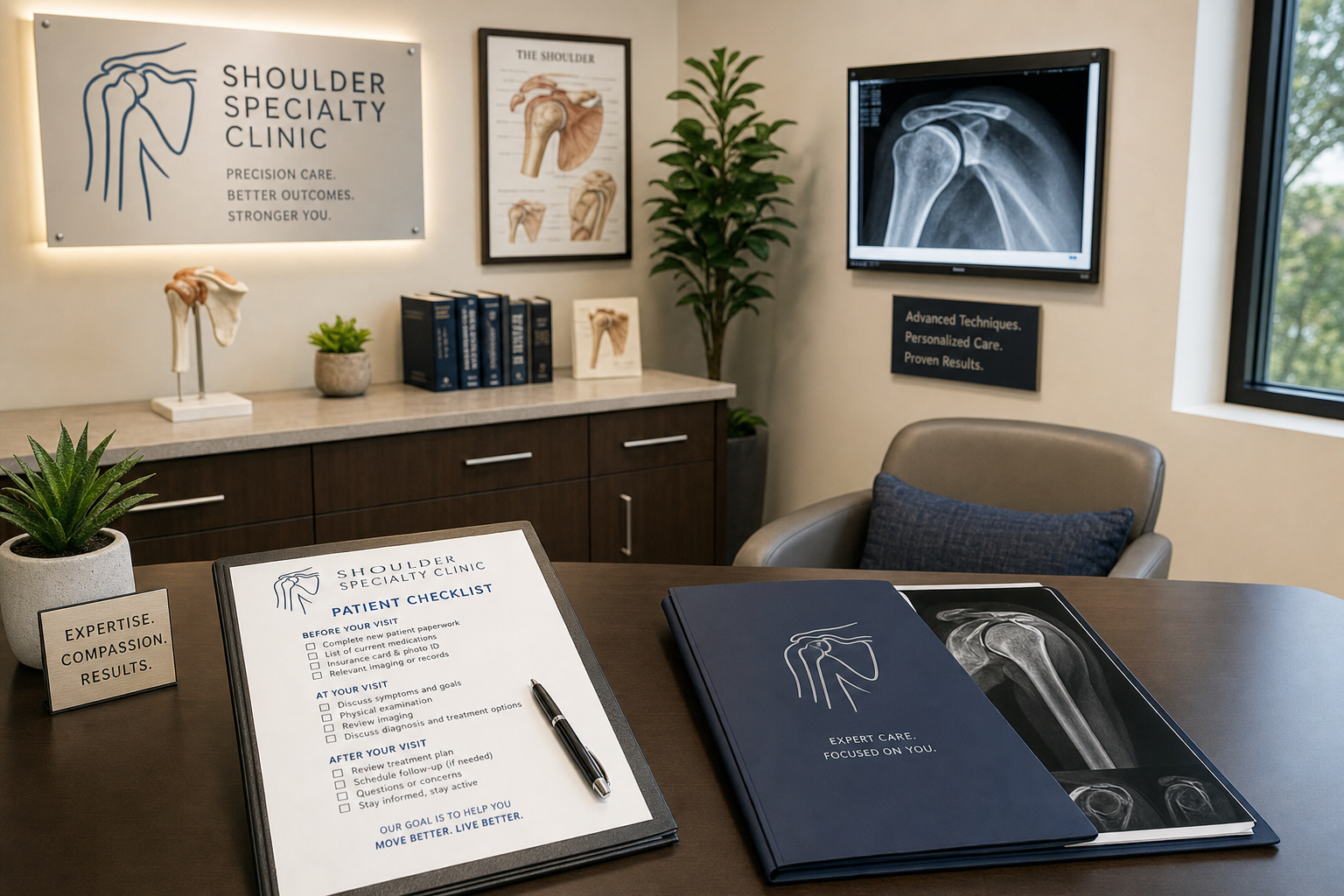
First Shoulder Specialist Visit Checklist
Using a shoulder specialist visit checklist before your first appointment can make a real difference in the quality of care you receive. At Varma Shoulder Institute in Clermont, Florida, we want every new patient to walk in prepared, confident, and ready to have a productive conversation about their shoulder health. Whether you are dealing with a rotator cuff injury, chronic shoulder pain, or a recent sports injury, arriving organized helps Dr. Varma provide the most accurate evaluation possible.
A well-prepared first visit sets the foundation for effective shoulder care. The more context your surgeon has from the start, the more efficiently your evaluation can move from assessment to a clear treatment plan. The sections below walk through everything you need to know before, during, and after your first appointment at a shoulder specialty practice.
Why Preparation Matters Before Your First Shoulder Visit
Shoulder conditions range widely in cause and complexity — from rotator cuff tears and impingement to frozen shoulder and arthritis. A shoulder specialist needs a complete picture of your history to distinguish between conditions that may look similar on the surface but require very different treatments.
When patients arrive without prior imaging or a clear symptom timeline, the first appointment often becomes a data-gathering session rather than a diagnostic one. This can add unnecessary delays to your care. Preparation is not just about paperwork — it is about giving your surgeon the tools to help you faster.
At Varma Shoulder Institute, our new patient intake process is designed to be thorough but efficient. Bringing the right materials means Dr. Varma can spend more of your appointment time on examination, explanation, and planning — not chasing down records.
What to Bring to Your New Patient Shoulder Evaluation
Use this checklist to make sure you arrive fully prepared for your new patient shoulder evaluation at Varma Shoulder Institute:
- Photo ID and insurance card(s): Bring a valid government-issued ID and all active insurance cards. VSI accepts Aetna, Cigna, Florida Blue/BCBS, UnitedHealthcare, Medicare, Tricare, and self-pay.
- Completed new patient forms: If forms were sent in advance, complete them before arriving to save time at check-in.
- List of current medications: Include prescription drugs, over-the-counter pain relievers, supplements, and any injections you have received for shoulder pain.
- Prior imaging on disc or digital format: X-rays, MRI, CT scans, or ultrasound studies related to your shoulder.
- Referral letter (if applicable): If your primary care physician or another specialist referred you, bring that documentation.
- Written symptom summary: Note when your pain started, what activities trigger it, whether it wakes you at night, and any prior treatments you have tried.
- Comfortable clothing: Wear or bring a loose-fitting top that allows easy access to your shoulder for examination.
Insurance coverage and out-of-pocket costs vary by plan and individual circumstance. Verify benefits directly with your insurance carrier and Varma Shoulder Institute before scheduling treatment.
How to Organize Imaging, Test Results, and Medical History
Imaging is one of the most valuable tools a shoulder surgeon has. If you have had X-rays or an MRI taken at another facility, request the images on a disc or through a digital transfer portal before your appointment. Reports alone are helpful, but the actual images allow Dr. Varma to perform his own interpretation rather than relying solely on a radiologist’s summary.
Organize your records chronologically. If you have had shoulder issues for several years, a timeline helps identify whether the condition is progressing, stable, or responding to prior treatment. Include notes from any physical therapy you have completed, as well as any injections (cortisone, PRP) and their outcomes.
For patients with prior shoulder surgery, bring operative reports if available. These documents describe exactly what was done during the procedure and are essential context for any follow-up care or revision evaluation. The American Academy of Orthopaedic Surgeons recommends patients maintain organized records of all prior musculoskeletal treatments.
What Dr. Varma Will Ask About Your Shoulder Symptoms
During your consultation, Dr. Amit Varma — a double-fellowship-trained shoulder surgeon who completed training at the Rothman Institute and the Andrews Institute — will conduct a detailed symptom interview before the physical examination. Anticipating these questions helps you give more precise answers.
- When did the pain start? Was it sudden (trauma, fall, sports injury) or gradual (overuse, aging)?
- Where exactly is the pain? Front of the shoulder, top, back, or radiating down the arm?
- What makes it worse? Overhead activity, reaching behind your back, sleeping on that side, or lifting?
- What makes it better? Rest, ice, anti-inflammatories, or a specific position?
- Have you had prior shoulder injuries or surgeries? Even old injuries from years ago are relevant.
- What treatments have you already tried? Physical therapy, injections, chiropractic care, or medications?
- How is the pain affecting your daily life? Work, sleep, sports, and personal care activities all matter.
Writing down your answers before the visit — even brief notes — ensures you do not forget important details during the appointment.
What Happens During the Physical Exam and Treatment Discussion
After the symptom interview, Dr. Varma will perform a structured physical examination of your shoulder. This typically includes assessing your range of motion, strength testing, palpation of key anatomical landmarks, and specific orthopedic tests designed to identify the likely source of pain. For example, impingement tests, rotator cuff strength assessments, and instability checks each target different structures.
If imaging has not yet been obtained, or if existing imaging is insufficient, Dr. Varma may order X-rays in the office or refer you for an MRI. In some cases, a diagnostic ultrasound may be used to assess soft tissue structures in real time.
Following the exam, you will have a treatment discussion. This may include non-surgical options such as physical therapy, anti-inflammatory medications, or targeted injections, or a recommendation for surgical intervention depending on the diagnosis. Our team at Varma Shoulder Institute always explains the reasoning behind each recommendation so you can make an informed decision about your care.
Questions New Patients Should Ask a Shoulder Specialist
Arriving with prepared questions helps you leave the appointment with clarity. Consider asking:
- What is my most likely diagnosis based on today’s exam?
- Do I need additional imaging before a treatment plan can be finalized?
- What are my non-surgical options, and how long should I try them before considering surgery?
- If surgery is recommended, what procedure would you perform and why?
- What is the expected recovery timeline for my condition?
- Will I need physical therapy, and for how long?
- What happens if I delay treatment?
You can also ask about second opinions. Varma Shoulder Institute welcomes patients seeking a second opinion and can typically provide one within 48 hours. There is no pressure — our goal is to make sure you have the information you need to move forward confidently. To get started, contact our Clermont shoulder team to request your consultation.
Common Mistakes That Can Delay Diagnosis or Treatment
Even well-intentioned patients sometimes make avoidable errors that slow down their path to relief. Here are the most common ones we see:
- Waiting too long to seek evaluation: Many patients manage shoulder pain with over-the-counter medications for months before seeing a specialist. Some conditions, like full-thickness rotator cuff tears, can worsen significantly with delay.
- Not bringing prior imaging: Arriving without X-rays or MRI images means the first appointment may need to be repeated or extended to gather baseline data.
- Underreporting symptoms: Patients sometimes minimize pain to avoid seeming dramatic. Accurate symptom reporting — including nighttime pain and functional limitations — is essential for diagnosis.
- Stopping physical therapy prematurely: If conservative treatment has been recommended, completing the full course is important before concluding it has failed.
- Self-diagnosing from online searches: Shoulder pain has many overlapping causes. A clinical examination and imaging are necessary for an accurate diagnosis — online symptom checkers are not a substitute.
- Ignoring red-flag symptoms: Sudden severe pain after trauma, inability to raise the arm, or significant swelling warrant prompt evaluation, not a wait-and-see approach.
When Shoulder Pain May Need Urgent Evaluation
Most shoulder pain can be evaluated on a scheduled basis, but certain symptoms suggest a more urgent need for assessment. Seek prompt care if you experience:
- Sudden inability to move the shoulder after a fall or collision
- Visible deformity or significant swelling following trauma
- Severe pain that does not respond to rest or over-the-counter medication
- Numbness, tingling, or weakness radiating down the arm
- Signs of shoulder dislocation (the shoulder appears “out of place”)
The AAOS notes that dislocated shoulders and acute fractures require timely orthopedic evaluation to prevent long-term complications. Varma Shoulder Institute offers same-week appointments for urgent shoulder concerns — call (352) 404-8956 to speak with our team.
What a Prepared First Visit Looks Like
Frequently Asked Questions
What should I bring to my first shoulder specialist appointment?
Bring a photo ID, insurance cards, a list of current medications, any prior shoulder imaging (X-rays, MRI, or CT scans on disc or digital format), and a written summary of your symptoms including when they started and what makes them worse. Completed new patient forms, if sent in advance, should also be brought to your appointment.
Do I need a referral to see a shoulder specialist at Varma Shoulder Institute?
Many insurance plans allow direct access to orthopedic specialists without a referral, but requirements vary by plan. Contact Varma Shoulder Institute at (352) 404-8956 or verify with your insurance carrier before scheduling to confirm whether a referral is needed for your specific plan.
How long does a new patient shoulder evaluation typically take?
A thorough new patient shoulder evaluation generally takes 45 to 60 minutes, including the symptom interview, physical examination, imaging review, and treatment discussion. Arriving with complete records and completed paperwork helps ensure the appointment stays focused on your diagnosis and care plan.
Can I get a second opinion on my shoulder diagnosis at Varma Shoulder Institute?
Yes. Varma Shoulder Institute welcomes second opinion consultations and can typically schedule them within 48 hours. Dr. Amit Varma will review your existing imaging and records and provide an independent assessment of your diagnosis and treatment options.
What insurance plans does Varma Shoulder Institute accept?
VSI accepts Aetna, Cigna, Florida Blue/BCBS, UnitedHealthcare, Medicare, Tricare, and self-pay. Coverage details vary by individual plan, so it is recommended to verify your specific benefits with both your carrier and VSI before your appointment.
What if I do not have prior imaging before my first appointment?
You can still attend your appointment without prior imaging. Dr. Varma may order X-rays in the office or refer you for an MRI following the physical examination. Having prior imaging available simply allows the evaluation to move more efficiently, but it is not a requirement for scheduling.
How soon can I be seen at Varma Shoulder Institute?
Varma Shoulder Institute offers same-week appointments for new patients. Call (352) 404-8956 or visit varmashoulderinstitute.com to request your appointment. Urgent shoulder concerns, including post-injury evaluations, are prioritized whenever possible.
Update Log
- May 2026: Article published with full new patient checklist, symptom preparation guide, and FAQ accordion. Content reviewed for accuracy against current VSI intake protocols and AAOS patient education resources.