

Failed Shoulder Surgery: When to Get a Second Opinion
A failed shoulder surgery second opinion could be the most important step you take if pain, stiffness, or weakness has persisted long after your procedure. At Varma Shoulder Institute, we regularly evaluate patients who were told their surgery went well but who still cannot lift their arm, sleep through the night, or return to the activities they love. You deserve clear answers — and a clear path forward.
Shoulder surgery is intended to restore function and relieve pain. When it does not, the experience can be frustrating, confusing, and even frightening. Understanding why surgery sometimes falls short — and knowing what to do next — is the first step toward recovery.
When Persistent Pain After Shoulder Surgery Is Not Normal
Some discomfort in the weeks immediately following shoulder surgery is expected. Swelling, soreness, and limited range of motion are part of the healing process. However, pain that remains severe beyond three to six months, motion that does not improve with physical therapy, or new symptoms such as instability or grinding are not typical milestones of recovery.
According to the American Academy of Orthopaedic Surgeons, most patients who undergo shoulder surgery should experience meaningful improvement in pain and function within several months, provided they follow their rehabilitation program. If that improvement is not occurring, something may have gone wrong — and you have every right to find out what.
At Varma Shoulder Institute, we see patients who have been waiting months or even years for improvement that never came. Our role is to provide an honest, thorough evaluation — not to simply validate a prior surgical decision.
Common Reasons Shoulder Surgery Can Fail
Shoulder surgery can fall short for a variety of reasons, and understanding them helps set realistic expectations for a second opinion visit. Common causes include:
- Retear of the rotator cuff: Repaired tendons can re-tear, particularly if the initial tear was large, if healing was compromised, or if rehabilitation was not followed carefully. The AAOS notes that larger tears carry a higher risk of re-tear after repair.
- Implant loosening or malposition: In shoulder replacement surgery, components can loosen over time or may not have been positioned optimally at the time of surgery.
- Postoperative stiffness (arthrofibrosis): Excessive scar tissue can develop after any shoulder procedure, severely limiting motion even when the original repair is intact.
- Infection: Though uncommon, deep infection after shoulder surgery can cause persistent pain and may require additional treatment.
- Nerve injury: Injury to nearby nerves during surgery can cause weakness, numbness, or pain that outlasts the original condition.
- Missed diagnosis: Occasionally, the original diagnosis was incomplete, and a contributing condition — such as a SLAP tear, labral injury, or cervical spine problem — was not addressed.
Signs You Should Get a Second Opinion
You should strongly consider a shoulder surgery second opinion if you are experiencing any of the following:
- Pain that has not meaningfully improved after three to six months of recovery and physical therapy
- Inability to raise your arm above shoulder height when you could do so before surgery
- New or worsening instability — a feeling that the shoulder is slipping or giving way
- Grinding, clicking, or catching sensations that were not present before surgery
- Numbness or weakness in the arm or hand that developed after the procedure
- Your surgeon has recommended revision surgery but you want to confirm the recommendation
- You feel your concerns have not been fully heard or explained
What a Shoulder Surgery Second Opinion Should Include
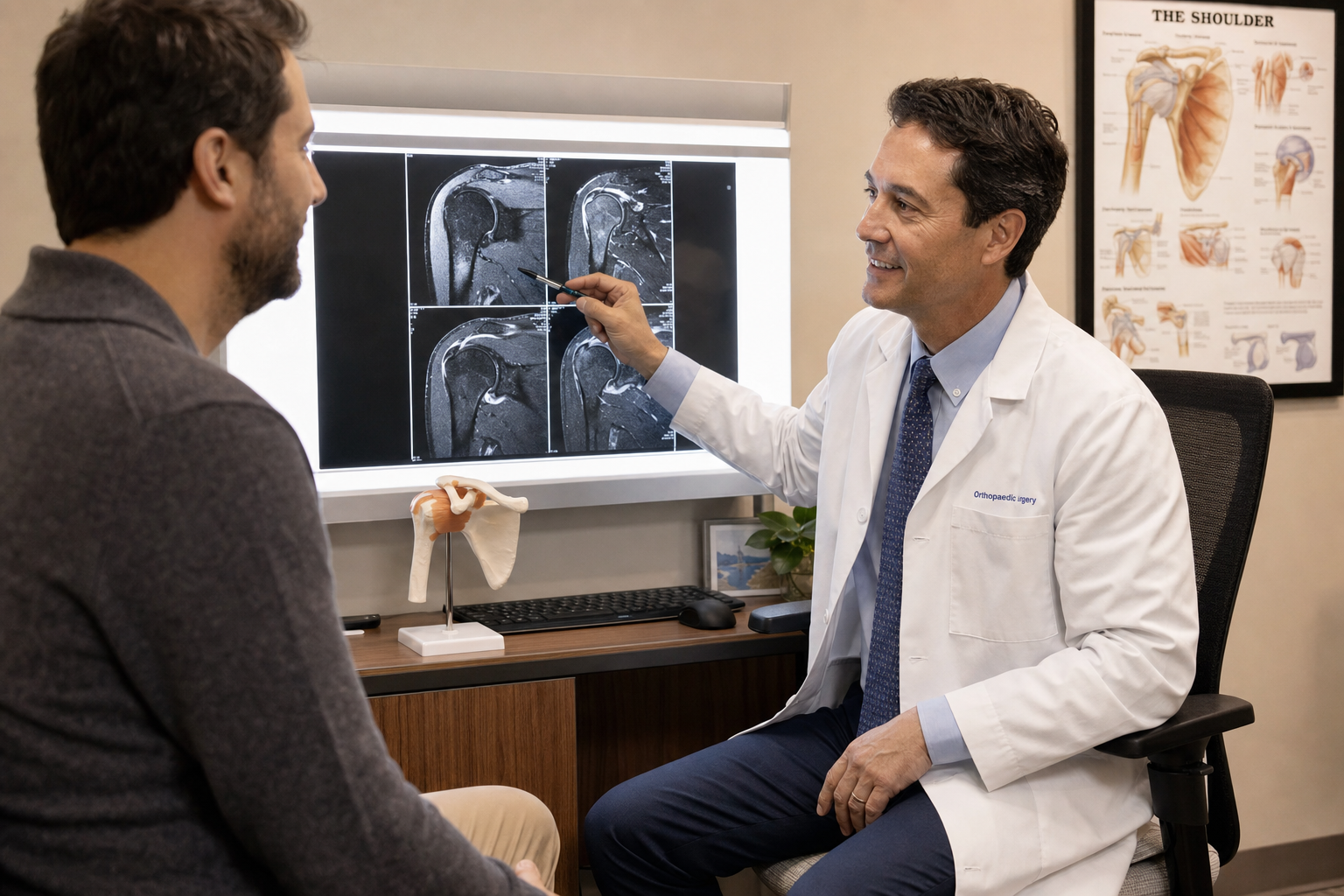
A meaningful second opinion is not simply a brief conversation. It should be a comprehensive clinical evaluation. When you visit Varma Shoulder Institute for a second opinion, our team conducts a structured review that includes:
- Surgical record review: We request and review your operative report, prior imaging, and any post-surgical notes to understand exactly what was done and how healing has progressed.
- Updated physical examination: Range of motion, strength testing, and specific provocative tests help us assess your current shoulder function independently of prior findings.
- New or updated imaging: In many cases, updated MRI or X-ray imaging is needed to evaluate the current state of the repair, implant, or surrounding structures.
- Honest discussion of options: We explain what we find, what it means, and what your realistic options are — including both surgical and non-surgical paths.
Dr. Amit Varma, a double-fellowship-trained shoulder surgeon who completed training at the Rothman Institute under Dr. Michael Ciccotti and the Andrews Institute under Dr. James Andrews, brings subspecialty expertise to every second opinion evaluation. His focus is exclusively on the shoulder and elbow, which means he has seen a wide range of outcomes — including complex revision cases — and can offer an informed, independent perspective.
Tests That May Help Identify Ongoing Shoulder Pain
Identifying the cause of persistent postoperative pain often requires updated diagnostic imaging. Commonly used tests include:
- MRI (with or without arthrogram): MRI remains the most useful tool for evaluating soft tissue structures such as the rotator cuff, labrum, and biceps tendon. An arthrogram (dye injection before MRI) can improve visualization of subtle tears or implant-related changes.
- X-ray: Plain X-rays are essential for evaluating implant position, bone quality, and signs of loosening in shoulder replacement patients.
- CT scan: CT imaging provides detailed bone anatomy and is particularly useful when implant malposition or bone loss is suspected.
- EMG/nerve conduction studies: If nerve injury is suspected, these tests can help localize the problem and guide treatment.
The peer-reviewed literature supports a systematic imaging approach when evaluating failed shoulder surgery, as the cause is not always apparent from symptoms alone.
When Revision Surgery May Help — and When It May Not
Revision shoulder surgery can be highly effective when the underlying cause of failure is clearly identified and correctable. For example, a confirmed retear of a rotator cuff repair in an otherwise healthy patient with good bone and tissue quality may be an excellent candidate for revision arthroscopic repair. Similarly, a loose or malpositioned shoulder replacement component may be correctable with revision arthroplasty.
However, revision surgery is not always the answer. When pain is caused by nerve injury, widespread arthrofibrosis, or a condition unrelated to the original surgery, additional operations may not provide meaningful relief. This is why an honest, thorough second opinion — rather than an automatic recommendation for more surgery — is so important.
Non-Surgical Options Before Another Operation
Before committing to revision surgery, our team at Varma Shoulder Institute explores whether non-surgical approaches can meaningfully improve your condition. These may include:
- Structured physical therapy: A targeted rehabilitation program addressing specific deficits — such as posterior capsule tightness or rotator cuff weakness — can produce significant improvement even after a prior surgery.
- PRP (platelet-rich plasma) injections: For patients with partial retears or tendon degeneration, PRP therapy may support tissue healing and reduce inflammation.
- Corticosteroid injections: Carefully timed injections can reduce pain and inflammation, allowing more effective participation in physical therapy.
- Activity modification and pain management: In some cases, adjusting activity levels and optimizing pain management provides adequate relief without further surgery.
We discuss all relevant options with you before any surgical recommendation is made. Our goal is the right treatment for your specific situation — not the most aggressive one. You can schedule an evaluation with our Clermont shoulder team to review your case in detail.
How to Prepare for Your Second Opinion Visit in Clermont
Getting the most from your second opinion visit starts before you arrive. We recommend:
- Requesting a copy of your operative report and any post-surgical clinic notes from your prior surgeon
- Bringing or requesting copies of all imaging studies (MRI, X-ray, CT) on disc or through a digital transfer
- Writing down your current symptoms, when they started or changed, and what makes them better or worse
- Listing all medications, supplements, and any prior physical therapy programs you have completed
- Preparing specific questions you want answered (see the next section)
Varma Shoulder Institute is located in Clermont, Florida, and serves patients from throughout Central Florida, including Orlando, Kissimmee, Leesburg, and surrounding communities. Same-week appointments are available, and second opinion consultations are typically scheduled within 48 hours.
Questions to Ask Before Deciding on Revision Shoulder Surgery
Before agreeing to any revision procedure, make sure you have clear answers to the following:
- What specifically caused my original surgery to fail?
- Is the cause of failure clearly identified on imaging or examination, or is it uncertain?
- What are the realistic goals of revision surgery — full recovery, partial improvement, or pain reduction?
- What are the risks of revision surgery compared to the original procedure?
- Have all non-surgical options been fully explored?
- What happens if I choose not to have revision surgery?
- How many revision shoulder surgeries has this surgeon performed, and what is their subspecialty training?
Common Mistakes Patients Make After a Failed Shoulder Surgery
Patients navigating a failed shoulder surgery often make decisions that delay recovery or lead to further complications. The most common mistakes include:
- Waiting too long to seek evaluation: Assuming that more time will resolve the problem can allow underlying issues — such as a retear or infection — to worsen. If something feels wrong beyond the expected recovery window, act on it.
- Skipping or stopping physical therapy: Rehabilitation is essential after shoulder surgery. Stopping early because of pain or frustration can prevent the shoulder from reaching its potential, even when the repair itself is intact.
- Accepting vague reassurance: Being told to “give it more time” without a clear explanation of why symptoms persist is not sufficient. You deserve a specific answer.
- Agreeing to revision surgery without a second opinion: Revision shoulder surgery is more complex than primary surgery. Confirming the recommendation with a subspecialty-trained surgeon is a reasonable and responsible step.
- Self-diagnosing based on online information: While general education is helpful, shoulder conditions are complex and require hands-on evaluation. Online symptom checkers cannot replace a physical examination and updated imaging.
Frequently Asked Questions
How do I know if my shoulder surgery actually failed?
Signs of a failed shoulder surgery include persistent pain beyond three to six months, inability to regain expected range of motion, new instability, or worsening symptoms after an initial period of improvement. A physical examination and updated imaging are needed to confirm the cause.
Is it normal to still have pain six months after rotator cuff surgery?
Some residual soreness at six months can be normal, particularly after large tear repairs. However, significant pain, weakness, or inability to use the arm for daily activities at six months is not typical and warrants evaluation by a shoulder specialist.
Will getting a second opinion offend my original surgeon?
Seeking a second opinion is a standard and accepted part of medical care, particularly before revision surgery. Most surgeons understand and support this process. Your health and confidence in your treatment plan are the priority.
How quickly can I get a second opinion at Varma Shoulder Institute?
Varma Shoulder Institute offers second opinion consultations typically within 48 hours. Same-week appointments are available. Call (352) 404-8956 or visit our website to request your evaluation.
Does insurance cover a shoulder surgery second opinion?
Many insurance plans, including Aetna, Cigna, Florida Blue/BCBS, UnitedHealthcare, Medicare, and Tricare, cover second opinion consultations. Coverage varies by plan, so we recommend verifying your benefits before your visit. Varma Shoulder Institute also accepts self-pay patients.
What is the difference between a failed rotator cuff repair and a retear?
A retear refers specifically to the repaired tendon tearing again after surgery. A failed rotator cuff repair is a broader term that can include retear, incomplete healing, stiffness, or persistent pain even when the repair appears structurally intact on imaging.
Can Dr. Varma perform revision shoulder surgery if it is needed?
Yes. Dr. Amit Varma is a double-fellowship-trained shoulder surgeon with subspecialty expertise in revision shoulder surgery, including revision rotator cuff repair and revision shoulder replacement. If revision surgery is the right option after your second opinion evaluation, our team can provide that care at Varma Shoulder Institute in Clermont, Florida.
Update Log
- May 2026: Article published covering indications for a failed shoulder surgery second opinion, common causes of surgical failure, diagnostic workup, revision surgery considerations, and non-surgical alternatives available at Varma Shoulder Institute.