

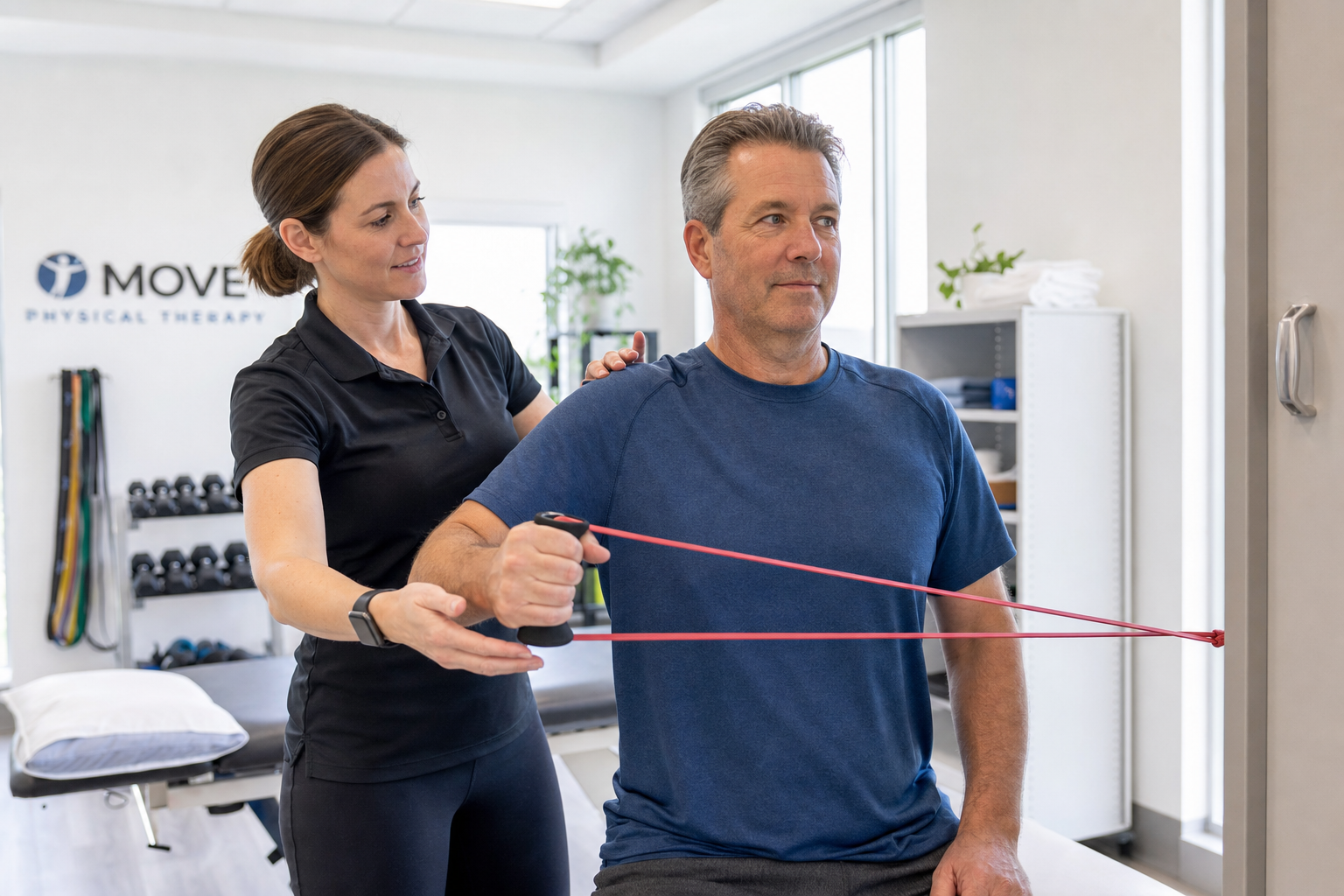
Shoulder Impingement Treatment Before Surgery
Non-surgical shoulder impingement treatment is the first and most important step for most patients experiencing subacromial pain, rotator cuff tendinitis, or shoulder bursitis. At Varma Shoulder Institute, we evaluate each patient individually to determine whether conservative care can restore comfortable shoulder function — and for many people, it can. Understanding your options before considering surgery helps you make a confident, informed decision about your shoulder health.
Shoulder impingement — sometimes called subacromial impingement syndrome — is among the most frequently diagnosed causes of shoulder pain in adults. The good news is that a structured, evidence-informed approach to conservative care resolves symptoms for a significant portion of patients. This guide walks through what impingement is, which non-surgical treatments are most effective, and how to recognize when surgery may be the right next step.
What Shoulder Impingement Is and Why It Hurts
Shoulder impingement occurs when the tendons of the rotator cuff — the group of muscles and tendons that stabilize the shoulder joint — become compressed or irritated as they pass through the narrow subacromial space beneath the acromion bone. This compression leads to inflammation of the tendons (rotator cuff tendinitis) and sometimes the bursa (shoulder bursitis), producing pain with overhead activity, reaching behind the back, or lifting.
Common causes include repetitive overhead motion, poor posture, muscle imbalances, bone spurs, or age-related changes to the shoulder anatomy. According to OrthoInfo from the American Academy of Orthopaedic Surgeons, shoulder impingement is one of the most common causes of shoulder pain, particularly in adults over 40 and in athletes who perform repetitive overhead movements.
Who May Improve Without Surgery
Not every patient with shoulder impingement requires surgery. Many people — particularly those with mild to moderate symptoms, no significant rotator cuff tear, and no structural bone abnormality — respond well to a consistent non-surgical program. Patients who are good candidates for conservative care typically have pain that has been present for less than several months, retain most of their shoulder range of motion, and have not experienced a traumatic injury to the shoulder.
If you are experiencing shoulder pain and wondering whether surgery is necessary, our team at Varma Shoulder Institute encourages you to schedule a consultation first. A thorough clinical examination and imaging review can clarify whether conservative treatment is a realistic path for your specific situation. You can request a same-week shoulder evaluation at our Clermont office to get started.
Non-Surgical Treatments to Try Before Surgery
A comprehensive non-surgical shoulder impingement treatment plan typically combines several approaches working together. No single intervention is sufficient on its own.
- Activity modification: Temporarily reducing or avoiding overhead activities, heavy lifting, and repetitive reaching that aggravate symptoms allows the inflamed tissue to calm down.
- Anti-inflammatory medication: Over-the-counter NSAIDs such as ibuprofen or naproxen can reduce pain and swelling when used as directed. Always consult your physician before starting any medication regimen.
- Physical therapy: A structured program targeting rotator cuff strength, scapular control, and posture correction is the most important component of conservative care (see the section below).
- Ice and heat: Applying ice after activity can help manage acute inflammation; heat may be useful for muscle relaxation before exercise.
- Corticosteroid injections: When pain is severe enough to limit participation in physical therapy, a subacromial injection may provide temporary relief that enables rehabilitation to proceed.
The AAOS patient education resource on shoulder pain reinforces that most shoulder conditions — including impingement — benefit from a trial of conservative management before surgical options are considered.
How Physical Therapy Helps Shoulder Impingement
Shoulder impingement physical therapy is the backbone of non-surgical care. A qualified physical therapist works to correct the underlying muscle imbalances and movement patterns that contribute to impingement in the first place. Key components of an effective program include:
- Rotator cuff strengthening: Exercises targeting the infraspinatus, supraspinatus, teres minor, and subscapularis help restore dynamic stability to the glenohumeral joint, reducing the mechanical compression that causes pain.
- Scapular stabilization: Weakness in the muscles that control the shoulder blade (scapula) is a common contributor to impingement. Exercises that improve scapular positioning reduce the likelihood of tendon compression during arm elevation.
- Postural correction: Forward head posture and rounded shoulders narrow the subacromial space. Addressing these patterns through stretching and strengthening can meaningfully reduce symptoms.
- Range-of-motion work: Gentle stretching to restore full shoulder mobility is incorporated progressively as pain allows.
- Functional retraining: For athletes or workers with repetitive overhead demands, sport- or task-specific movement retraining helps prevent recurrence.
Physical therapy is most effective when it is consistent and supervised. A program of 6 to 12 weeks is typically recommended before reassessing progress.
What to Avoid While Your Shoulder Is Healing
Certain habits and activities can slow recovery or worsen impingement symptoms. Patients should be aware of the following common pitfalls during conservative treatment:
- Continuing overhead activities that reproduce sharp pain — pushing through significant pain delays healing.
- Sleeping on the affected shoulder, which can increase nighttime pain and inflammation.
- Stopping physical therapy prematurely because symptoms improve — early improvement does not mean the underlying weakness is resolved.
- Relying solely on pain medication without addressing the mechanical cause of impingement.
- Ignoring worsening symptoms or new weakness, which may signal a developing rotator cuff tear requiring prompt evaluation.
When Injections May Be Appropriate
Corticosteroid injections into the subacromial space can be a useful tool in the management of shoulder impingement, particularly when pain is severe enough to prevent meaningful participation in physical therapy. The injection reduces local inflammation, providing a window of reduced pain during which rehabilitation exercises can be performed more effectively.
It is important to understand that injections treat the symptom — inflammation — rather than the underlying cause. They are most beneficial when used as part of a broader treatment plan that includes physical therapy and activity modification. Repeated injections over a short period are generally avoided, as frequent corticosteroid use can weaken tendon tissue over time. Your physician will determine whether an injection is appropriate based on your specific clinical picture.
For patients interested in regenerative options, platelet-rich plasma (PRP) injections are another avenue that may be discussed during a consultation. At Varma Shoulder Institute, we evaluate each patient’s candidacy for PRP on an individual basis.
Signs Non-Surgical Treatment Is Not Enough
Conservative care is effective for many patients, but it is not universally successful. Certain signs suggest that non-surgical treatment may not be providing adequate relief and that a more detailed evaluation — or a surgical discussion — may be warranted:
- Persistent pain after 3 to 6 months of consistent, supervised physical therapy
- Significant weakness in the shoulder that does not improve with strengthening exercises
- Night pain that consistently disrupts sleep despite conservative measures
- Imaging findings (MRI) revealing a partial or full-thickness rotator cuff tear that may require repair
- Functional limitations that prevent you from performing work, sport, or daily activities
If you are experiencing any of these signs, it is time to revisit your diagnosis with a fellowship-trained shoulder specialist. Our team can provide a second opinion within 48 hours for patients who are uncertain about their current treatment plan.
When Surgery Becomes the Better Option
When non-surgical shoulder impingement treatment has been given a genuine trial and symptoms persist, surgery may offer the most reliable path to lasting relief. The most common surgical procedure for impingement is arthroscopic subacromial decompression, in which a small camera and instruments are used to remove bone spurs and inflamed bursal tissue that are compressing the rotator cuff tendons. If a rotator cuff tear is present, it may be repaired at the same time.
According to OrthoInfo on shoulder arthroscopy, arthroscopic procedures offer the advantage of smaller incisions, reduced recovery time, and lower risk of complications compared to open surgery. The decision to proceed with surgery should always be made collaboratively between the patient and a qualified shoulder surgeon after a thorough evaluation.
How a Shoulder Specialist Evaluates Impingement
A proper evaluation for shoulder impingement goes beyond a brief physical exam. Double-fellowship-trained shoulder surgeon Dr. Amit Varma — who completed fellowships at the Rothman Institute under Dr. Michael Ciccotti and the Andrews Institute under Dr. James Andrews — conducts a comprehensive assessment that includes a detailed history of symptoms, physical examination of shoulder strength and range of motion, provocative impingement tests, and review of imaging studies including X-rays and MRI when indicated.
This thorough approach ensures that the correct diagnosis is established before any treatment plan is recommended. Impingement symptoms can sometimes overlap with other conditions such as a SLAP tear, AC joint arthritis, or a partial rotator cuff tear — conditions that may require different management strategies. Getting the diagnosis right from the start saves time, money, and unnecessary treatment.
The American Shoulder and Elbow Surgeons emphasizes the importance of specialist-level evaluation for shoulder conditions to ensure accurate diagnosis and appropriate treatment planning.
Next Steps for Patients in Clermont and Central Florida
Varma Shoulder Institute provides comprehensive non-surgical and surgical shoulder care for patients throughout Clermont, Orlando, and Central Florida. Whether you are in the early stages of shoulder pain or have been dealing with impingement symptoms for months without resolution, our team is here to help you find the right path forward.
At Varma Shoulder Institute, we believe that surgery should be a last resort — not a first response. We take the time to understand your goals, your lifestyle, and your shoulder’s specific anatomy before recommending any course of action. Same-week consultation appointments are available, and we accept Aetna, Cigna, Florida Blue/BCBS, UnitedHealthcare, Medicare, Tricare, and self-pay.
Common Mistakes Patients Make with Shoulder Impingement
Before we get to frequently asked questions, it is worth highlighting the most common mistakes patients make when managing shoulder impingement — because avoiding these errors can significantly improve your outcome.
- Delaying evaluation: Many patients wait months or years before seeing a specialist, allowing the condition to worsen and potentially develop into a rotator cuff tear.
- Self-diagnosing and self-treating: Shoulder pain has many causes. Treating yourself for impingement when you actually have a rotator cuff tear or labral injury can lead to wasted time and worsened damage.
- Stopping physical therapy too soon: Symptom improvement in the first few weeks of PT does not mean the underlying weakness is resolved. Completing the full program is essential.
- Relying on injections alone: Corticosteroid injections are a bridge to rehabilitation, not a standalone cure. Patients who skip PT after an injection often see symptoms return.
- Ignoring red-flag symptoms: Sudden weakness, inability to lift the arm, or pain following a fall or injury should prompt immediate evaluation — these may indicate an acute rotator cuff tear.
Frequently Asked Questions
How long does non-surgical shoulder impingement treatment take to work?
Most patients who respond to conservative care see meaningful improvement within 6 to 12 weeks of consistent physical therapy and activity modification. If significant pain persists beyond 3 to 6 months of structured treatment, a surgical evaluation may be appropriate.
Can shoulder impingement heal on its own without treatment?
Mild impingement symptoms may improve with rest and activity modification alone, but the underlying muscle imbalances and mechanical issues that caused impingement typically require targeted physical therapy to resolve. Without addressing the root cause, symptoms often return.
Is shoulder impingement the same as a rotator cuff tear?
No, but they are related. Shoulder impingement refers to compression and irritation of the rotator cuff tendons, while a rotator cuff tear is an actual disruption of the tendon tissue. Chronic impingement can contribute to the development of a rotator cuff tear over time. An MRI can distinguish between the two conditions.
Are corticosteroid injections safe for shoulder impingement?
When used appropriately and infrequently, subacromial corticosteroid injections are generally safe and can provide meaningful short-term pain relief. Repeated injections over a short period are typically avoided due to the potential for tendon weakening. Your physician will determine whether an injection is appropriate for your situation.
When should I see a shoulder specialist for impingement?
You should see a specialist if your shoulder pain has persisted for more than a few weeks, is worsening, is accompanied by weakness or inability to lift your arm, or is not responding to rest and over-the-counter anti-inflammatories. At Varma Shoulder Institute, Dr. Varma offers same-week appointments for patients in Clermont and Central Florida — call (352) 404-8956 to schedule.
What exercises help shoulder impingement?
Exercises that strengthen the rotator cuff (such as external rotation with a resistance band) and improve scapular stability (such as rows and scapular retractions) are commonly used in physical therapy for impingement. These should be performed under the guidance of a physical therapist to ensure correct form and appropriate progression.
Does Varma Shoulder Institute offer second opinions for shoulder impingement?
Yes. Varma Shoulder Institute provides second opinions within 48 hours for patients who are uncertain about their diagnosis or treatment plan. Contact our Clermont office at (352) 404-8956 or visit varmashoulderinstitute.com to request an appointment.
Update Log
- May 2026: Article reviewed and updated to reflect current conservative care protocols for subacromial impingement, including updated guidance on physical therapy sequencing and injection use. Outbound references verified against current AAOS and ASES resources.