


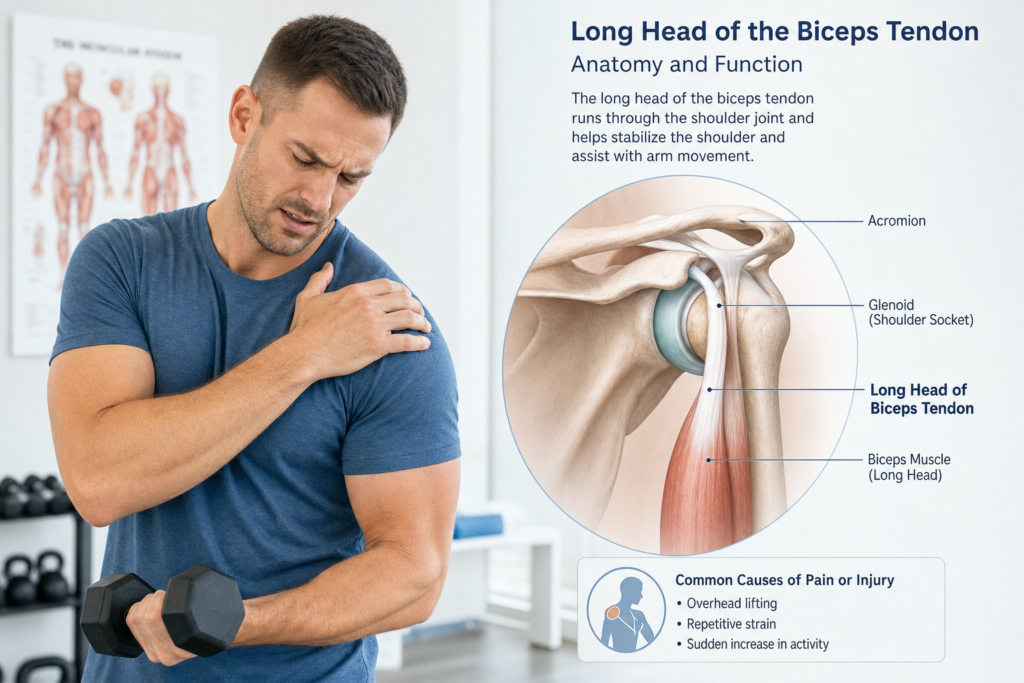
Biceps Tendon Shoulder Pain Treatment Options
Front-of-shoulder pain with lifting, reaching overhead, or pulling can come from the long head of the biceps tendon. This tendon runs through the front of the shoulder and attaches near the top of the labrum, so irritation, partial tearing, instability, or related labral and rotator cuff problems can create similar symptoms. Understanding what is driving the pain helps guide the right treatment plan.
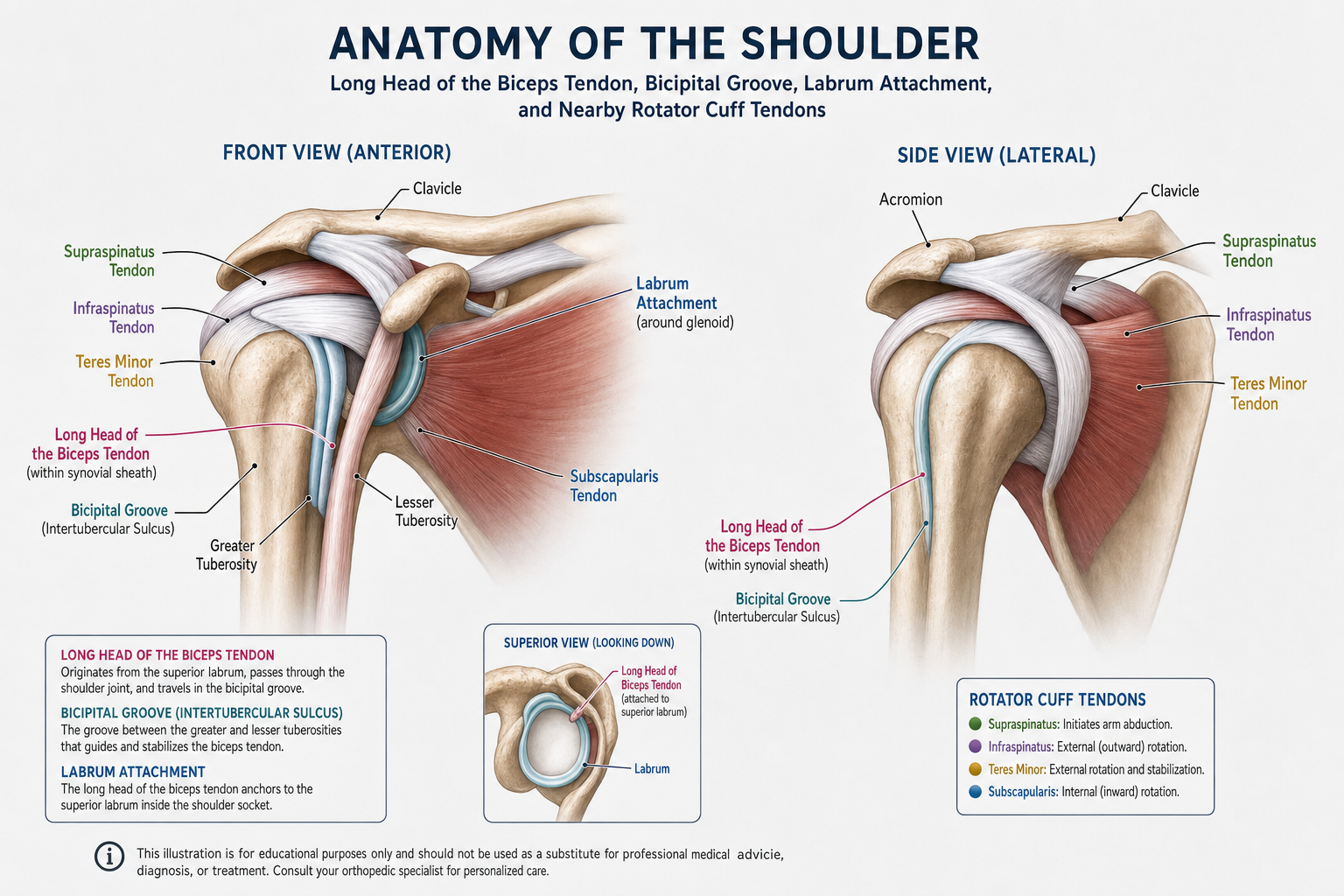
The biceps tendon has two proximal attachments at the shoulder. The long head, the portion most often linked to anterior shoulder pain, passes through the bicipital groove and attaches near the superior labrum. Because of that course, it can be irritated on its own or alongside other problems. For a broader overview, see shoulder pain causes.
What Biceps Tendon Shoulder Pain Feels Like
People often describe a dull ache or sharp pain at the front of the shoulder, especially with lifting in front of the body, overhead activity, pulling, or forearm rotation. Some also notice clicking, catching, or pain that is hard to separate from the top or deep part of the shoulder.
When the long head tendon ruptures, a visible bulge in the upper arm, sometimes called a Popeye deformity, can appear. The amount of weakness varies. Some people mainly notice cosmetic change and cramping, while others, especially active adults, notice more bothersome pain or loss of strength with lifting and forearm rotation.

Why the Long Head of the Biceps Causes Front Shoulder Pain
The long head of the biceps tendon can act as a pain generator because part of it runs inside the shoulder joint before entering the groove in the upper arm bone. Reviews of proximal biceps pathology describe how tendinopathy, groove inflammation, partial tearing, instability, and superior labral attachment injuries can all contribute to similar pain patterns. See Management of proximal biceps tendon pathology.
Biceps tendon problems also commonly overlap with other shoulder pathology rather than existing in isolation. That matters because treating the label of “tendonitis” without identifying associated rotator cuff disease, SLAP pathology, or instability may not solve the main problem. If your symptoms are not improving, this guide on when shoulder pain needs a specialist may help you decide when to get examined.
Common Causes: Lifting, Reaching, and Overhead Activity
Symptoms are common in people who lift weights, do repetitive overhead work, throw, swim, or play racket sports. Repeated loading can aggravate the tendon, but age-related tendon degeneration and altered shoulder mechanics can contribute too.
Other causes of similar front shoulder pain include rotator cuff tears, impingement-related irritation, labral pathology, and less commonly instability of the biceps tendon in the groove. Because the same symptom can come from several overlapping problems, it is often more useful to think in terms of anterior shoulder pain with a differential diagnosis rather than assuming a single isolated tendon problem. You can also read about partial vs. full-thickness rotator cuff tears.
How a Shoulder Specialist Diagnoses Biceps Tendon Pain
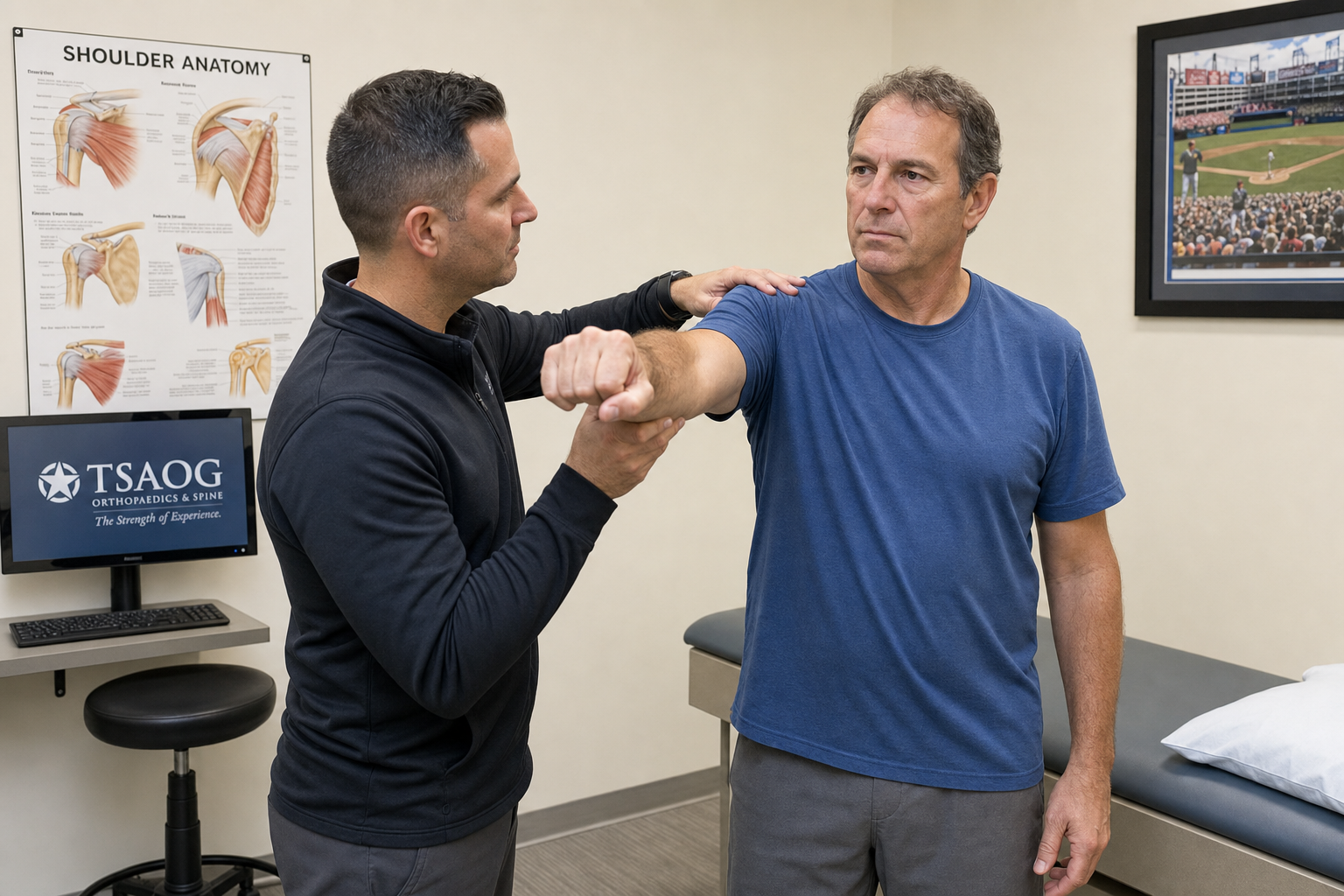
Diagnosis starts with the story of how the pain began, what activities trigger it, and whether there was a specific injury. On examination, clinicians may check for groove tenderness and use shoulder maneuvers that can reproduce pain around the biceps-labral complex. No single physical exam test is perfect, so the diagnosis usually depends on the overall pattern rather than one maneuver alone.
X-rays may help rule out other shoulder causes. MRI, MRI arthrogram, or ultrasound may be used when symptoms persist, when a tear or labral problem is suspected, or when surgical planning is being considered. If you have already had imaging and want another review, the practice offers a shoulder surgery second opinion. For urgent questions about booking an evaluation, visit the contact page.
Non-Surgical Treatment Options
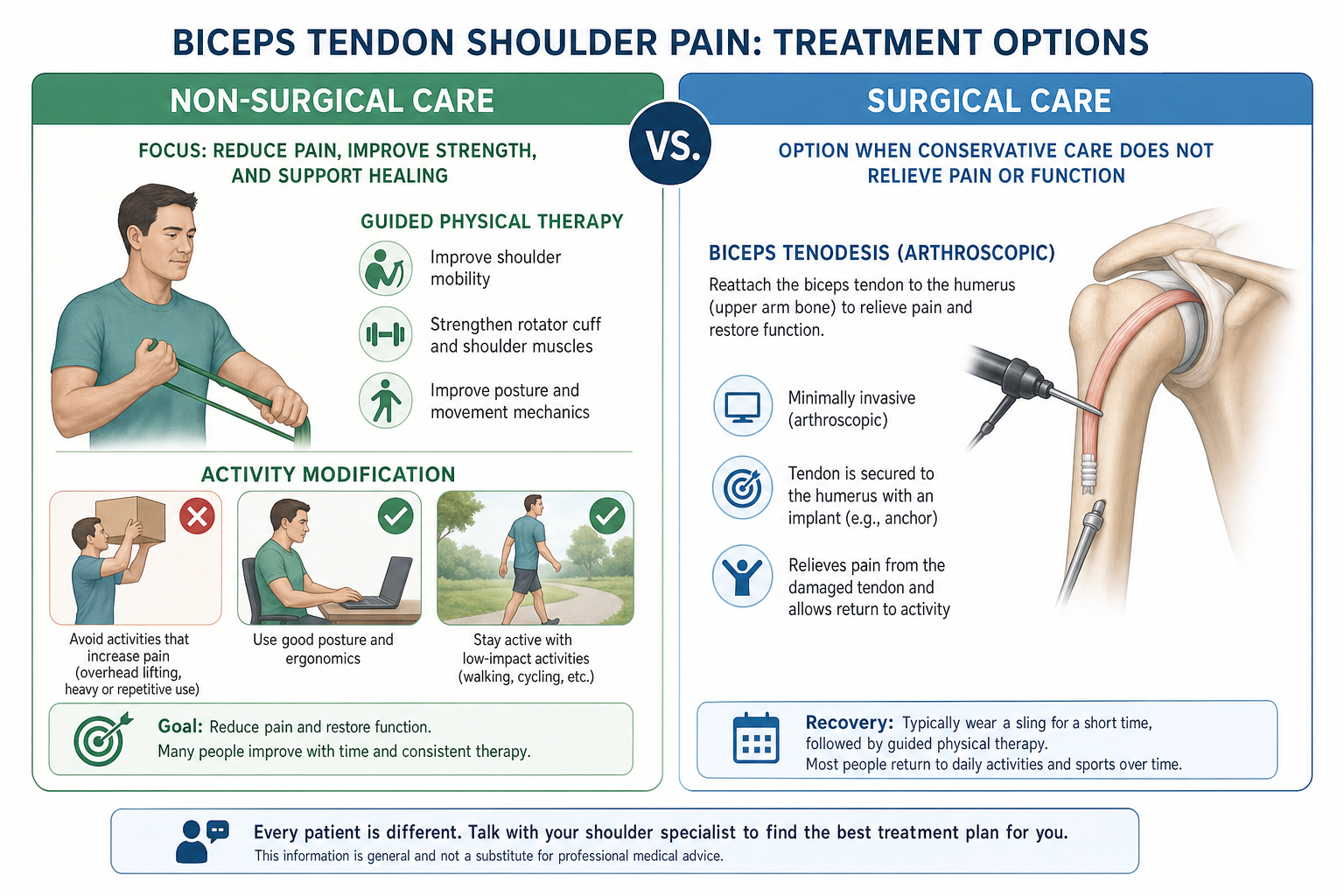
For many patients, the first step is non-surgical care. Reviews of long head biceps tendinopathy and physical therapy literature support initial conservative management, but they also note that the evidence base is still developing and there is not one universally proven protocol. The general themes are activity modification, progressive rehabilitation, and management of associated shoulder problems rather than simple rest alone. See Long head of the biceps tendinopathy: diagnosis and management and Physical therapy interventions used to treat individuals with biceps tendinopathy.
Common non-surgical options may include:
- Activity modification: Temporarily reducing painful overhead pressing, pulling, throwing, or repetitive front-loaded lifting.
- Physical therapy: A program that may focus on shoulder blade control, rotator cuff strength, mobility where needed, and gradual tendon loading. Learn more about shoulder physical therapy.
- Pain-relief measures: Depending on the patient, clinicians may discuss ice, short-term anti-inflammatory medication if appropriate, or an injection as part of a broader plan.
- Broader non-surgical planning: Some patients benefit from a more comprehensive discussion of rehab and nonoperative options through non-surgical shoulder treatment.
- PRP: PRP is sometimes discussed for tendon-related shoulder pain, but evidence is mixed and not well established specifically for proximal biceps tendinopathy. For shoulder biologics more broadly, AAOS rotator cuff guidance does not support routine PRP use in all settings, so it should be presented as a selective option rather than a proven standard. If you want to understand how the practice presents it, see PRP shoulder injections.
When Surgery Becomes the Right Next Step
Surgery may become part of the discussion when a good trial of non-surgical care has not provided enough relief, or when the overall picture suggests a structural problem unlikely to improve adequately without an operation. The exact timing varies by diagnosis, symptom severity, activity demands, and associated findings on imaging.
Examples that can prompt a surgical discussion include persistent pain despite rehabilitation, symptomatic partial tearing, instability of the tendon, certain labral injuries, or associated rotator cuff pathology that also needs treatment. A complete long head rupture does not automatically require surgery, but it may lead to surgical discussion in active adults with bothersome weakness, cramping, cosmetic concern, or combined shoulder pathology. If you are trying to decide whether it is time to move beyond self-care, see when shoulder pain warrants a surgical consultation.
Biceps Tenodesis vs. Tenotomy vs. Treating Related Problems
When surgery is chosen for the biceps tendon, common options include tenotomy and tenodesis. Tenotomy releases the tendon from its attachment. It is simpler and can work well for pain relief, but some patients develop a Popeye deformity, cramping, or some strength loss, especially with forearm supination.
Biceps tenodesis moves and secures the tendon outside the joint, aiming to remove the painful portion while preserving contour and function better for selected patients. In active adults, this is often part of the discussion, especially when strength demands or cosmetic concerns matter. The choice is individualized and may depend as much on the rest of the shoulder as on the tendon itself. If associated pathology is present, surgeons may address it during shoulder arthroscopy, including related SLAP tear or labral tear treatment when appropriate.
Recovery, Return to Activity, and Next Steps
Recovery depends on the diagnosis and the treatment used. With non-surgical care, improvement often takes weeks rather than days, and return to heavier activity is usually gradual. If surgery is performed, recovery also depends on whether other procedures were done at the same time.
After tenodesis, patients commonly use a sling for a period determined by the surgeon and begin progressive rehabilitation before returning to heavier lifting or sports. If a rotator cuff repair or labral procedure is added, restrictions and recovery can be longer. Related reading on repair vs. therapy-first decision-making may help put the process in context.
Common Mistakes Patients Make
Several common decisions can slow recovery:
- Assuming all front shoulder pain is just tendonitis: Similar symptoms can come from the rotator cuff, labrum, impingement, or instability.
- Training through sharp or worsening pain: Continued loading can aggravate symptoms and make it harder to tell what is actually injured.
- Skipping progressive rehab: Rest alone may calm symptoms temporarily without improving shoulder mechanics or strength.
- Expecting one injection or one exercise to fix every case: Treatment usually works best when matched to the diagnosis and activity demands.
- Waiting too long after a traumatic change: Sudden deformity, major weakness, or loss of function after an injury deserves timely evaluation.
Frequently Asked Questions
What causes pain in the front of the shoulder when lifting weights?
The long head of the biceps tendon is one possible cause, but rotator cuff problems, labral injuries, and impingement-related irritation can cause very similar symptoms. The location of pain alone does not confirm the diagnosis.
How do I know if my biceps tendon is the reason my shoulder hurts?
Biceps tendon pain is often suspected when pain is focused at the front of the shoulder and worsens with lifting, pulling, or forearm rotation. A clinician uses the history, examination, and sometimes imaging to decide whether the biceps tendon is the main pain source or part of a larger shoulder problem.
Does biceps tendonitis in the shoulder go away with physical therapy?
Many people improve with a structured rehabilitation program, especially when activity modification and treatment of related shoulder mechanics are included. Improvement is not guaranteed, and some patients with tearing or associated pathology may continue to have symptoms.
When is biceps tenodesis recommended instead of continued rehab?
Tenodesis may be discussed when symptoms remain limiting after an adequate course of non-surgical care, or when the tendon and surrounding shoulder findings suggest surgery is a better fit for the patient’s goals. It is often part of the conversation for active adults, but it is not automatic.
Can a SLAP tear and biceps tendon problem cause the same symptoms?
Yes. The long head biceps attaches near the superior labrum, so SLAP pathology and biceps tendon pathology can overlap and produce similar front-of-shoulder pain, clicking, and symptoms with overhead activity.
What should I avoid if I have biceps tendon shoulder pain?
Avoid repeatedly pushing through movements that clearly reproduce sharp pain, especially heavy overhead pressing, forceful pulling, or throwing, until you understand the cause. Temporary load reduction is often more useful than complete inactivity.
When should I see a shoulder specialist in Clermont for front shoulder pain?
Consider an evaluation if pain is not improving after several weeks, followed an injury, is affecting work or exercise, or comes with weakness, catching, or visible deformity. You can review next-step guidance at when shoulder pain needs a specialist.
Update Log
- 2026-09-18: Article prepared for first publication. Medical claims, dates, and linked resources were reviewed and unsupported promotional or physician-review language was removed.