


Shoulder Fracture Follow-Up After Urgent Care: What to Do Next in Clermont
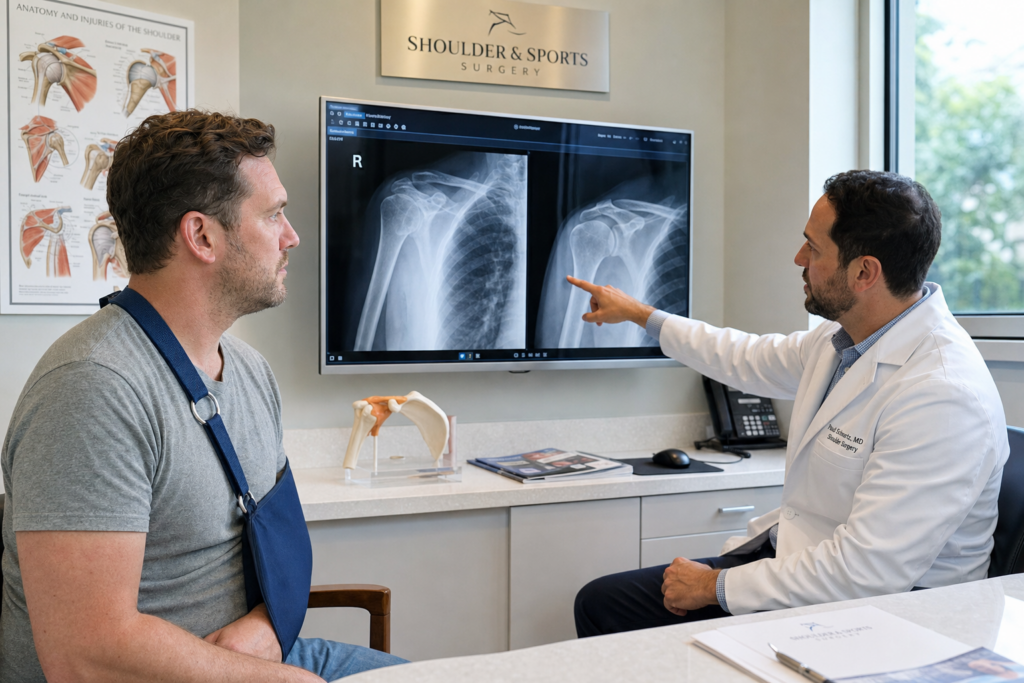
If urgent care or the ER told you that you may have a shoulder fracture, the next step is usually orthopedic follow-up. A shoulder fracture specialist in Clermont after urgent care visit can review your X-rays, confirm the fracture pattern, assess alignment, and decide whether treatment is best with a sling, follow-up imaging, physical therapy, or surgery. This article is general education only and is not a substitute for medical care.
This article is designed for a different search intent than a broad service page: it focuses on what to do after an urgent care or ER diagnosis. If you already know you need fracture-focused orthopedic care, see the main shoulder fracture specialist in Clermont page for service-level information.
When to See a Shoulder Fracture Specialist After Urgent Care
Timing depends on what urgent care found, how severe your symptoms are, and whether there are signs of nerve, blood-vessel, skin, or chest injury. In many cases, follow-up within a few days is reasonable after initial immobilization and X-rays. If symptoms are worsening or the injury followed high-energy trauma, you may need faster evaluation. AAOS patient guidance notes that shoulder trauma can involve fractures of the clavicle, proximal humerus, or scapula, and recovery may be affected for weeks or months depending on the injury pattern.
If you were discharged with a sling and instructions to arrange follow-up, do not ignore a change in arm color, increasing numbness, severe swelling, new deformity, or breathing symptoms. For help deciding whether symptoms need escalation, see when shoulder pain or injury may need a surgeon.

What Urgent Care Diagnoses vs. What a Shoulder Specialist Adds
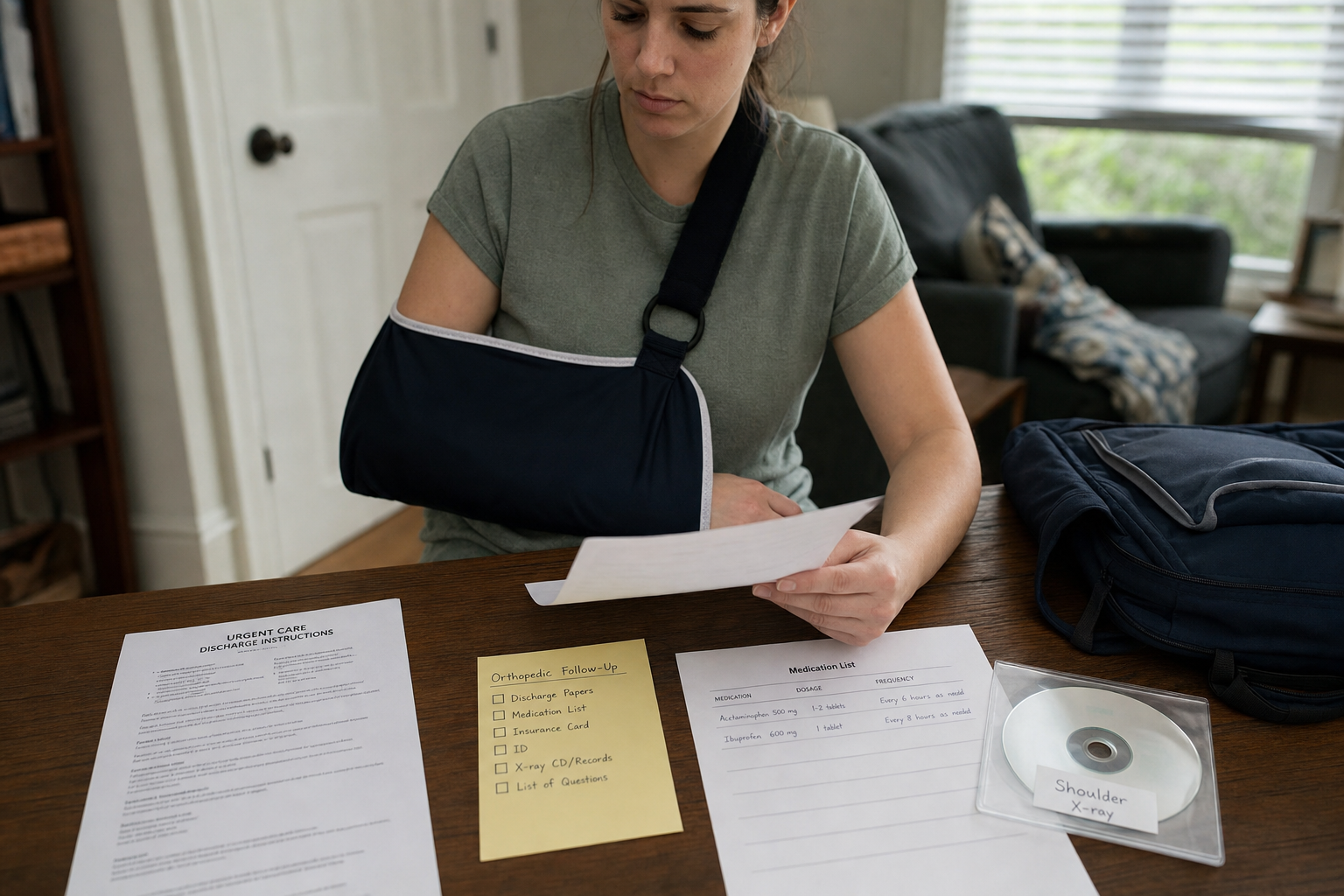
Urgent care and ER teams are important for first-line assessment. They may examine the arm, check circulation and nerve function, obtain X-rays, provide a sling or immobilizer, address pain, and refer you for follow-up. A specialist visit may add a more detailed review of fracture location and displacement, repeat radiographs, and sometimes CT when the pattern is complex or treatment planning is uncertain. MRI is used more selectively, such as when associated soft-tissue injury is a concern.
The main question at follow-up is not only whether a bone is broken, but whether it is likely to heal in acceptable alignment without surgery. For patients comparing options, VSI also has information on non-surgical shoulder treatment and shoulder physical therapy.
Types of Shoulder Fractures a Specialist Evaluates
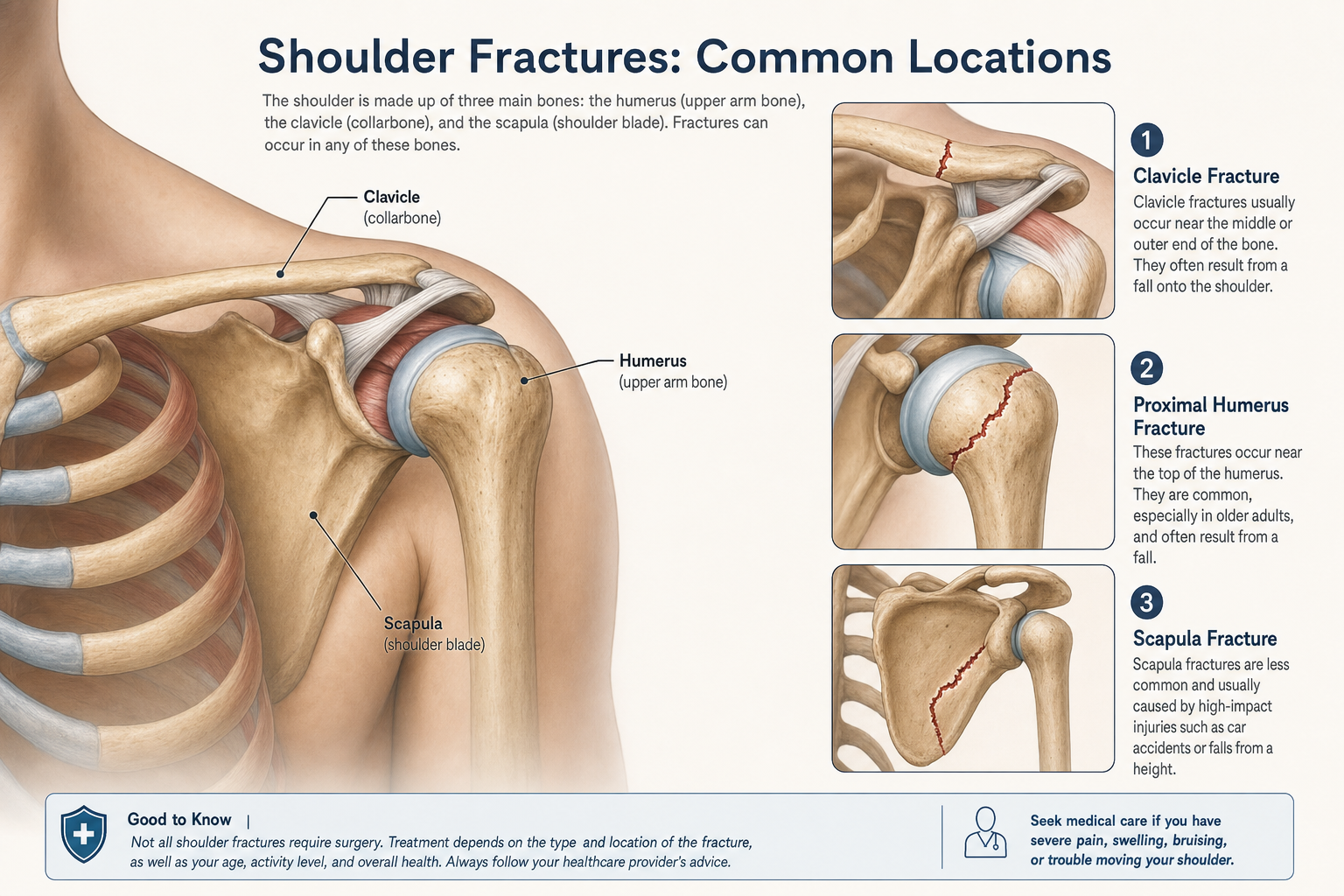
The shoulder region includes three common fracture areas described in AAOS patient education: the clavicle, the proximal humerus, and the scapula.
- Proximal humerus fracture — a break near the top of the upper arm bone. Reviews of current practice note that many proximal humerus fractures are treated nonoperatively, while displaced or unstable patterns may be considered for fixation or arthroplasty depending on patient and fracture factors.
- Clavicle fracture — a broken collarbone. AAOS notes that many clavicle fractures can be treated without surgery, while some displaced fractures are treated operatively.
- Scapula fracture — a shoulder blade fracture. These are less common and are often linked to higher-energy trauma, so associated injuries matter.
How Treatment Decisions Are Made: Sling, Therapy, or Surgery
Treatment depends on the fracture pattern, whether the pieces are displaced, whether the joint surface is involved, your age and activity demands, bone quality, and whether there are associated injuries. Published reviews and AAOS patient guidance support that many minimally displaced proximal humerus fractures can be treated without surgery, typically with immobilization followed by progressive motion and rehabilitation. Surgery is considered more often for some displaced, unstable, or complex patterns, but evidence is mixed in some fracture groups, so decisions should be individualized rather than assumed.
Non-surgical care may include sling use, follow-up imaging, pain control, and a staged rehab plan. Surgical care may involve fixation, and in selected complex fractures, arthroplasty may be discussed. That does not mean every displaced fracture needs surgery or that every older adult needs replacement; the decision depends on the specific injury and patient goals.
Red Flags That Need Faster Orthopedic Follow-Up
Seek prompt medical attention, and in some situations emergency care, if you develop any of the following after urgent care discharge:
- Numbness, tingling, or new weakness in the arm or hand
- A hand or forearm that becomes pale, blue, unusually cold, or poorly perfused
- Rapidly increasing swelling, severe uncontrolled pain, or a visible change in deformity
- Drainage, fever, or increasing redness around an open injury
- Chest pain or trouble breathing after major trauma
These symptoms do not always mean a complication is present, but they should not be ignored. If you are unsure whether your situation is routine follow-up or more urgent, use emergency services when symptoms suggest a circulation, nerve, chest, or open-injury problem.
What to Bring to Your Fracture Consultation in Clermont
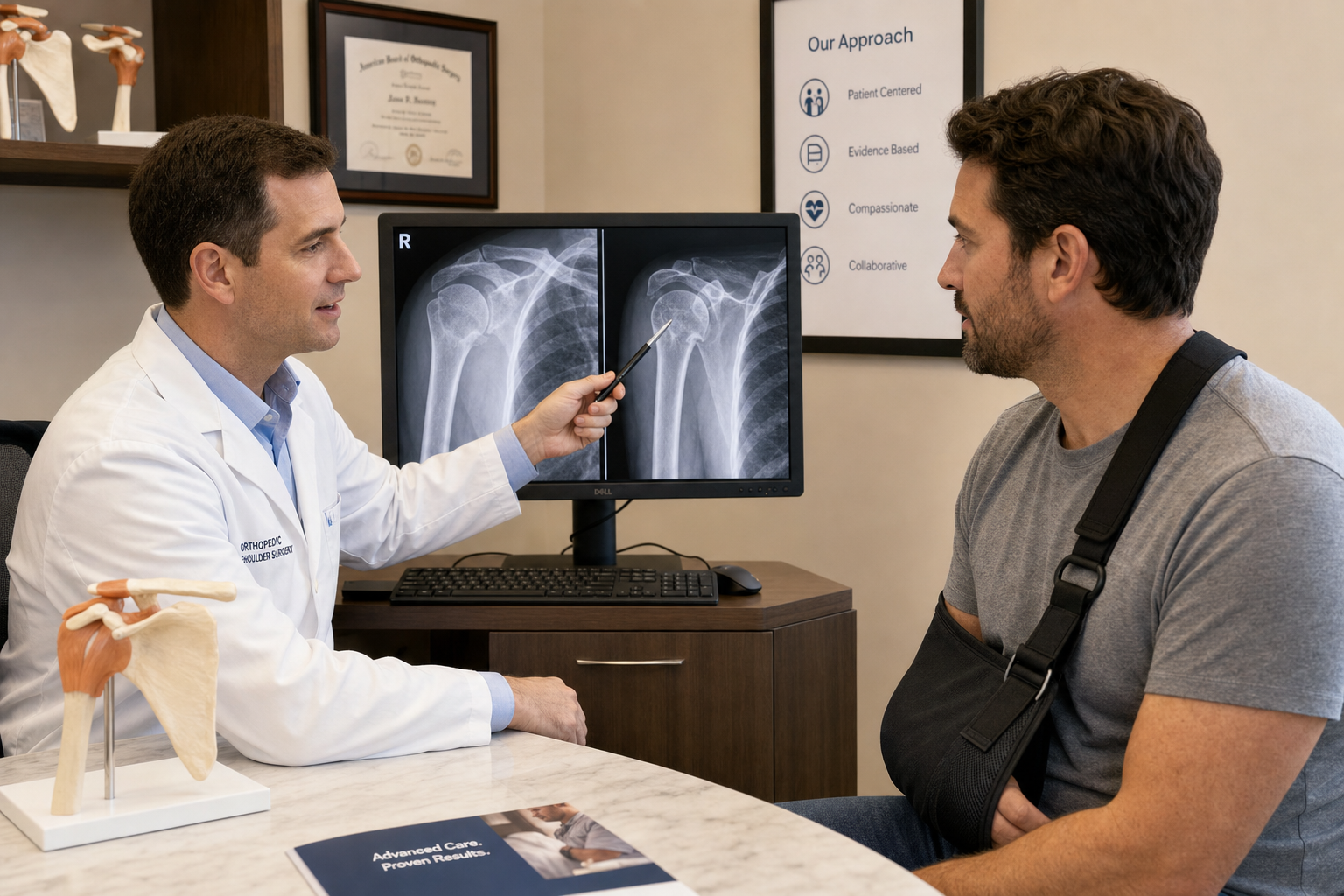
Bring as much of the urgent care record as you can so the follow-up visit is more efficient. A good checklist includes:
- Actual imaging files — CD, USB, portal access, or image link if available
- Radiology report and discharge instructions
- Your sling or immobilizer, since fit and positioning may need to be checked
- A current medication list, especially blood thinners and pain medicines
- Your questions about healing time, work restrictions, driving, sleep, and when motion can start
For a broader preparation guide, see the published first shoulder specialist visit checklist.
What Recovery May Involve After a Shoulder Fracture
Recovery is variable. AAOS notes that pain, strength, and range of motion often keep improving for several months after shoulder trauma. In general, recovery may include an initial protected period, followed by guided motion and then strengthening, but the pace depends on fracture stability, healing on repeat imaging, and whether treatment was surgical or non-surgical.
Some patients also seek a second review of imaging when they are unsure about the treatment path. VSI has a public page on shoulder surgery second opinions if you are weighing recommendations.
When to Request a Second Opinion for a Shoulder Fracture
A second opinion can be reasonable if surgery has been recommended and you want confirmation, if your pain and function are not improving as expected, or if you were told the injury is simple but the symptoms feel out of proportion. It can also help when advanced imaging findings and treatment recommendations do not seem to match.
If you want another review before proceeding, VSI also publishes information about a shoulder second opinion in Clermont.
Update Log
- 2026-09-19: Article published for post-urgent-care shoulder fracture follow-up intent. Unsupported provider-specific speed, insurance, and treatment claims were removed or softened, dates were corrected, and sources were added.
Sources
Frequently Asked Questions
Urgent care said I have a shoulder fracture. What should I do next?
Keep the arm protected as instructed, watch for red-flag symptoms, and arrange orthopedic follow-up. Bring the actual X-ray images, not just the report, plus your discharge paperwork and medication list.
How quickly should I see a shoulder fracture specialist in Clermont?
Often within a few days, but sooner if symptoms worsen, the hand becomes cold or discolored, numbness develops, or the injury followed major trauma.
Will I need surgery for a proximal humerus fracture?
Not always. Many proximal humerus fractures are treated without surgery, while some displaced or unstable patterns may be treated operatively. The right plan depends on the fracture pattern and patient factors.
Can urgent care treat a shoulder fracture completely?
Urgent care may provide the initial diagnosis, sling, and pain guidance, but follow-up is often needed to confirm alignment, healing plan, and whether more imaging or specialist care is appropriate.
What symptoms after a shoulder fracture mean I should be seen sooner?
Numbness, weakness, worsening deformity, uncontrolled pain, a pale or cold hand, chest pain, breathing trouble, or signs of infection around an open injury all need faster evaluation.
Should I get a second opinion before shoulder fracture surgery?
It can be reasonable, especially for a complex fracture, conflicting recommendations, or uncertainty about risks and expected recovery.
What should I bring from urgent care to my orthopedic visit?
Bring imaging files, the report, discharge paperwork, your sling or immobilizer, medication list, and any questions about activity restrictions or recovery.
How long does recovery take after a shoulder fracture?
It varies. Many patients improve over months rather than days, and recovery depends on fracture type, alignment, associated injuries, and whether treatment is surgical or non-surgical.