

Shoulder Pain Warning Signs: 9 Proven Signals Demand Action Now
Understanding Shoulder Pain and Why Early Recognition Matters
Your shoulder aches after a long day. You tell yourself it’s nothing serious. You take over-the-counter pain medication and hope it goes away. Days turn into weeks. The pain intensifies. Simple tasks like reaching into the back seat of your car or lifting groceries become difficult. You’re still waiting, convinced the pain will eventually disappear.
Many people ignore early shoulder problems until damage becomes severe. A small rotator cuff tear that could have been repaired with minimally invasive surgery expands into a massive tear requiring complex reconstruction. Early shoulder arthritis that could have been managed with physical therapy and injections progresses to bone-on-bone grinding that demands joint replacement.
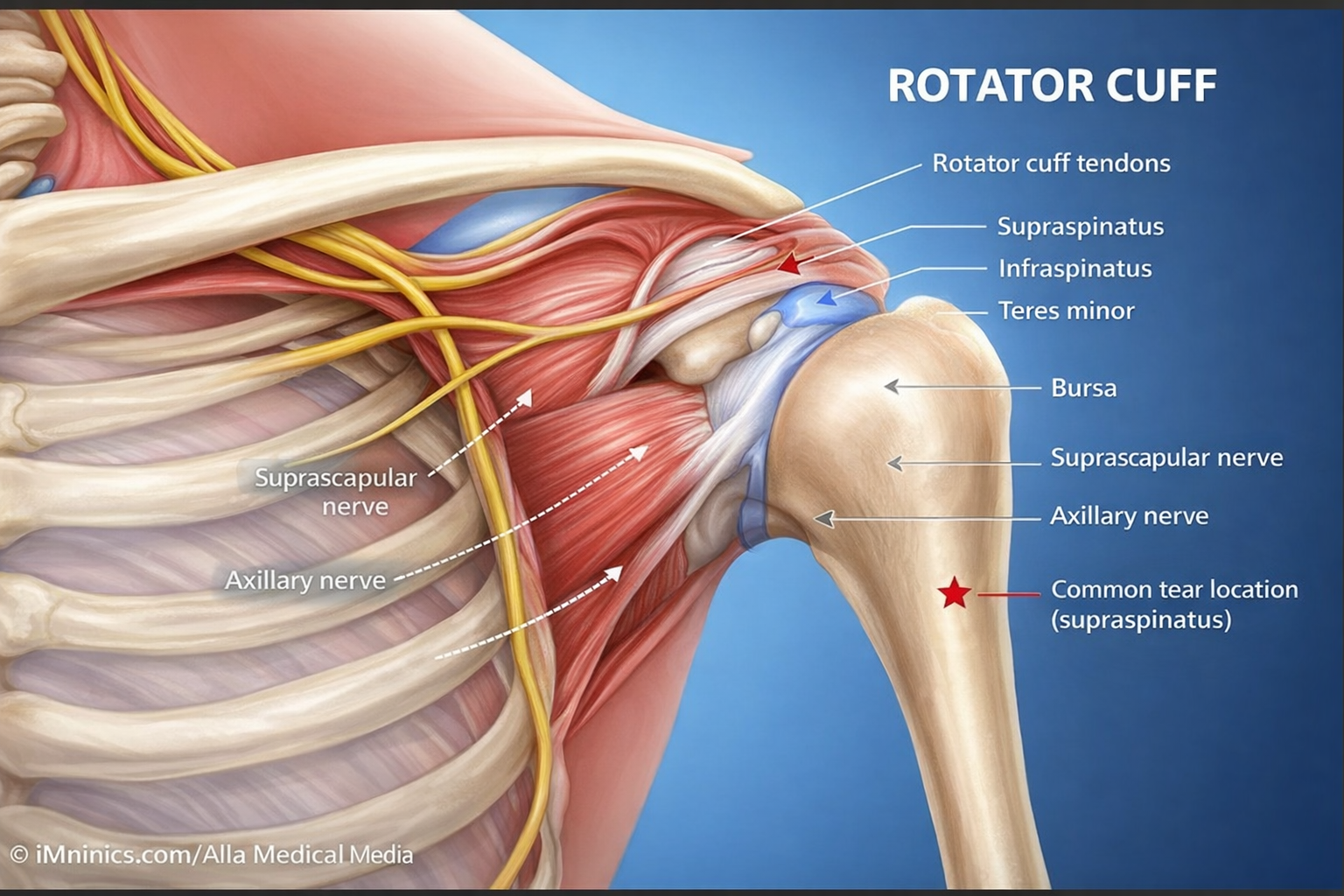
The shoulder is complex. Your rotator cuff consists of four tendons connecting muscles to bone. These tendons stabilize your shoulder during every movement. The labrum—a ring of cartilage surrounding the shoulder socket—deepens the joint and provides stability. When these structures sustain damage, your body can’t always repair them without intervention.
Early recognition matters because shoulder injuries rarely heal on their own once significant damage occurs. Tendons don’t regenerate. Cartilage doesn’t grow back. The longer you wait, the more surrounding structures compensate for the injury, creating additional problems. What starts as a small tear can progress to muscle atrophy, frozen shoulder, and permanent loss of function.
According to research published by the American Academy of Orthopaedic Surgeons, patients who address rotator cuff injuries within three months of onset have significantly better surgical outcomes and faster recovery times compared to those who delay treatment for six months or longer. The window for optimal repair closes as tissues deteriorate.
Start here: Shoulder Pain
The 9 Essential Warning Signs You Cannot Ignore
"Most patients who come to me with severe shoulder damage tell me the same story: the pain started small, they thought it would go away, and they waited too long. The shoulder rarely gives subtle warnings. When you notice persistent pain, loss of motion, or weakness that doesn't improve with rest, your body is telling you something is wrong. The sooner we diagnose the problem, the more options we have for treatment. Waiting often means the difference between a simple arthroscopic repair and major reconstructive surgery."
Dr. Amit Varma, MD Double Fellowship-Trained Shoulder Surgeon
Rothman Institute & Andrews Institute under Dr. James Andrews
Most shoulder problems give clear signals before they become severe. These warning signs indicate your shoulder needs professional evaluation. Ignoring them puts you at risk for permanent damage.
1. Pain That Worsens at Night
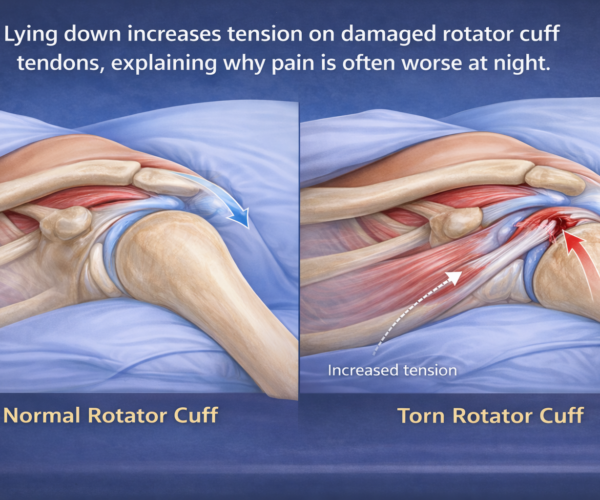
Your shoulder throbs when you lie down. You can’t sleep on your affected side. The pain wakes you up multiple times during the night. This pattern signals rotator cuff involvement.
Night pain occurs because gravity no longer helps stabilize your shoulder when you’re horizontal. The damaged tendons experience tension, causing inflammation and pain. Rotator cuff tears, shoulder impingement, and calcific tendinitis all produce characteristic night pain.
2. Sudden Loss of Strength
You could lift your arm above your head last week. Now you can’t raise it past shoulder height. You struggle to lift light objects. Weakness that appears suddenly often indicates a complete rotator cuff tear.
When a tendon tears completely, the muscle it connects can no longer function properly. Your shoulder loses the ability to lift against resistance. Partial tears produce weakness that gradually worsens over time, while complete tears cause immediate strength loss.
3. Persistent Grinding or Clicking Sounds
Your shoulder makes audible clicking, popping, or grinding sounds with movement. You feel catching or locking sensations. These sounds occur consistently, not just occasionally after exercise.
Grinding indicates cartilage wear—a sign of arthritis. Clicking or catching suggests labral tears or loose bodies (fragments of bone or cartilage) floating in the joint space. While some clicking is normal, persistent mechanical symptoms paired with pain need evaluation.
4. Severe Pain After a Fall or Impact
You fell on your outstretched arm. Someone pulled your arm forcefully. You suffered a direct blow to your shoulder during sports. The pain is intense and immediate. You can’t lift your arm.
Traumatic injuries can cause multiple problems simultaneously: rotator cuff tears, labral tears, fractures, or dislocations. Even if your shoulder “goes back in place” after a dislocation, internal damage often remains. Trauma demands immediate medical evaluation to rule out fractures and assess soft tissue damage.
5. Pain That Radiates Down Your Arm
The pain doesn’t stay localized to your shoulder. It travels down your upper arm, sometimes reaching your elbow or hand. You experience tingling, numbness, or burning sensations in your arm or fingers.
Radiating pain indicates nerve involvement. Cervical spine problems (neck issues) often refer pain to the shoulder. Brachial plexus irritation—compression of the nerve bundle that controls shoulder and arm movement—produces these symptoms. Thoracic outlet syndrome and shoulder impingement can also cause nerve-related symptoms.
6. Inability to Reach Behind Your Back
You can’t tuck in your shirt. Reaching for your back pocket becomes impossible. Hooking your bra strap challenges you. This specific loss of motion indicates frozen shoulder (adhesive capsulitis) or severe rotator cuff disease.
Frozen shoulder progresses through three stages: freezing (increasing pain and stiffness), frozen (less pain but maximum stiffness), and thawing (gradual return of motion). Early intervention during the freezing stage prevents progression to the frozen stage, where recovery can take 18-24 months.
7. Visible Deformity or Swelling
Your shoulder looks different from your other shoulder. You notice a bump or bulge. Significant swelling appears after injury. Your shoulder blade protrudes abnormally (called “winging”).
Visible deformity suggests dislocation, fracture, or complete tendon rupture. A “Popeye deformity”—a bulge in your upper arm—indicates a biceps tendon rupture. Scapular winging points to nerve damage or severe muscle weakness. Any visible abnormality requires immediate medical assessment.
8. Pain During Specific Movements but Not Others
Reaching overhead hurts, but other movements feel fine. Throwing motion causes sharp pain. Lifting your arm to the side produces pain, but lifting it forward doesn’t.
Movement-specific pain helps diagnose the exact structure causing problems. Overhead pain often indicates rotator cuff tears or impingement. Throwing pain suggests labral tears. The painful arc sign—pain between 60 and 120 degrees of arm elevation—strongly indicates rotator cuff pathology.
9. No Improvement After 2 Weeks of Rest
You’ve rested your shoulder for two weeks. You’ve taken anti-inflammatory medication. You’ve iced the area. The pain hasn’t improved or has actually worsened.
Most muscle strains and minor overuse injuries resolve with rest within 10-14 days. Persistent symptoms beyond this timeframe indicate structural damage that won’t heal without treatment. Continuing to wait only allows problems to worsen.
What to Do When You Notice These Warning Signs
Stop Aggravating Activities Immediately
Your shoulder is telling you something is wrong. Continuing the activity that causes pain makes the injury worse. If overhead reaching hurts, avoid reaching overhead. If throwing motion causes pain, stop throwing. Pushing through pain damages tissues further and extends recovery time.
Rest doesn’t mean complete immobilization. You can still use your arm for gentle daily activities. Avoid loaded movements, repetitive motions, and positions that reproduce your pain. Your shoulder needs reduced stress, not absolute inactivity.
Apply Ice for Acute Pain
Ice reduces inflammation and numbs pain. Apply an ice pack wrapped in a thin towel to your shoulder for 15-20 minutes every 2-3 hours during the first 48-72 hours after pain starts. Don’t apply ice directly to skin—this can cause ice burns.
Ice works best for acute injuries and recent pain flare-ups. Heat may feel soothing for chronic, long-standing shoulder stiffness, but ice is more effective for reducing active inflammation.
Take Anti-Inflammatory Medication as Directed
Over-the-counter NSAIDs (non-steroidal anti-inflammatory drugs) like ibuprofen or naproxen reduce pain and inflammation. Follow package directions. Take with food to prevent stomach upset. Don’t exceed recommended doses.
If you have a history of stomach ulcers, kidney disease, or take blood thinners, consult your primary care physician before taking NSAIDs. These medications provide temporary relief but don’t fix the underlying problem.
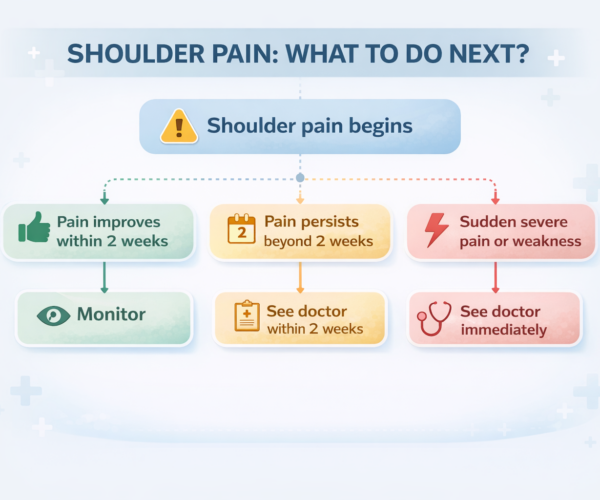
Schedule a Consultation Within Two Weeks
Don’t adopt a “wait and see” approach for more than two weeks. Call a shoulder specialist for evaluation. Many practices, including Varma Shoulder Institute, offer same-week appointments for acute injuries.
During your consultation, the doctor will perform a physical examination, assess your range of motion and strength, and order imaging if needed. X-rays reveal bone problems. MRI scans show soft tissue injuries like rotator cuff tears and labral tears. Proper diagnosis determines the right treatment plan.
Follow Conservative Treatment Before Surgery
Most shoulder problems respond to conservative care: physical therapy, anti-inflammatory medications, activity modification, and sometimes corticosteroid injections. Physical therapy strengthens surrounding muscles to compensate for injury and improves mechanics.
Your doctor recommends 6-12 weeks of conservative treatment for most non-traumatic shoulder conditions. If symptoms don’t improve or actually worsen despite appropriate conservative care, surgical intervention may be necessary. Some injuries—like complete rotator cuff tears in younger, active patients—benefit from early surgical repair.
Understand Your Treatment Options
Modern shoulder surgery has evolved significantly. Most procedures are performed arthroscopically—through tiny incisions using a camera and miniature instruments. Arthroscopic rotator cuff repair, labral repair, and shoulder impingement surgery offer faster recovery than traditional open surgery.
Advanced techniques like stemless shoulder replacement preserve bone for younger patients with arthritis. Platelet-rich plasma (PRP) injections may accelerate healing for partial rotator cuff tears. Ask about all options and choose the treatment that aligns with your goals and lifestyle.
"I'm 52 and work in real estate, so I'm lifting yard signs and showing properties all day. The shoulder pain started gradually, but within three weeks, I couldn't sleep at night. I kept waking up every two hours with throbbing pain. My husband insisted I see someone.
Dr. Varma found a partial rotator cuff tear on my MRI. He explained that if I waited, it would likely progress to a complete tear, which is much harder to repair. We did arthroscopic surgery, and I was back to full activity in four months. The night pain disappeared immediately after surgery. I'm so glad I didn't wait—my colleague ignored similar symptoms for two years and ended up needing a much more complicated surgery."

Jennifer's Story
Night Pain Led to Early Rotator Cuff Repair"I'm a 58-year-old contractor. I was pulling a heavy tool chest across my shop when I felt a pop and sharp pain in my shoulder. Within minutes, I couldn't lift my arm. I went to urgent care, and they referred me to Dr. Varma.
The MRI showed a complete supraspinatus tear—one of my rotator cuff tendons tore completely off the bone. Dr. Varma explained that complete tears don't heal on their own. We scheduled surgery within two weeks. He reattached the tendon arthroscopically. Six months later, I'm lifting, swinging a hammer, and doing everything I did before the injury. Early surgery made all the difference—the tendon hadn't retracted yet, which made the repair straightforward."

Mark's Story
Sudden Weakness After Lifting Meant Complete Tear"I'm 47 and started noticing my shoulder getting stiff. Within a month, I couldn't reach behind my back to zip my dress. Simple tasks like washing my hair became painful. I thought maybe it was arthritis, but Dr. Varma diagnosed frozen shoulder in the early stage.
He explained that frozen shoulder has three stages, and catching it early meant we could prevent it from progressing to the fully frozen stage, which can last years. We did physical therapy, a corticosteroid injection, and hydrodilatation to stretch the capsule. Within three months, I had 90% of my motion back. Dr. Varma said if I had waited another few months, it would have been much harder to treat."

Susan's Story
Frozen Shoulder Caught Early Prevented Two-Year RecoveryCommon Questions About Shoulder Pain Warning Signs
You should schedule a shoulder consultation if pain persists beyond two weeks despite rest and over-the-counter pain medication. Ongoing pain may indicate an underlying issue that requires evaluation by an orthopedic specialist.
Seek immediate medical care if you experience sudden, severe shoulder pain after trauma, visible deformity, complete inability to lift your arm, or signs of joint infection such as fever, warmth, or redness. These symptoms can signal fractures, dislocations, tendon ruptures, or infections that require urgent treatment.
For athletes or individuals with physically demanding jobs, it’s smart to consult a shoulder specialist sooner—often within one week of symptom onset. Early evaluation and early intervention for shoulder injuries can prevent minor problems from progressing into chronic pain or major structural damage.
Minor muscle strains and mild overuse injuries usually heal within 10–14 days with rest and reduced activity. This includes simple muscle irritation and short-term inflammation that responds to time and load management.
Structural shoulder injuries are different. Conditions such as rotator cuff tears, labral tears, and shoulder arthritis do not heal on their own. Partial rotator cuff tears can enlarge over time, and arthritis is a progressive condition that typically worsens without appropriate treatment.
From a biological standpoint, the body cannot regenerate damaged tendons or cartilage once they are structurally compromised. If shoulder pain does not improve with rest within two weeks, a professional orthopedic evaluation is necessary to prevent further damage and guide proper treatment.
Muscle soreness from exercise—often called delayed onset muscle soreness (DOMS)— feels like a dull, generalized ache in the muscle belly (the thick, fleshy part of the muscle). It typically peaks 24–48 hours after exercise and fades over 3–5 days. With normal muscle soreness, you keep full range of motion and strength, even if the muscle feels tight or tender.
Serious shoulder problems feel different. Pain is usually localized to the shoulder joint or specific tendons, often sharp or stabbing with certain movements. Symptoms like night pain, weakness, loss of motion, or clicking and grinding sounds suggest structural damage—not simple muscle soreness. These findings are commonly associated with conditions such as rotator cuff tears or labral injuries.
Yes. Rotator cuff tears become more common with age. Studies show that over 40% of people older than 60 have some degree of rotator cuff damage, even if they don’t have symptoms. That said, younger athletes can experience traumatic rotator cuff tears from overhead sports, heavy lifting, or sudden forceful movements.
Labral tears and shoulder instability and dislocations are most common in people under 30, particularly those involved in contact sports or repetitive overhead activities. These injuries often result from trauma or repetitive stress that compromises joint stability.
Shoulder arthritis typically affects individuals over age 50 and develops gradually over time. However, post-traumatic arthritis can occur at any age following a significant shoulder injury such as a fracture or dislocation.
Not necessarily. Many cases of shoulder pain respond well to non-surgical shoulder pain treatment such as physical therapy for shoulder pain, medication, targeted injections, and activity modification. In practice, approximately 60–70% of patients improve within 6–12 weeks of consistent conservative care.
Shoulder surgery becomes more likely when conservative treatment fails, when you have rotator cuff tears (especially complete/full-thickness tears that won’t heal on their own), when pain significantly limits daily function despite treatment, or when you’re a younger, active patient with structural damage that can worsen without surgical repair. For a clinical overview of when injections and surgery may be considered, see Mayo Clinic’s rotator cuff injury treatment guidance.
Why Choose Varma Shoulder Institute for Your Shoulder Care
Shoulder problems demand specialized expertise. Dr. Amit Varma completed two prestigious fellowships—training under Dr. James Andrews at the Andrews Institute in Gulf Breeze, Florida, and at the Rothman Institute in Philadelphia. This double fellowship training focused exclusively on shoulder and elbow surgery, providing expertise beyond standard orthopedic training.
The practice serves Winter Garden, Clermont, Ocoee, and surrounding Central Florida communities with a patient-focused approach that emphasizes education and conservative care before surgery.
- Advanced Diagnostic Technology
- Conservative Treatment First
- Minimally Invasive Surgical Expertise
- Same-Week Appointments
Take Control of Your Shoulder Health Today
Your shoulder pain is telling you something. Persistent pain, weakness, loss of motion, or night pain that won’t improve with rest indicates a problem that needs professional attention. Waiting doesn’t make shoulder injuries better—it makes them worse.
Early diagnosis gives you options. Conservative treatment becomes more effective when started early. Surgical repairs are simpler and more successful when performed before damage becomes severe. Taking action now prevents months of unnecessary pain and disability.
You deserve to move without pain. You deserve to sleep through the night. You deserve to lift, reach, and perform daily activities without limitation. Schedule your consultation at Varma Shoulder Institute in Clermont. Dr. Varma and his team will evaluate your shoulder, explain what’s causing your pain, and create a treatment plan tailored to your needs and goals.
Call (352) 404-5660 to book your same-week appointment.
Medical Disclaimer: This content is provided for educational and informational purposes only. It is not intended as a substitute for professional medical advice, diagnosis, or treatment. Always seek the advice of your physician or qualified healthcare provider with questions regarding a medical condition or treatment options. Never disregard professional medical advice or delay seeking it because of information you read here. Individual symptoms and conditions vary significantly between patients. Only a qualified medical professional can properly diagnose shoulder conditions and recommend appropriate treatment.