

Denied Shoulder Surgery? Get a Second Opinion
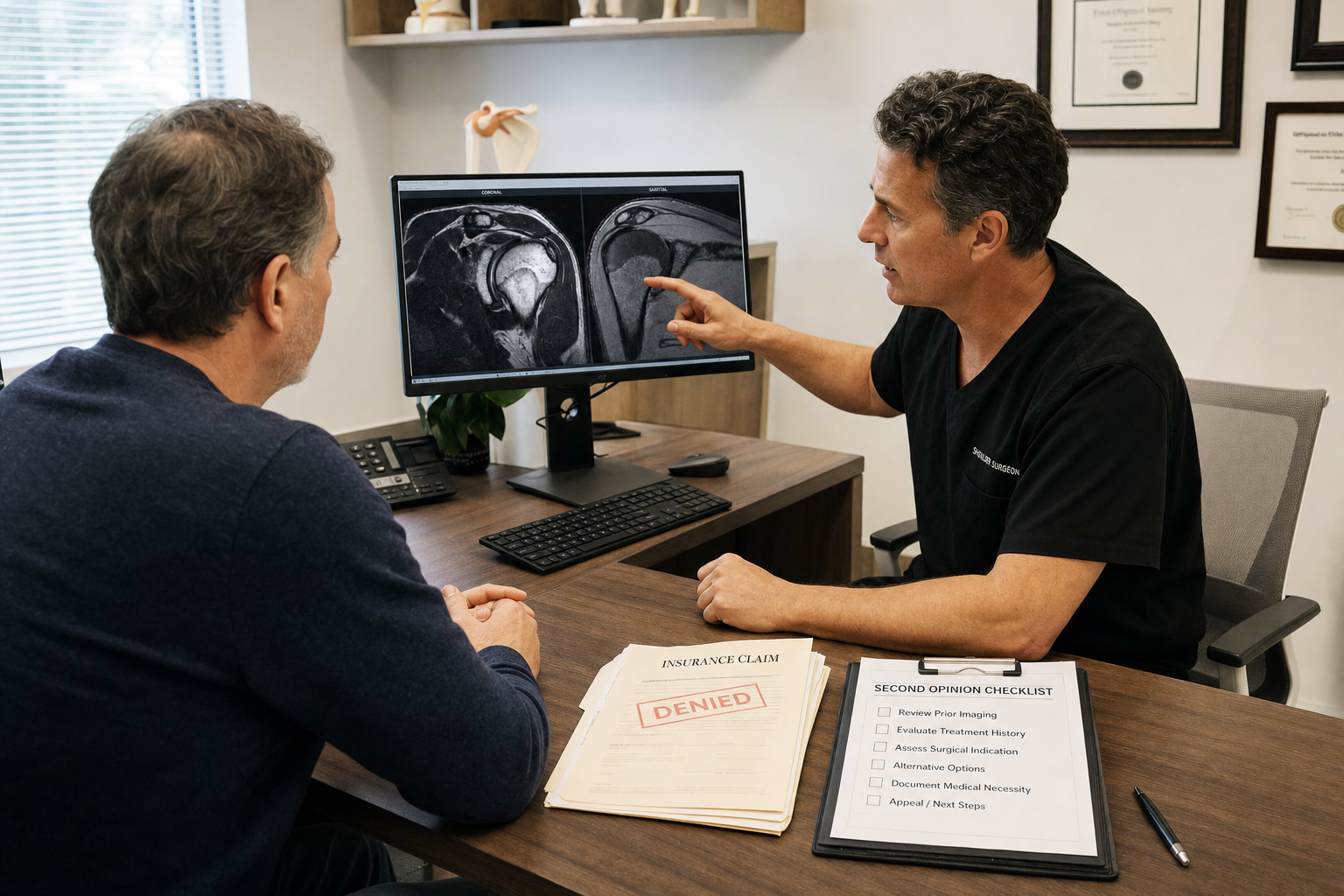
Getting a shoulder surgery second opinion after a denied insurance approval can help you understand why the prior authorization was denied and whether your records address the insurer’s stated concerns. A focused second opinion may clarify the diagnosis, review imaging, and identify what additional documentation may be useful if you decide to appeal.
Insurance coverage, appeal rights, timing, and out-of-pocket costs vary by plan and circumstance. Verify benefits and deadlines directly with your insurer and care team.
Insurance denials for shoulder surgery often turn on documentation details such as the diagnosis submitted, imaging findings, prior treatment history, or whether the request matches the insurer’s coverage criteria. This guide focuses on what to do after a denied approval, how a second opinion fits into that process, and which records are often useful to gather.
Why Shoulder Surgery Approvals Get Denied
Common reasons for shoulder surgery insurance denial include incomplete records, missing imaging, limited documentation of physical therapy or other nonoperative treatment, a mismatch between the diagnosis and the requested procedure, or failure to meet plan-specific prior authorization criteria. In practical terms, the denial letter often points to what the insurer believes is missing.
Start by reading the denial letter carefully. For many health plans, the notice explains why the request was denied and how to appeal. Official federal patient-rights information is available at CMS: Your right to appeal a denied prior authorization and, for Medicare, Medicare: Filing an appeal.
When a Second Opinion Can Help After a Denial
A shoulder second opinion after insurance denial can be especially useful when the denial cites medical necessity, when you are unsure whether the recommended procedure matches your diagnosis, or when you need a clearer explanation of what your MRI and treatment history show. It may also help before you file an appeal, because submitting the same records without new clarification may not address the denial rationale.
If you want a denial-focused review, you can request a shoulder second opinion. Related educational resources on the site include shoulder MRI second opinion and shoulder surgery second opinion, which cover broader second-opinion topics beyond denied prior authorization.
What a Shoulder Specialist Reviews Before Recommending Surgery
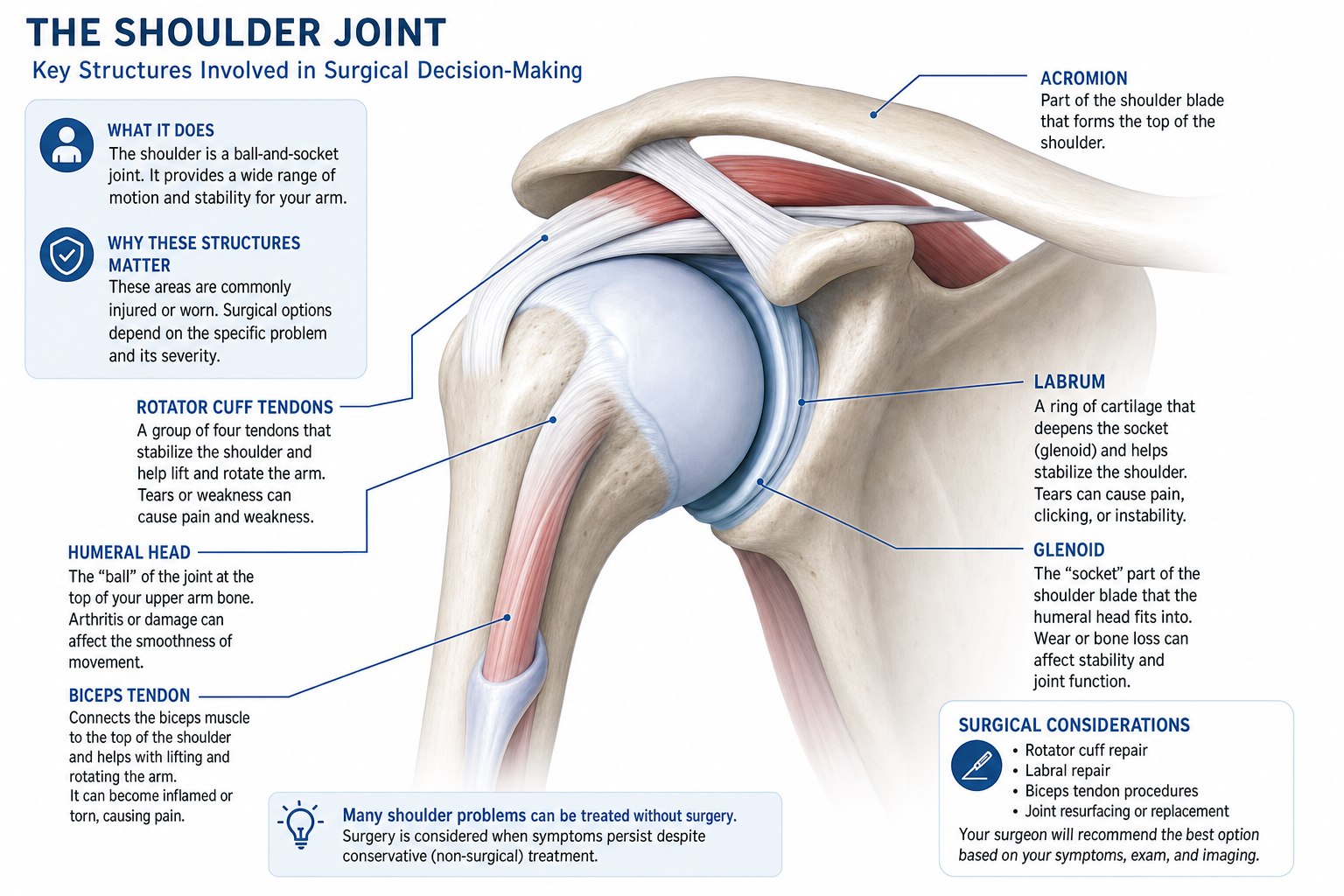
A meaningful second opinion usually compares several pieces of information rather than relying on one MRI report alone: your symptoms, physical examination, imaging, prior injections or medications, physical therapy history, and how much the problem affects daily function. That matters because guideline-based shoulder treatment is individualized, not automatic.
The AAOS plain-language summary on rotator cuff injuries explains that treatment decisions depend on factors such as age, activity level, how the tear happened, tear size, overall health, pain, and expectations. It also supports the broader point that not every rotator cuff tear needs immediate surgery and that nonoperative and operative options both have a role depending on the situation. See AAOS plain-language summary on rotator cuff injuries.
Records to Gather for Your Second Opinion and Appeal
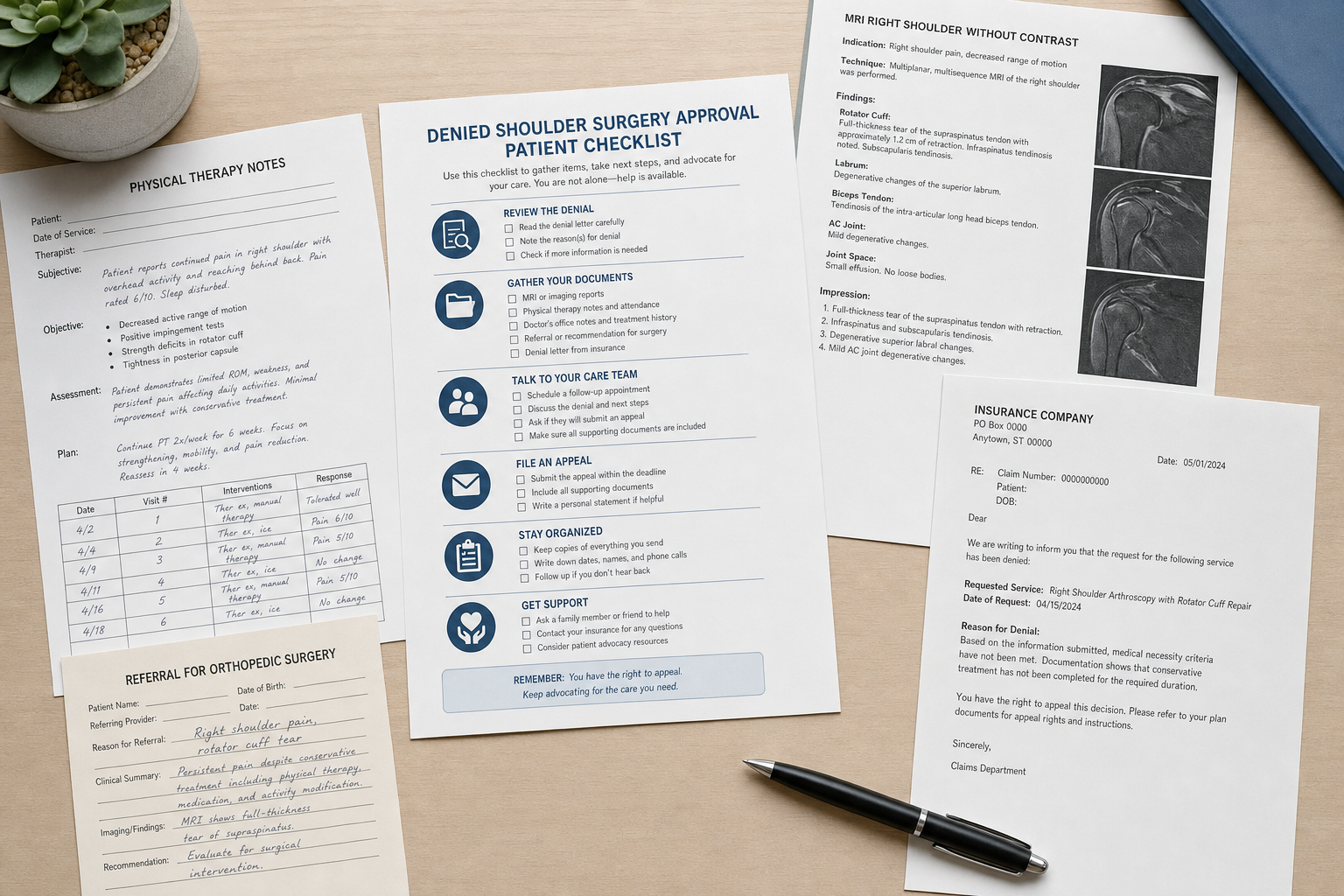
Gathering records before the visit can make the appointment more useful. Try to bring:
- The denial letter with the stated reason for denial and any deadline information
- MRI images and the radiology report, not just the written impression if image files are available
- Physical therapy records, including dates, attendance, and progress notes if available
- Prior treatment records, such as injections, medications, prior office notes, and prior imaging
- Operative reports if you have had prior shoulder surgery
- The original authorization request or office note if your referring clinician can provide it
For visit preparation, see the first shoulder specialist visit checklist. For broader coverage questions, see shoulder surgery cost and insurance basics.
How a Second Opinion Strengthens Medical Necessity Documentation
A second opinion can strengthen an appeal when it directly addresses the insurer’s stated reason for denial. Examples include clarifying the diagnosis, explaining why the requested procedure matches the imaging and exam, documenting prior nonoperative care more clearly, or identifying when additional treatment information is still needed before an appeal is likely to be persuasive.
For Medicare patients, the official Medicare appeals page explains that patients can appeal coverage or payment decisions and may submit additional information during the process. See Medicare: Filing an appeal.
What Happens If Surgery Is Not the Best Next Step
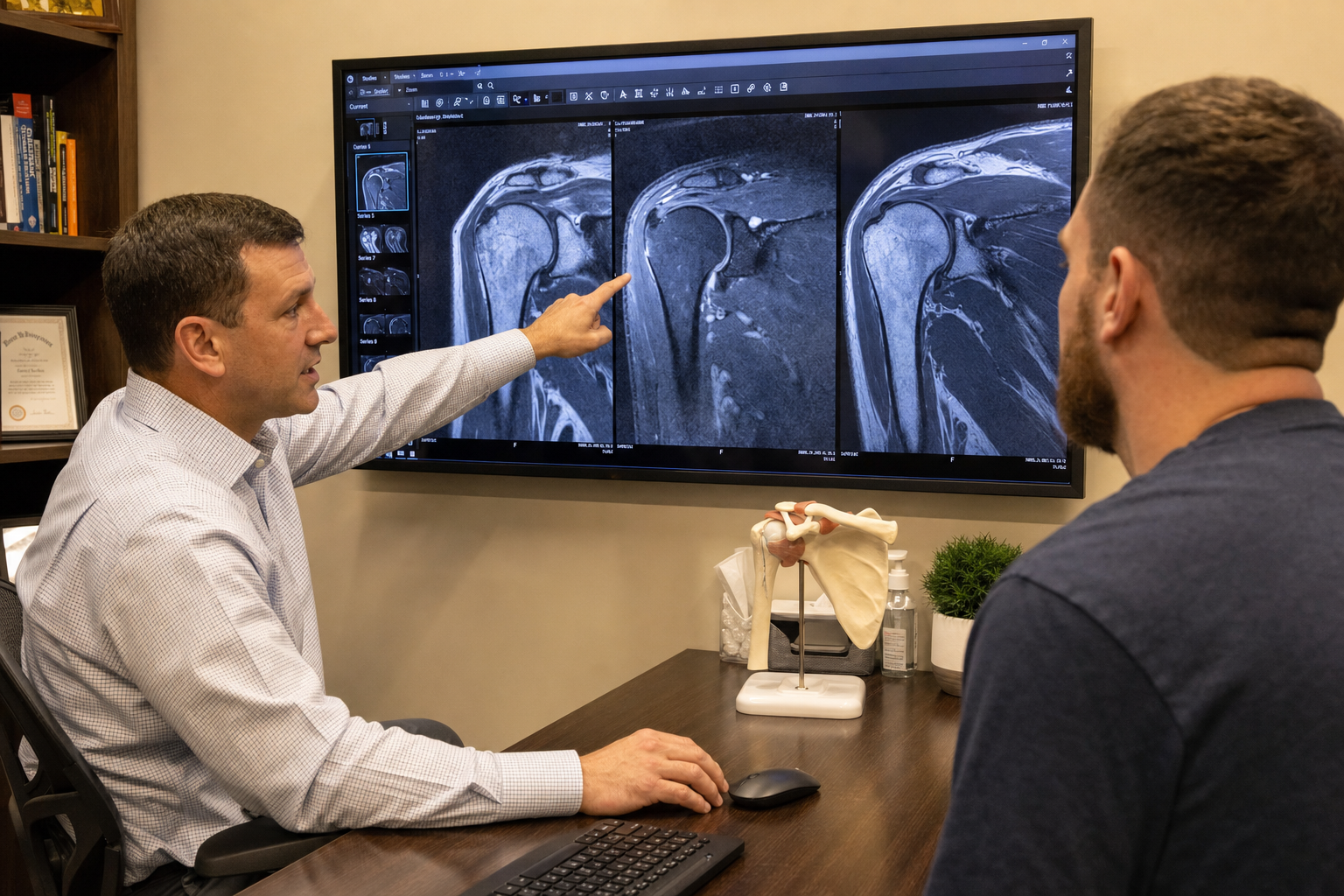
A second opinion should not be treated as a formality before surgery. Sometimes the review supports an operation, and sometimes it supports more conservative treatment first, a different procedure, or a different diagnosis. For rotator cuff problems in particular, AAOS guidance supports individualized decision-making rather than a one-size-fits-all rule.
Conservative options may include structured therapy, medications, injections, or activity modification depending on the diagnosis. If you are exploring nonoperative care, relevant resources include non-surgical shoulder treatment and shoulder physical therapy. If PRP is discussed for rotator cuff tendinopathy or partial tears, patients should know current AAOS guidance does not support routine use for those conditions based on available evidence.
Common Mistakes After a Shoulder Surgery Denial
Common mistakes include appealing without reading the denial rationale, missing the appeal deadline, resubmitting the same records without any added clarification, or assuming the denial itself answers the medical question. The denial is an administrative coverage decision; it does not replace a clinical evaluation.
- Do not ignore deadlines. Plans vary, and your denial notice should explain the timeline.
- Do not assume one MRI sentence decides everything. Imaging is interpreted in context with symptoms and exam findings.
- Do not delay urgent evaluation for major new weakness, instability, or neurologic symptoms.
- Do not assume all tears need surgery or that all partial tears should avoid surgery. The best next step depends on the full clinical picture.
When to Seek Urgent Shoulder Evaluation Despite Insurance Delays
Seek prompt medical evaluation if you have sudden major loss of strength, inability to raise the arm after an injury, repeated dislocation, severe uncontrolled pain, fever or significant swelling, or numbness and tingling with weakness. Those symptoms can signal an acute injury or another problem that should be assessed without waiting for the insurance process to play out.
Frequently Asked Questions
Can a second opinion help overturn a denied shoulder surgery authorization?
It can help, especially if it adds new information that directly addresses the denial reason. A second opinion may clarify the diagnosis, the imaging findings, prior conservative care, or whether a different next step makes more sense.
What records should I bring after insurance denies my shoulder surgery?
Bring the denial letter, MRI images and report, prior office notes, physical therapy records, injection or medication history, and any prior operative reports. If possible, also bring the note used for the original authorization request.
Will a shoulder MRI review help with an insurance appeal?
It may. A specialist review can be useful when the written report does not fully explain how the imaging matches your symptoms, examination, and requested procedure.
What are common reasons rotator cuff surgery gets denied?
Common reasons include incomplete conservative-care documentation, missing imaging, unclear procedure selection, or failure to meet a plan’s specific authorization criteria.
Can I get a shoulder second opinion before filing an appeal?
Yes. In many cases, getting the second opinion first is practical because it may identify what information is still missing before you submit the appeal.
What if the second opinion recommends therapy instead of surgery?
That can still be useful. A second opinion may show that additional nonoperative treatment is the better next step or that more documentation of conservative care is needed before surgery is reconsidered.
How long do insurance appeals for shoulder surgery usually take?
It depends on the type of plan, whether the appeal is standard or expedited, and whether the denial involves prior authorization, payment, or coverage. Check the denial notice and your plan documents for the exact timeline that applies to you.
Do Medicare patients have appeal rights after a denial?
Yes. Medicare patients can appeal certain coverage and payment decisions. The current process and levels of review are described on Medicare’s official appeals page.
Update Log
- 2026-09-14: Article published with denial-focused workflow, records checklist, appeal-oriented guidance, and verified internal links.