


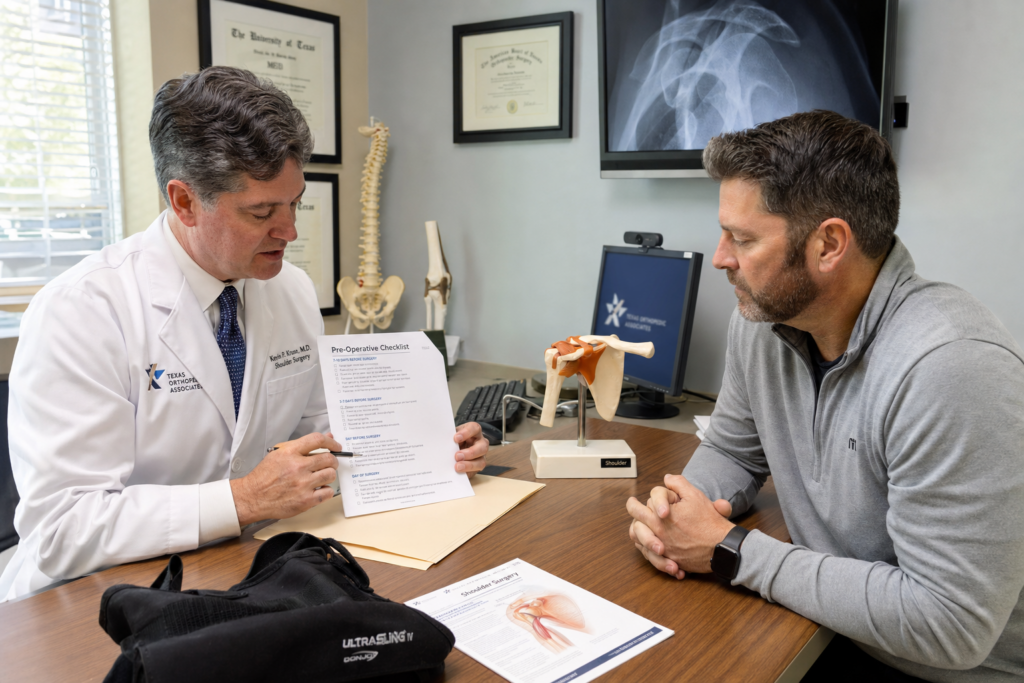
How to Prepare for Shoulder Surgery
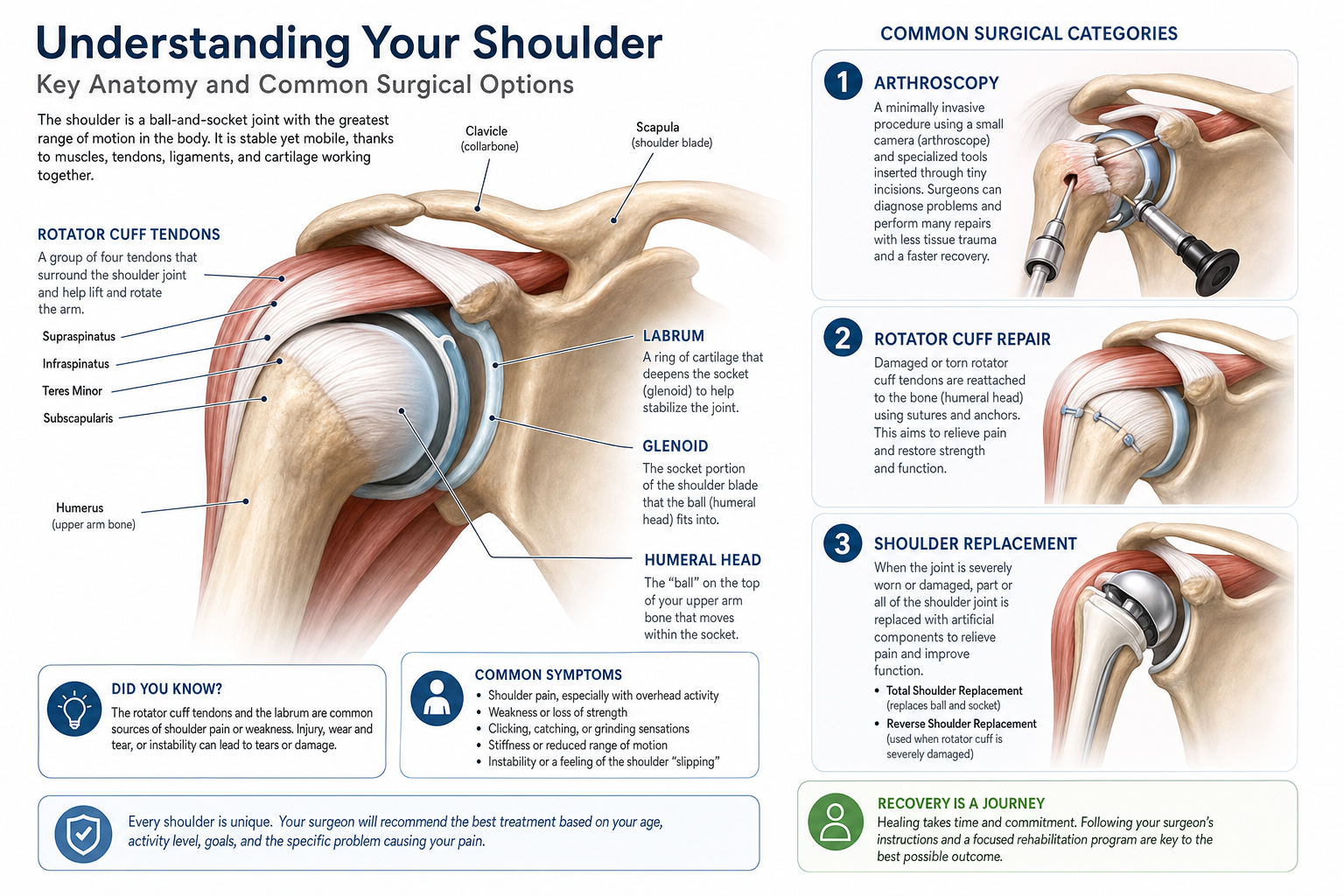
Knowing how to prepare for shoulder surgery can reduce anxiety and help you plan for a safer, smoother recovery. Whether you are scheduled for rotator cuff repair, shoulder arthroscopy, or shoulder replacement, this guide covers practical steps to discuss with your surgical team before your procedure.
This guide is designed as a practical pre-op hub for patients preparing for shoulder surgery. For procedure-specific recovery information, see our rotator cuff repair recovery timeline, shoulder arthroscopy recovery timeline, and shoulder replacement recovery timeline.
Who This Guide Is For
This shoulder surgery preparation guide is for patients who have already met with a shoulder specialist and are considering or scheduling surgery. It can apply to rotator cuff repair, shoulder arthroscopy, shoulder replacement, and shoulder revision surgery. If you are still deciding whether surgery is right for you, you may also want to review non-surgical shoulder treatment or request a shoulder second opinion.

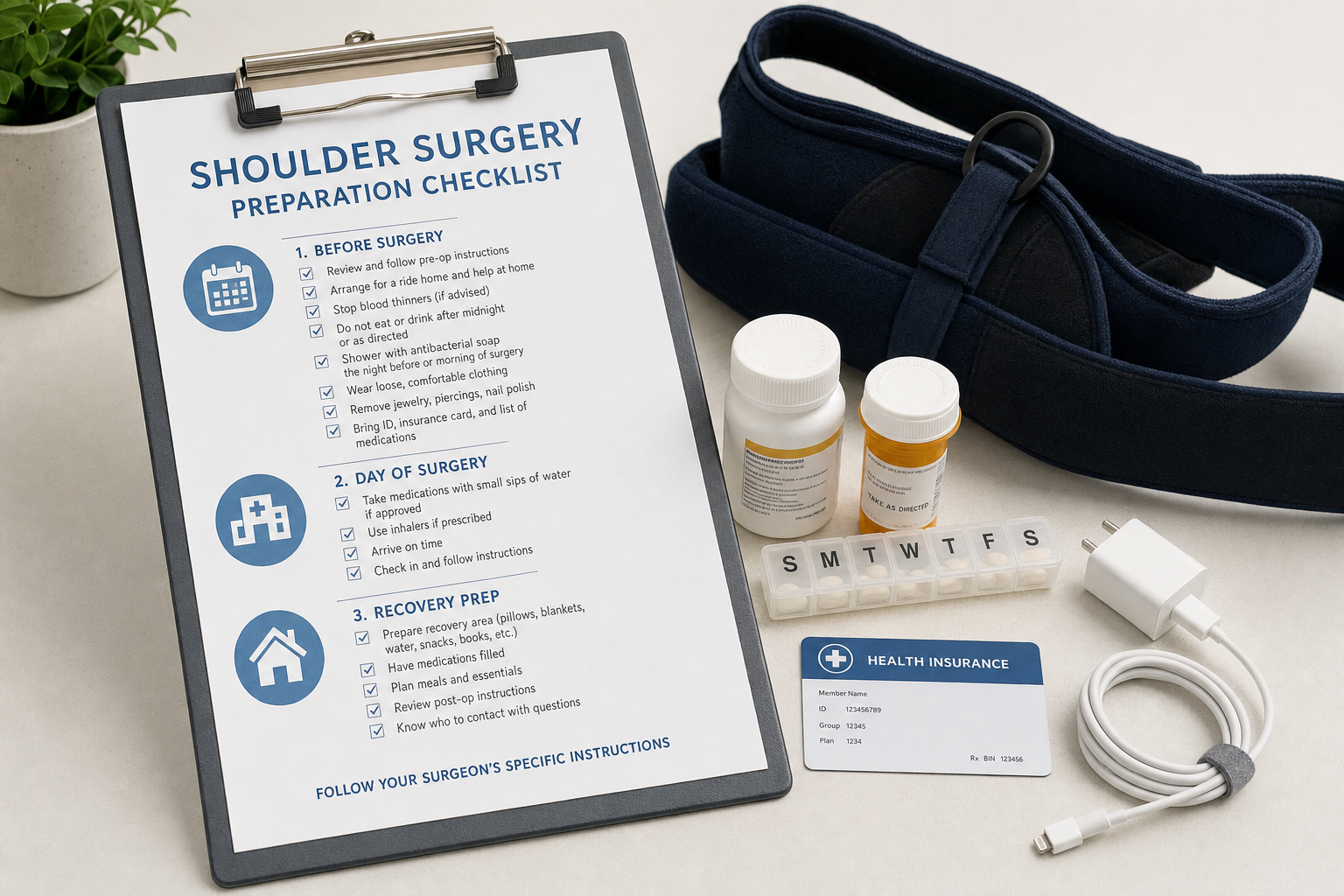
What to Do After Surgery Is Recommended
Once surgery is recommended, make sure you understand which procedure is planned and what the early recovery period may involve. If you are still organizing records and questions from your first evaluation, our first shoulder specialist visit checklist may help. It is also reasonable to review insurance details and expected costs before your procedure by visiting our shoulder surgery cost and insurance guide.
Arrange time away from work early, especially if your job involves lifting, reaching, or driving. The timeline varies by procedure, restrictions, pain control needs, and your surgeon’s protocol.
Medical Clearance, Medications, and Tests
Many patients need a preoperative medical evaluation before shoulder surgery. Depending on your age, medical history, and anesthesia plan, your care team may request blood work, an EKG, or other testing. The American Academy of Orthopaedic Surgeons notes that planning for surgery may include medical evaluation and review of medications or supplements.
Medication management is one of the most important parts of shoulder surgery preparation. Patients should bring a complete list of prescription medications, over-the-counter drugs, vitamins, and supplements to the pre-op visit. Do not stop prescribed blood thinners, diabetes medications, or other long-term medicines on your own; ask both the prescribing clinician and your surgical team for procedure-specific instructions. Over-the-counter products such as NSAIDs and some supplements may also need to be addressed before surgery, but timing varies by medication and patient.
If you smoke or use nicotine, ask your care team how this may affect wound healing and recovery planning. Your surgeon may also want other health issues such as diabetes or blood pressure optimized before surgery.
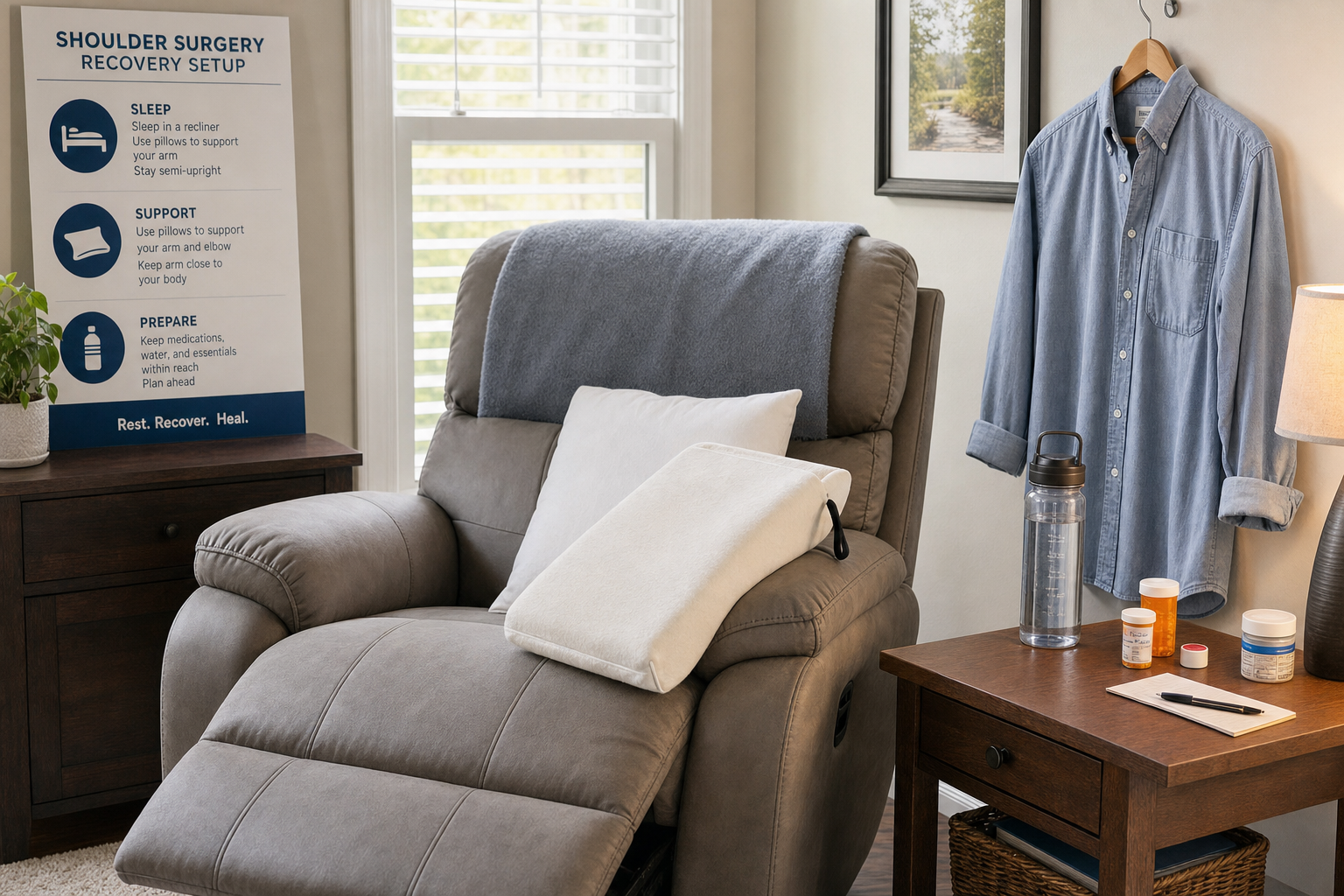
How to Prepare Your Home
Setting up your home before surgery can make recovery more manageable. After shoulder surgery, you may have limited use of the operative arm for a period of time, so it helps to reduce reaching, lifting, and overhead tasks ahead of time.
- Sleeping position: Many patients are more comfortable sleeping in a recliner or propped up with pillows or a wedge early after surgery. Positioning needs vary by procedure; see our guide to shoulder replacement recovery: sleeping and driving for more detail.
- Clothing: Set out loose shirts, especially button-front or zip-front options that are easier to put on around a sling.
- Kitchen and bathroom: Move frequently used items to waist or counter height so you do not need to reach overhead.
- Medications and supplies: Ask whether any prescriptions will be sent before surgery so you can pick them up in advance if allowed.
- Phone and charger: Keep your phone, charger, water, and other essentials near your main recovery area.
What to Wear, Bring, and Expect on Surgery Day
Plan to arrive with a responsible adult driver if your procedure involves anesthesia or sedation and you are being discharged the same day. Many outpatient centers will not allow you to drive yourself home.
- Clothing: Wear loose, comfortable clothing and shoes that are easy to put on.
- Documents: Bring your photo ID, insurance card, and any paperwork your surgical team requested.
- Fasting: Follow your pre-op fasting instructions exactly. If you are unsure what you can eat, drink, or take the morning of surgery, call ahead before the procedure date.
- Medications: Take only the medications your pre-op team specifically told you to take.
Shoulder arthroscopy is commonly performed as outpatient surgery. Some shoulder replacement patients may go home the same day, while others may need observation or an overnight stay depending on the procedure, health status, and facility plan.
Pain Control, Sling Use, and Early Recovery Planning
Pain control after shoulder surgery may include a combination of oral medications, icing, and sometimes a regional nerve block. If you receive a nerve block, ask when it may wear off and what plan you should follow as sensation returns.
Sling use is procedure-specific. Some rotator cuff repairs require several weeks in a sling, while some arthroscopy patients use one for a shorter period. Shoulder replacement protocols also vary. Ask exactly how long to wear the sling, when it can come off for hygiene or exercises, and what motions to avoid.
Physical therapy timing also depends on the procedure. For procedure-specific recovery planning, review our shoulder arthroscopy recovery timeline, rotator cuff repair recovery timeline, and shoulder replacement recovery timeline. We also have information about shoulder physical therapy in Clermont, FL.
Questions to Ask Before Your Procedure
Before surgery, make sure you know what is planned and what recovery instructions will apply to you. AHRQ’s surgery-planning patient resource supports asking practical safety questions in advance.
- What exact procedure is planned, and what problem is it intended to treat?
- Which medications or supplements should I stop, continue, or bring on surgery day?
- Will I have a nerve block or other regional anesthesia?
- How long should I expect to wear a sling?
- When should physical therapy or home exercises begin?
- What symptoms are expected, and which ones should prompt a call right away?
- Who should I contact after hours if I have a question?
If you want another opinion before proceeding, you can review this VSI page on shoulder surgery second opinions in Clermont.
When to Call Your Surgical Team
Contact your surgical team before surgery if you develop a fever, respiratory illness, skin infection, or another new medical problem close to the procedure date. After surgery, call promptly if you notice increasing redness, pain, drainage, or fever, or if you have new symptoms your discharge instructions list as urgent. CDC patient guidance on surgical site infection highlights redness, pain, drainage, and fever as warning signs that should prompt contact with your healthcare provider.
Common Mistakes Patients Make When Preparing for Shoulder Surgery
Common avoidable problems include:
- Waiting too long to arrange help: Transportation, meals, and basic home support are easier to plan ahead than after surgery.
- Forgetting supplements or over-the-counter medicines during medication review: These matter too, not just prescription drugs.
- Delaying required medical clearance: Missing pre-op steps can postpone surgery.
- Not filling approved prescriptions in advance: Ask whether your medications can be obtained before surgery day.
- Not clarifying rehab instructions: Know whether you should start therapy, home exercises, or simply protect the shoulder at first.
Practical Next Steps: Your Shoulder Surgery Preparation Plan
Here is a simple planning timeline to discuss with your care team once surgery is scheduled:
- Several weeks out: Confirm the procedure, review insurance and work planning, and complete any requested medical clearance.
- One to three weeks out: Confirm transportation, home support, and your medication plan.
- The week before surgery: Prepare your recovery area, review fasting instructions, and make sure you know your arrival time.
- The day before surgery: Set out clothing, documents, and any approved post-op supplies.
- Surgery day: Follow all instructions from your surgical center and bring the items you were told to bring.
For related planning resources, see our first shoulder specialist visit checklist and shoulder surgery cost and insurance guide.
Frequently Asked Questions
How far in advance should I prepare for shoulder surgery in Clermont?
It is helpful to start planning as soon as surgery is being considered or scheduled so you have time to complete medical clearance, medication review, transportation planning, and home setup.
What medications should I ask about before shoulder surgery?
Ask about prescription blood thinners, diabetes medications, over-the-counter pain relievers such as NSAIDs, aspirin, vitamins, and supplements. Do not stop prescribed medication without instructions from your prescribing clinician and surgical team.
Do I need medical clearance before shoulder surgery?
Many patients do, especially if they have other medical conditions or are having a more involved procedure. Your surgeon or anesthesiology team will tell you what is required for your situation.
What should I wear to shoulder surgery?
Wear loose, comfortable clothing that will fit around a sling after surgery. Button-front or zip-front tops are often easier than pullover shirts.
How should I sleep after shoulder surgery?
Many patients are more comfortable in a recliner or propped up with pillows at first, but the best position depends on your procedure and your surgeon’s instructions.
What should I set up at home before shoulder surgery?
Prepare a comfortable place to rest, move essentials within easy reach, plan simple meals, and make sure you know where your medications, ice, and charger will be kept.
When can I start physical therapy after shoulder surgery?
The timing varies by procedure and repair details. Ask your surgeon for your specific rehab timeline before surgery so you know what to expect.
Sources
Update Log
- 2026-09-30: Article published.