

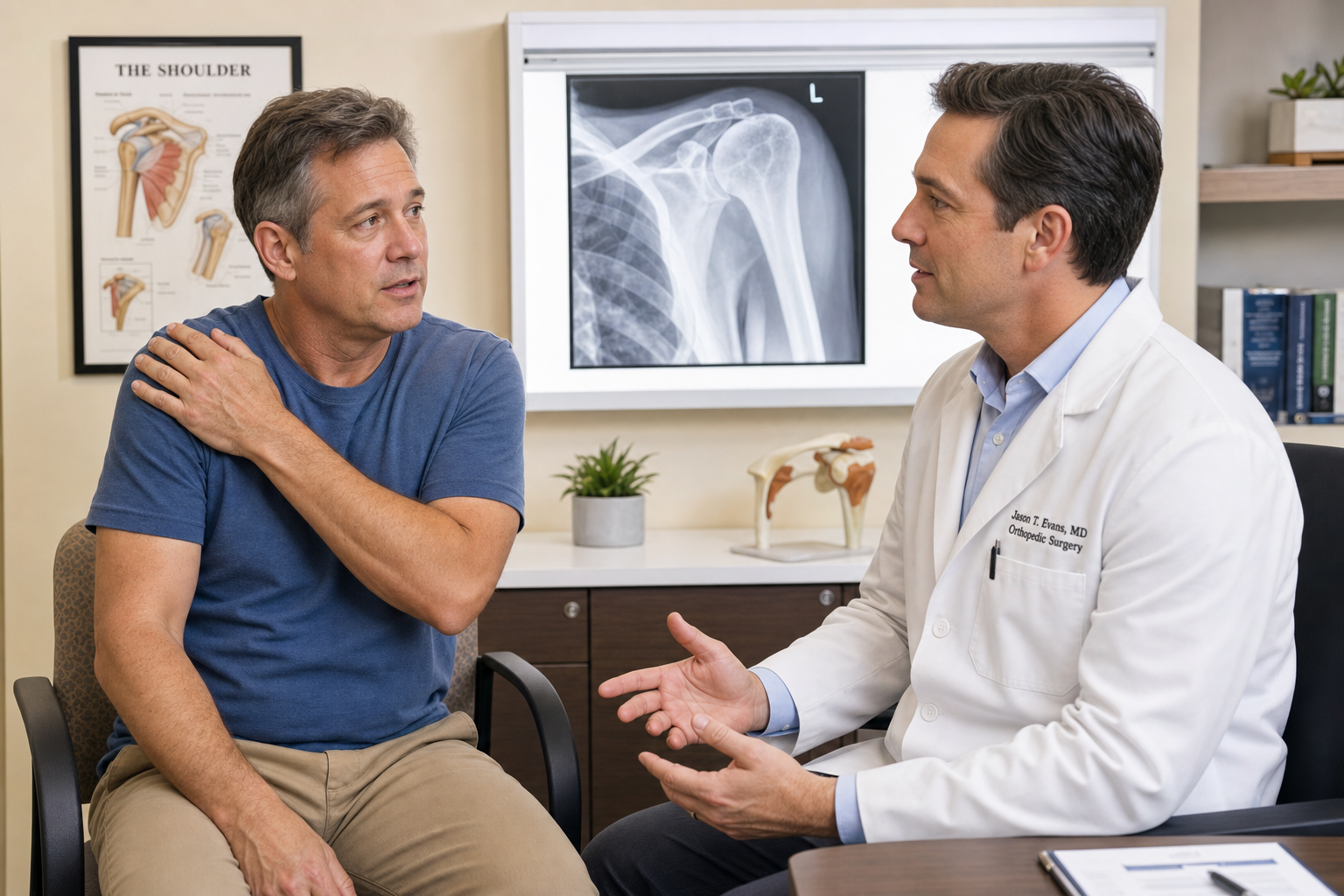
Shoulder Arthritis Surgeon in Clermont: How to Reclaim Comfortable Daily Movement
Finding a skilled shoulder arthritis surgeon in Clermont is the first step toward understanding why everyday tasks — reaching a cabinet, fastening a seatbelt, or sleeping through the night — have become painful and difficult. At Varma Shoulder Institute, we evaluate and treat shoulder arthritis at every stage, from early joint degeneration to advanced cases requiring shoulder replacement. Dr. Amit Varma, a double-fellowship-trained shoulder surgeon, leads our team with the expertise to match each patient with the right treatment plan.
Shoulder arthritis is one of the most common causes of persistent shoulder pain in adults over 50, though it can affect younger patients as well — particularly those with prior shoulder injuries or inflammatory conditions. Understanding what is happening inside your joint, and knowing when to act, can make a meaningful difference in your long-term comfort and function.
How Shoulder Arthritis Makes Daily Tasks Painful
The shoulder is a ball-and-socket joint where the head of the upper arm bone (humerus) meets the shallow socket of the shoulder blade (glenoid). Healthy cartilage cushions these surfaces and allows smooth, nearly frictionless movement. When that cartilage wears away — a process called osteoarthritis of the shoulder or glenohumeral arthritis — bone begins to rub against bone. The result is pain, inflammation, and stiffness that can make ordinary activities feel surprisingly difficult.
Patients often describe trouble with tasks like pulling on a jacket, reaching into an overhead cabinet, lifting a bag of groceries, or simply rolling over in bed. The pain is frequently described as a deep ache that worsens with use and may linger even at rest. For many people, nighttime discomfort becomes one of the most disruptive symptoms.
If you are experiencing these patterns, scheduling a shoulder evaluation at Varma Shoulder Institute is a practical first step toward understanding what is driving your pain and what can be done about it.
Common Signs Your Shoulder Pain May Be Arthritis
Shoulder arthritis does not always announce itself dramatically. It tends to develop gradually, and many patients initially attribute their symptoms to a muscle strain or overuse. According to OrthoInfo from the American Academy of Orthopaedic Surgeons, common signs of shoulder arthritis include:
- Deep, aching pain in the shoulder joint — not just the surrounding muscles
- Stiffness and loss of shoulder range of motion, especially when rotating the arm
- A grinding, clicking, or crunching sensation (crepitus) during movement
- Pain that worsens with activity and may persist at rest or at night
- Swelling or tenderness around the shoulder joint
- Difficulty with overhead reaching or behind-the-back movements
These symptoms can overlap with other shoulder conditions such as rotator cuff tears or frozen shoulder, which is why an accurate diagnosis from a shoulder specialist is essential before beginning any treatment.
Why Everyday Movements Become Difficult Over Time
As glenohumeral arthritis progresses, the joint space narrows and bone spurs (osteophytes) can develop around the edges of the joint. These changes reduce the shoulder’s mechanical efficiency and increase friction with every movement. The body’s natural response — guarding the painful joint by limiting motion — leads to further stiffness and muscle weakness over time.
This cycle of pain, guarding, and deconditioning is why shoulder joint degeneration tends to become more limiting without treatment. Activities that were once effortless — washing hair, reaching a shelf, or participating in recreational sports — gradually require more effort and cause more discomfort. For some patients, the dominant arm is affected, which can significantly impact work and independence.
When to See a Shoulder Arthritis Surgeon in Clermont
You should consider scheduling a consultation with a shoulder specialist if:
- Shoulder pain has persisted for more than four to six weeks despite rest and over-the-counter pain relief
- Pain is interfering with sleep, work, or daily activities
- You notice progressive stiffness or a grinding sensation in the joint
- You have a history of shoulder injury, prior surgery, or inflammatory arthritis (such as rheumatoid arthritis)
- You are unsure whether your symptoms are arthritis, a rotator cuff problem, or another condition
At Varma Shoulder Institute, our team provides thorough shoulder evaluations that include a physical examination, review of your history, and imaging when appropriate. We serve patients throughout Clermont, Orlando, and Central Florida, and same-week appointments are available. You can also reach our Clermont shoulder team to request a second opinion if you have already received a diagnosis elsewhere.
Non-Surgical Treatment Options That May Help First
Not every patient with shoulder arthritis needs surgery. For mild to moderate glenohumeral arthritis, a structured non-surgical program can meaningfully reduce pain and improve function. Options our team may recommend include:
- Physical therapy: Targeted exercises to improve shoulder range of motion, strengthen the surrounding muscles, and reduce mechanical stress on the joint.
- Anti-inflammatory medications: Oral NSAIDs (such as ibuprofen or naproxen) can reduce inflammation and pain, though long-term use carries risks that should be discussed with your physician.
- Corticosteroid injections: A cortisone injection into the shoulder joint can provide meaningful short-term pain relief, particularly during flare-ups.
- PRP (platelet-rich plasma) injections: At Varma Shoulder Institute, we offer PRP injections as a biologic option for appropriate candidates. PRP uses concentrated growth factors from your own blood to support the joint environment.
- Activity modification: Adjusting how you perform certain tasks can reduce aggravation of the joint while you pursue other treatments.
The American Shoulder and Elbow Surgeons recognize that conservative management is the appropriate starting point for most shoulder arthritis patients, with surgery reserved for those who do not achieve adequate relief.
When Surgery Becomes the Right Next Step
Surgery for shoulder arthritis is typically considered when non-surgical treatment has been given a fair trial — generally three to six months — and pain or functional limitation remains significant. Indicators that surgery may be appropriate include:
- Persistent pain that limits sleep, work, or essential daily activities despite conservative care
- Imaging showing advanced joint space narrowing or significant bone changes
- Progressive loss of shoulder motion that does not respond to physical therapy
- Quality of life that has declined substantially due to shoulder pain
The decision to proceed with surgery is always individualized. Dr. Varma reviews each patient’s imaging, functional goals, overall health, and response to prior treatment before recommending a surgical approach. Learn more about shoulder joint replacement from OrthoInfo to understand what the procedure involves.
Shoulder Replacement Options for Arthritis Pain
When surgery is indicated, shoulder replacement is the most effective long-term solution for advanced glenohumeral arthritis. Varma Shoulder Institute provides both primary and revision shoulder replacement procedures, including:
- Total shoulder replacement (anatomic): The damaged ball and socket surfaces are replaced with prosthetic components that replicate normal shoulder anatomy. This is typically the preferred option when the rotator cuff is intact.
- Reverse shoulder replacement: In this design, the ball and socket positions are switched. Reverse shoulder replacement is particularly effective for patients with arthritis combined with significant rotator cuff damage or deficiency, as it allows the deltoid muscle to power shoulder movement. Learn more about shoulder surgery options from the AAOS.
Dr. Amit Varma, who completed fellowships at the Rothman Institute under Dr. Michael Ciccotti and the Andrews Institute under Dr. James Andrews, brings subspecialty-level expertise to shoulder replacement surgery. As Chief of Surgery at South Lake Hospital, he performs these procedures in a dedicated surgical environment with experienced support staff.
What to Expect: Evaluation, Recovery, and Next Steps
Your first visit at Varma Shoulder Institute will include a detailed history, physical examination, and a review of any existing imaging. If X-rays or an MRI are needed, we will coordinate that promptly. From there, Dr. Varma will walk you through your diagnosis and all appropriate treatment options — non-surgical and surgical — so you can make an informed decision.
For patients who proceed with shoulder replacement, recovery typically involves a period of immobilization followed by a structured physical therapy program to restore strength and motion. Most patients begin to notice meaningful improvement in pain within the first few weeks after surgery, with continued functional gains over several months. Recovery timelines vary based on the type of replacement, the patient’s overall health, and adherence to rehabilitation.
Common Mistakes Patients Make With Shoulder Arthritis
- Delaying evaluation: Many patients wait years before seeing a specialist, allowing the joint to deteriorate further and reducing the window for effective non-surgical care.
- Self-diagnosing and self-treating: Shoulder pain has many causes. Treating presumed arthritis without a confirmed diagnosis can delay care for a different — and potentially more urgent — condition such as a rotator cuff tear.
- Stopping physical therapy too soon: Patients sometimes discontinue therapy after a few sessions because progress feels slow. Consistent, guided rehabilitation is essential for meaningful improvement.
- Avoiding surgery out of fear: When conservative care has been exhausted, delaying a recommended shoulder replacement can lead to further muscle weakness and bone loss that complicates eventual surgery.
- Not asking about all treatment options: Some patients are unaware that biologic options like PRP injections or reverse shoulder replacement exist. A thorough consultation ensures you understand every available path.
Frequently Asked Questions
What is the difference between shoulder arthritis and a rotator cuff tear?
Shoulder arthritis involves cartilage breakdown within the glenohumeral joint, while a rotator cuff tear is damage to the tendons that stabilize and move the shoulder. Both conditions can cause pain and limited motion, and they sometimes occur together. An evaluation with imaging is the most reliable way to distinguish between them.
Can shoulder arthritis be treated without surgery?
Yes. Many patients manage shoulder arthritis effectively with physical therapy, anti-inflammatory medications, corticosteroid injections, or PRP injections. Surgery is typically considered only after conservative treatment has been given an adequate trial and has not provided sufficient relief.
How do I know if I need a total or reverse shoulder replacement?
The choice between total and reverse shoulder replacement depends on the condition of your rotator cuff, the pattern of joint damage, and your functional goals. Dr. Varma at Varma Shoulder Institute evaluates each patient individually and recommends the approach most likely to restore comfortable, lasting function.
How long does recovery from shoulder replacement surgery take?
Recovery varies by patient and procedure type, but most people begin experiencing meaningful pain relief within the first few weeks. A structured physical therapy program typically continues for several months to restore strength and range of motion. Dr. Varma will provide a personalized recovery timeline at your consultation.
Does Varma Shoulder Institute accept my insurance for shoulder arthritis treatment?
Varma Shoulder Institute accepts Aetna, Cigna, Florida Blue/BCBS, UnitedHealthcare, Medicare, Tricare, and self-pay. We recommend verifying your specific benefits directly with your insurance carrier and our office before scheduling treatment.
How soon can I get an appointment to discuss my shoulder arthritis?
Varma Shoulder Institute offers same-week appointments for new patients and second opinions within 48 hours. Call (352) 404-8956 or submit a request online to get started.
Is Dr. Varma experienced in shoulder replacement surgery?
Yes. Dr. Amit Varma is a double-fellowship-trained shoulder and elbow surgeon who completed advanced training at the Rothman Institute and the Andrews Institute. He serves as Chief of Surgery at South Lake Hospital and has over 10 years of experience performing shoulder replacement procedures for patients throughout Central Florida.
Update Log
- May 2026: Article reviewed and updated to reflect current non-surgical and surgical treatment options for shoulder arthritis, including reverse shoulder replacement indications and PRP injection availability at Varma Shoulder Institute.