
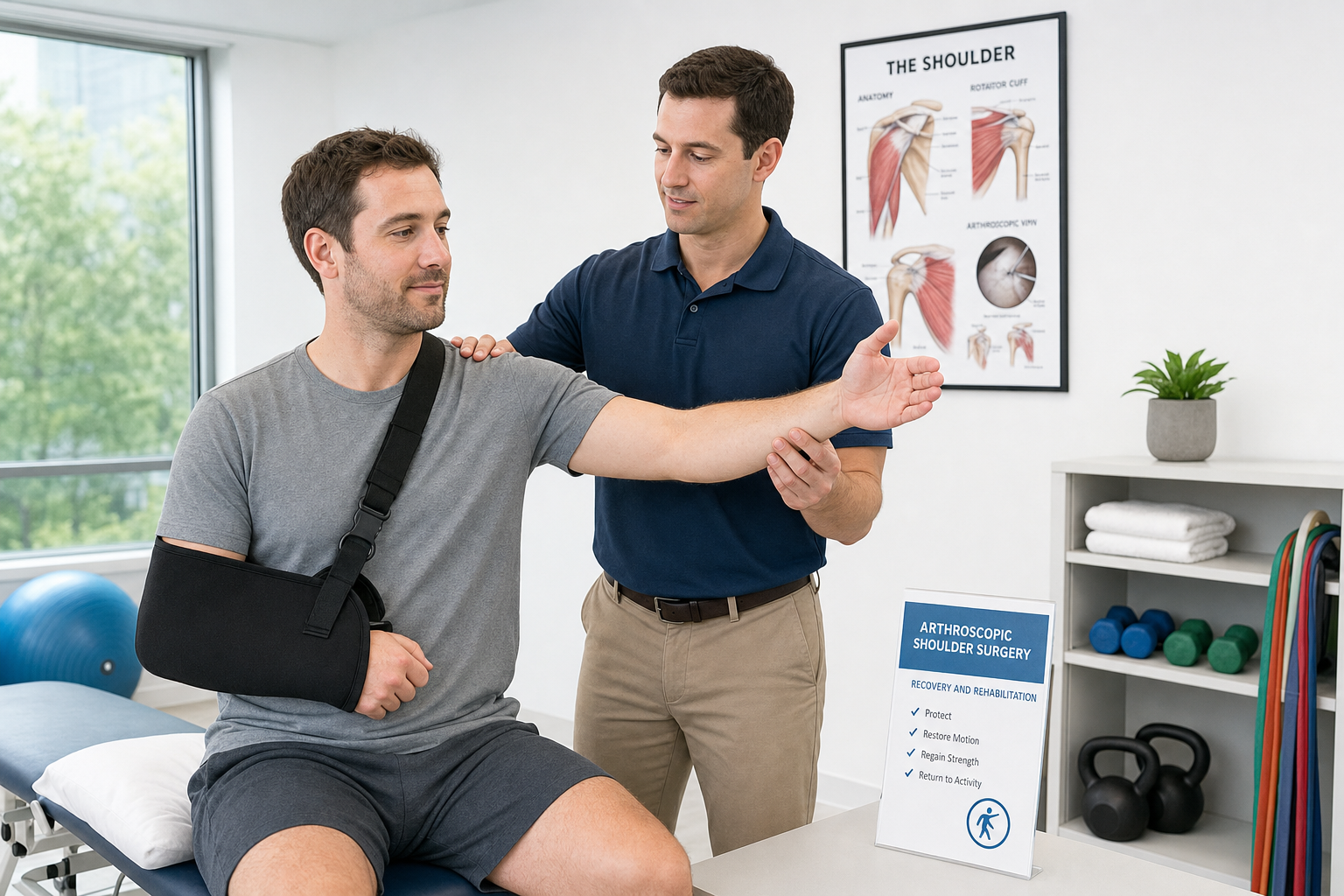
Shoulder Arthroscopy Recovery Timeline: Rehab Milestones Week by Week
Understanding the shoulder arthroscopy recovery timeline can help you set realistic expectations after surgery. Recovery usually moves through phases: protecting the shoulder early, restoring motion, rebuilding strength, and then returning to work, exercise, or sports. Exact milestones depend on what was done during arthroscopy, so your surgeon’s instructions always matter more than any general guide.
This page is a general recovery hub for arthroscopic shoulder surgery. If you are exploring treatment details, you can also learn about shoulder arthroscopy in Clermont. If your procedure involved a specific repair, your milestones may differ from someone who had a simpler clean-up procedure.
What Shoulder Arthroscopy Recovery Usually Looks Like
Shoulder arthroscopy uses a small camera and instruments inserted through small incisions to diagnose or treat shoulder problems. Compared with open surgery, recovery is often quicker, but it can still take weeks to months depending on the procedure performed. MedlinePlus notes that recovery after shoulder arthroscopy may take about 1 to 6 months, that sling use can be longer when more repair is done, and that physical therapy may be needed to regain motion and strength.
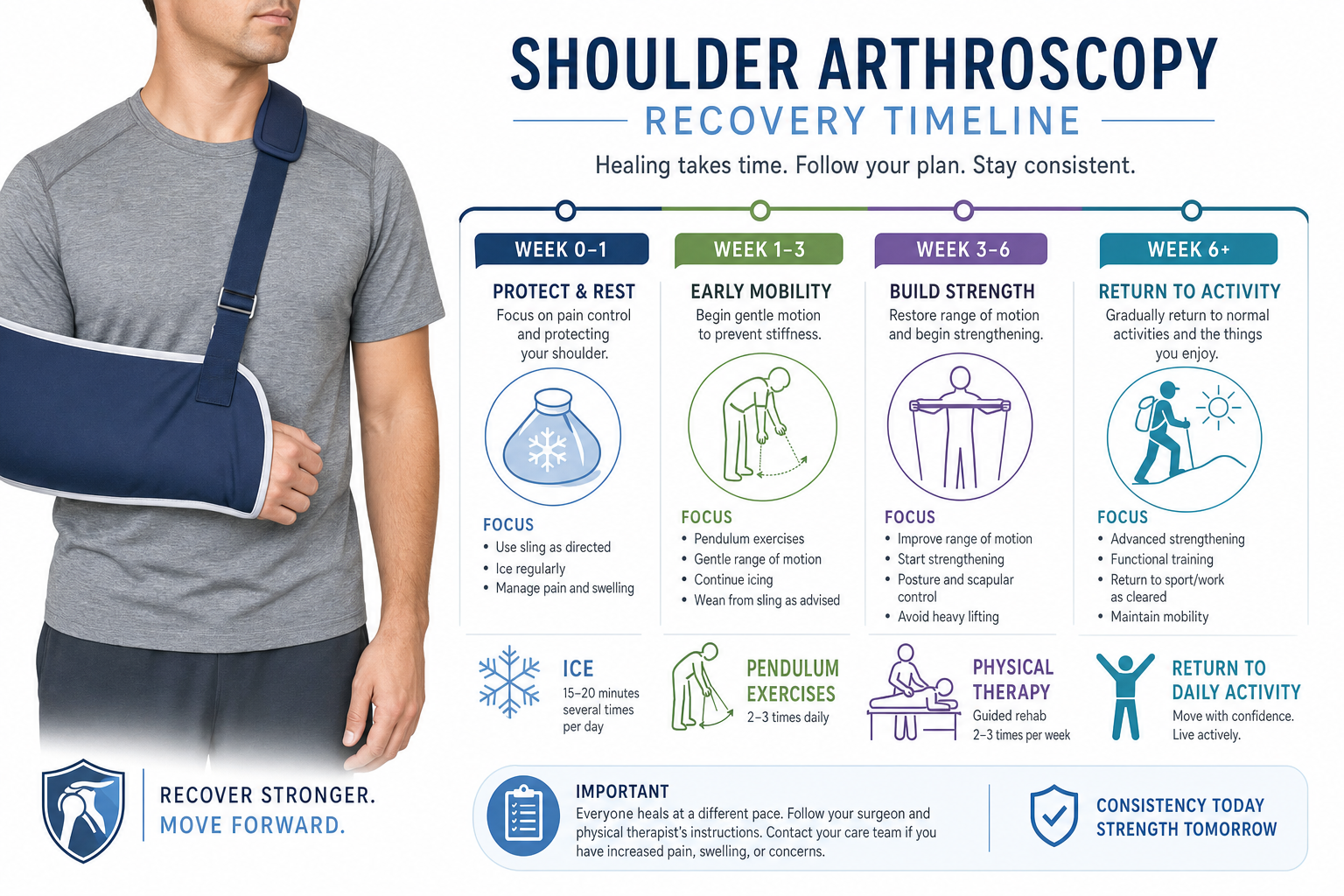
In general, recovery moves through four broad phases: early protection, progressive motion, strengthening, and gradual return to activity. That overall structure is especially important after repairs, because healing tissue has to be protected before heavier use is introduced.
Why Rehab Milestones Differ by Procedure
One patient may be moving the shoulder actively within days, while another may still be in a sling several weeks later. That difference usually reflects the procedure itself.
- Debridement or decompression: These procedures may involve removing inflamed or damaged tissue without reattaching tendon or labrum, so motion often returns sooner.
- Rotator cuff repair: Tendon healing to bone takes time, so early rehab emphasizes protection before active strengthening.
- Labral tear arthroscopy: Sling use and motion restrictions are commonly longer than after simple debridement.
- SLAP-related arthroscopy: Return to overhead activity may take longer because the repair needs protection during early healing.
This is why comparing your progress to a friend, family member, or online forum post can be misleading. A general timeline helps, but the exact milestones should match your operative findings and surgeon’s protocol.
Week 1 to 2: Pain Control, Sling Use, and Early Motion
The first two weeks focus on pain control, swelling management, incision care, and protecting the shoulder. Most shoulder arthroscopy procedures are outpatient, meaning patients usually go home the same day.
- Sling use: Some patients wear a sling mainly for comfort, while others need more consistent use after a repair.
- Ice: Ice and other pain-control measures are commonly used during the early phase.
- Wound care: Keep incision sites clean and follow the written instructions you were given after surgery.
- Early exercises: Depending on the procedure, your surgeon or therapist may start pendulum or other gentle exercises early.
- Help with daily tasks: Dressing, bathing, and meal preparation may temporarily require one-handed strategies or assistance.
Driving is generally avoided while you are wearing a sling or taking opioid pain medication. If you have questions about timing, ask at your first follow-up rather than guessing.
Weeks 3 to 6: Restoring Motion Without Overloading the Repair
This phase usually focuses on regaining motion safely. For patients with repairs, range of motion often progresses in a controlled way before strengthening becomes the priority.
Formal shoulder physical therapy may help restore motion and function. MedlinePlus notes that the length of therapy depends on what was done during surgery. In other words, a simple arthroscopy and a tissue-repair procedure should not be expected to progress identically.
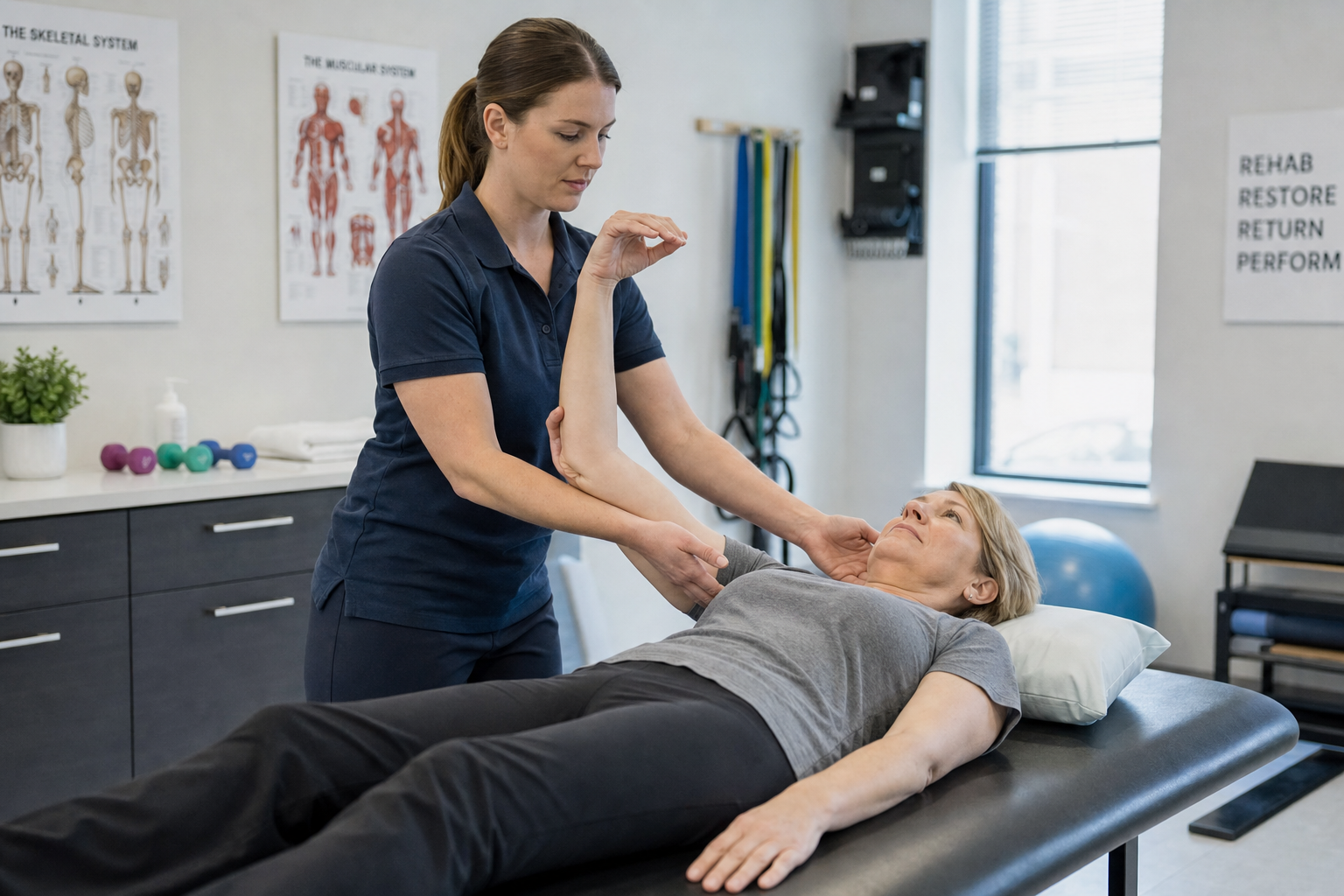
For arthroscopic rotator cuff repair specifically, the ASSET consensus statement describes a staged framework: an initial immobilization period, protected passive motion during the early weeks, then restoration of active motion, and progressive strengthening beginning later in rehab. That type of milestone-based progression is one reason surgeons may be cautious about moving too fast after a repair.
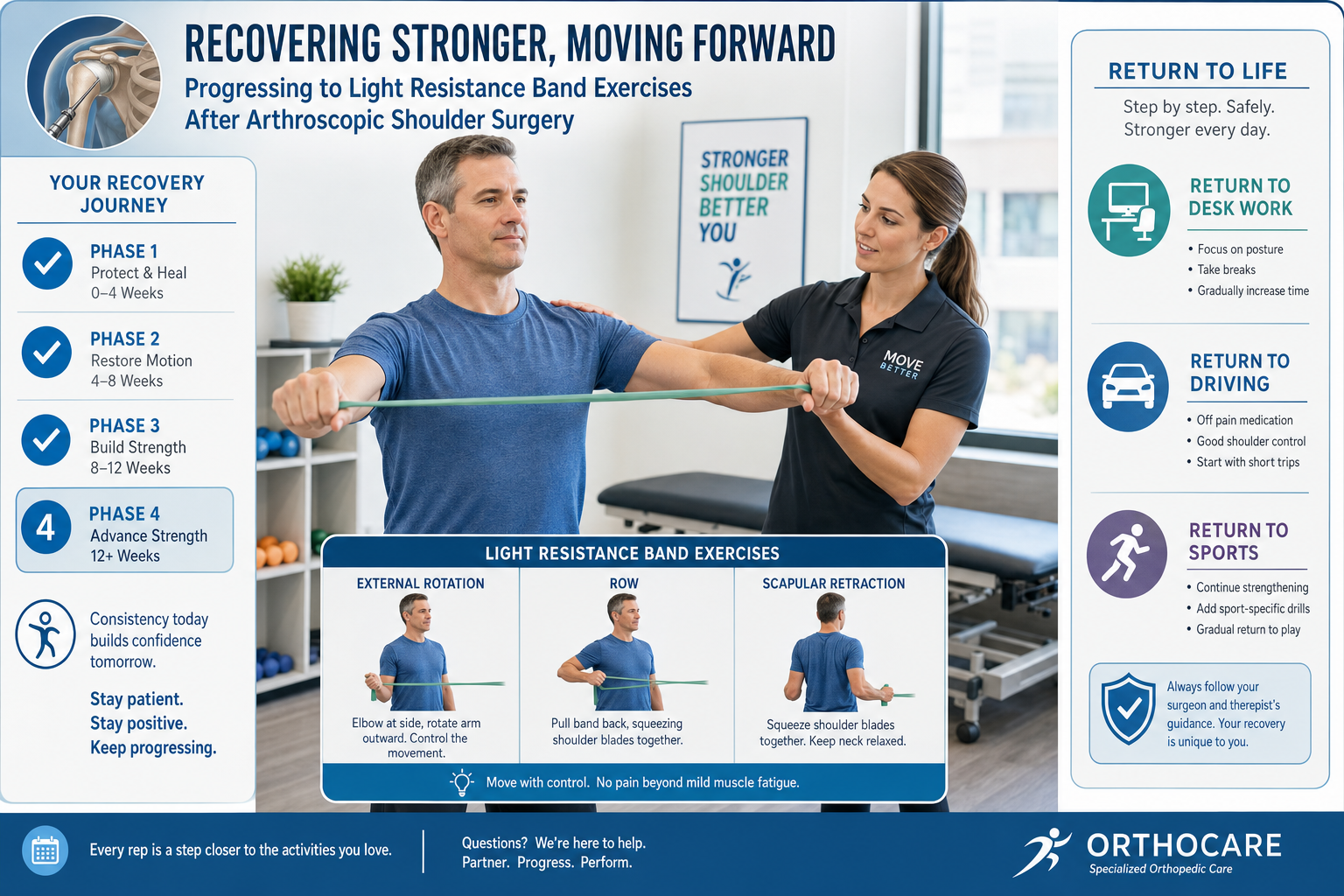
Weeks 6 to 12: Strengthening and Functional Progress
Once motion improves and the repair is far enough along, rehab usually shifts toward strength and control. The timing of this transition varies by procedure.
After rotator cuff repair, guideline-level rehabilitation frameworks generally delay more meaningful strengthening until later healing phases rather than starting heavy strengthening right away. That same principle of tissue protection also influences rehab after some labral and SLAP repairs.
By the end of this phase, many patients can do more light daily activity with the arm, but heavy lifting, repetitive overhead use, and sports-specific loading are often still limited.
Months 3 to 6: Return to Work, Exercise, and Sports
The later phase of the shoulder arthroscopy recovery timeline is about getting back to real-life demands. Return timing depends on the operation, your job, your symptoms, and whether strength and motion have recovered enough.
- Desk work: Often returns sooner than lifting or manual labor, sometimes within days to a few weeks depending on pain control, sling needs, and one-handed function.
- Light-duty work: May return earlier than overhead or forceful work.
- Heavy labor: Can take several months, especially after tendon or labral repair.
- Golf, tennis, swimming, or gym activity: These are usually resumed gradually after motion, strength, and control improve. For sport-specific guidance, see returning to golf and tennis after shoulder arthroscopy.
If you still need treatment planning for the other shoulder or for ongoing nonoperative symptoms, options such as non-surgical shoulder care may be part of a broader discussion. That is separate from routine post-op rehab and should not replace your surgical follow-up plan.
Warning Signs That Recovery May Not Be on Track
Some soreness, stiffness, sleep disruption, and frustration are common after shoulder surgery. Concerning symptoms are different: they suggest you should call your surgeon instead of trying to push through rehab.
- Fever or feeling ill after surgery
- Increasing redness, warmth, drainage, or foul odor from an incision
- Pain that is worsening instead of gradually improving
- New numbness, major swelling, or unexpected weakness
- Marked stiffness or loss of motion that is not improving as expected
If recovery is not going as expected, patients may seek a second opinion after failed or difficult shoulder surgery recovery. For some cases of persistent pain or mechanical problems after prior surgery, shoulder revision surgery may be part of the evaluation.
Questions to Ask at Your Follow-Up Visits
Good follow-up questions can make recovery clearer and safer. Consider asking:
- What procedure-specific milestones should I be meeting right now?
- When can I stop using the sling during the day and at night?
- When is it safe for me to drive?
- Which exercises are appropriate now, and which should I still avoid?
- When can I return to desk work, lifting, or sports?
- Which symptoms should prompt a call before my next visit?
A Simple Post-Op Recovery Checklist for Patients
Use this as a general checklist only. Your own post-op instructions take priority.
- ☐ Wearing the sling as directed
- ☐ Using ice and pain-control measures as instructed
- ☐ Keeping incision sites clean and following wound-care instructions
- ☐ Starting home exercises only when directed
- ☐ Attending physical therapy consistently if prescribed
- ☐ Avoiding early lifting or overhead use before clearance
- ☐ Watching for warning signs and reporting them promptly
- ☐ Getting explicit clearance before sports or heavy work
Frequently Asked Questions
How long is the sling worn after shoulder arthroscopy?
It depends on the procedure. After a simple arthroscopy, sling use may be brief and mainly for comfort. After rotator cuff, labral, or SLAP repair, sling use often lasts longer because the repair needs protection. Your surgeon should give the exact timeline for your case.
When can I drive after shoulder arthroscopy?
Driving is generally avoided while you are in a sling or taking opioid pain medication. Clearance should come from your surgeon because safe timing depends on pain, arm control, and the specific procedure.
When can I sleep without the sling after shoulder arthroscopy?
Nighttime sling use depends on the procedure and your surgeon’s instructions. Patients with repairs are often told to protect the shoulder during sleep longer than patients who had a simpler arthroscopy.
Is it normal to have pain or clicking during rehab after shoulder arthroscopy?
Mild discomfort can be part of recovery, and some patients notice occasional clicking during rehab. But sharp pain, a sudden setback, drainage, fever, or clicking associated with instability or major weakness should be reported rather than ignored.
When can I return to desk work after shoulder arthroscopy?
Desk work often returns earlier than manual labor, sometimes within days to a few weeks depending on pain, sling use, transportation, and whether one-handed work is realistic. Ask for guidance specific to your job duties.
When can I return to golf, tennis, or the gym after shoulder arthroscopy?
Return to sports and gym activity should be gradual and based on healing, motion, strength, and surgeon clearance. Patients recovering from repairs often need a longer timeline than those recovering from simple debridement procedures.
What are red flags after shoulder arthroscopy that should prompt a call to the surgeon?
Fever, worsening redness, drainage, pain that is getting worse instead of better, major swelling, or unexpected weakness are common reasons to call promptly.
How is recovery different after debridement versus labral repair or rotator cuff repair?
Debridement often allows faster progress because no major tissue is being reattached. Labral and rotator cuff repairs usually require more protection early on, slower motion progression, and later strengthening.
Update Log
- 2026-09-28: Article published as a general shoulder arthroscopy recovery timeline hub. Unsupported promotional claims, unverified physician-review language, and dated references were removed. Links and medical support were rechecked before publication.