

Shoulder Pain Treatment in Clermont: When to See a Surgeon
Shoulder pain treatment in Clermont is more accessible than many patients realize, and knowing when to act can make a significant difference in your recovery. Whether your discomfort started after a sports injury, developed gradually over years, or appeared without an obvious cause, the shoulder is a complex joint that deserves expert attention. At Varma Shoulder Institute, we help patients throughout Clermont and Central Florida understand their condition and find the right path forward — from conservative care to advanced surgical solutions.
Shoulder pain is one of the most common musculoskeletal complaints among adults, yet it is also one of the most frequently undertreated. Many people wait months — sometimes years — before seeking a professional evaluation, often assuming the pain will resolve on its own. Understanding the likely cause of your pain and knowing when to escalate care can protect your shoulder’s long-term function and quality of life.
Why Shoulder Pain Should Not Be Ignored
The shoulder is the most mobile joint in the human body, which also makes it one of the most vulnerable to injury and degeneration. Unlike knee or hip pain, shoulder pain can quietly worsen over time — a partial rotator cuff tear, for example, can progress to a full-thickness tear if left untreated. Pain that disrupts sleep, limits your ability to reach overhead, or interferes with work and daily tasks is your body’s signal that something needs attention.
Delaying evaluation does not just prolong discomfort — it can narrow your treatment options. Conditions that respond well to physical therapy or minimally invasive procedures early on may eventually require more complex surgery. Early intervention is almost always better for outcomes and recovery time. If you are experiencing persistent shoulder pain, scheduling a shoulder evaluation at Varma Shoulder Institute is the right first step.
Common Causes of Shoulder Pain in Adults
Shoulder pain has many potential sources, and accurate diagnosis is essential before any treatment plan is developed. The most common conditions we see at Varma Shoulder Institute include:
- Rotator cuff tears: Partial or full tears of the tendons surrounding the shoulder joint, often caused by repetitive overhead activity or acute injury. Learn more from AAOS OrthoInfo on rotator cuff tears.
- Shoulder impingement: Compression of the rotator cuff tendons beneath the acromion bone, causing pain with overhead movements. The AAOS guide on shoulder impingement provides a helpful overview.
- Frozen shoulder (adhesive capsulitis): Progressive stiffening of the shoulder capsule that severely limits range of motion.
- Shoulder arthritis: Degenerative joint disease that causes pain, stiffness, and grinding sensations in the shoulder.
- Labral tears (SLAP tears): Damage to the cartilage ring surrounding the shoulder socket, common in overhead athletes and after dislocations.
- Shoulder instability and dislocation: Recurrent looseness or dislocation of the shoulder joint, often following an initial traumatic event.
Signs Your Shoulder Pain May Need a Specialist
Not every ache requires a surgeon’s attention, but certain symptoms are clear indicators that a specialist evaluation is warranted. You should see a shoulder specialist if you experience any of the following:
- Pain that has persisted for more than four to six weeks without improvement
- Sudden inability to lift your arm or significant weakness after an injury
- A popping, clicking, or grinding sensation accompanied by pain
- Shoulder pain that wakes you from sleep consistently
- Visible deformity or swelling of the shoulder joint
- Pain following a fall, collision, or direct blow to the shoulder
- Loss of range of motion that is worsening over time
These symptoms can indicate structural damage — such as a rotator cuff tear, labral injury, or fracture — that requires imaging and expert assessment to properly diagnose and treat.
When Non-Surgical Treatment May Be Enough
Many shoulder conditions respond well to conservative, non-surgical care — particularly when addressed early. At Varma Shoulder Institute, our team always explores non-surgical options first when clinically appropriate. These may include:
- Physical therapy: Targeted exercises to restore strength, flexibility, and shoulder mechanics.
- Anti-inflammatory medications: NSAIDs to reduce pain and swelling during the acute phase.
- Corticosteroid injections: Guided injections to reduce inflammation in the joint or bursa.
- PRP (Platelet-Rich Plasma) therapy: Biologic injections that may support tendon healing in select patients.
- Activity modification: Adjusting movements and workload to allow healing without complete rest.
Conditions such as mild rotator cuff tendinitis, early-stage impingement, and frozen shoulder often improve significantly with a structured conservative program. The key is having an accurate diagnosis so the right non-surgical approach is applied.
When It May Be Time to See a Shoulder Surgeon
Surgery is not the first answer for most shoulder conditions, but it becomes the right answer when conservative treatment has been appropriately tried and has not provided adequate relief — or when the injury itself requires surgical repair to restore function. Situations where surgical evaluation is appropriate include:
- Full-thickness rotator cuff tears, especially in active patients
- Recurrent shoulder dislocations or instability that does not respond to rehabilitation
- Labral tears causing persistent pain and mechanical symptoms
- Severe shoulder arthritis that limits daily function and has not responded to injections or therapy
- Shoulder pain that has failed six or more weeks of structured conservative care
Double-fellowship-trained shoulder surgeon Dr. Amit Varma — who completed advanced training at the Rothman Institute under Dr. Michael Ciccotti and the Andrews Institute under Dr. James Andrews — performs a full range of shoulder procedures including arthroscopic rotator cuff repair, labral reconstruction, and total and reverse shoulder replacement. Our goal is always to use the least invasive approach that achieves lasting results.
What Happens During a Shoulder Evaluation
If you come to Varma Shoulder Institute for a shoulder evaluation, here is what to expect. Dr. Varma and our team will begin with a thorough review of your medical history, the onset and character of your symptoms, and any prior treatments you have tried. A hands-on physical examination assesses your range of motion, strength, and specific provocative tests that help identify the likely source of pain.
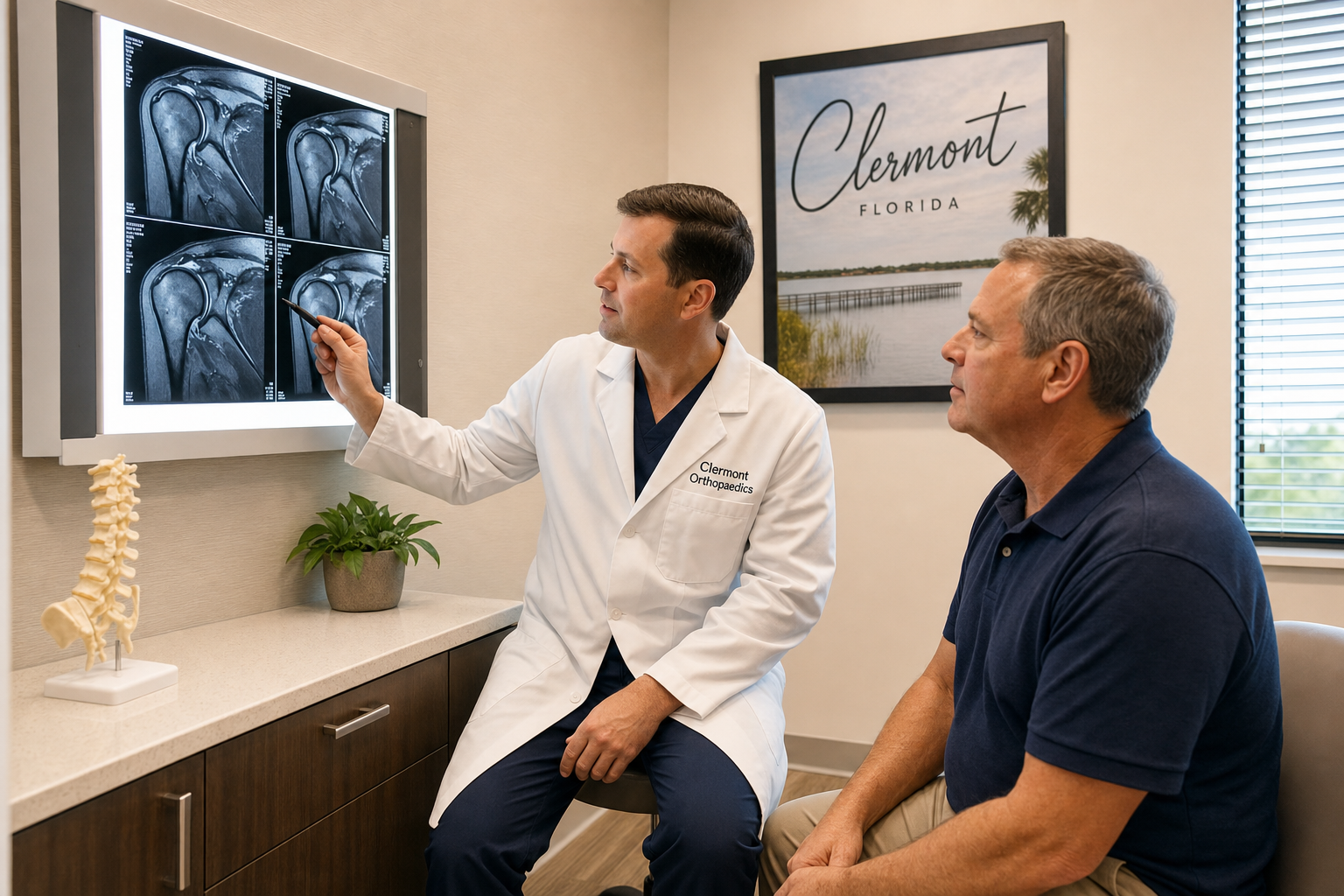
Imaging is often ordered to confirm the diagnosis. X-rays evaluate bone structure and joint spacing, while MRI provides detailed visualization of soft tissues including the rotator cuff, labrum, and cartilage. In some cases, ultrasound-guided evaluation is used for dynamic assessment of tendon integrity. Based on these findings, Dr. Varma will walk you through your diagnosis and present a clear, individualized treatment plan — starting with the most conservative appropriate option.
Treatment Options: Conservative Care to Surgery
Varma Shoulder Institute provides a full spectrum of shoulder care, meaning patients do not need to be referred elsewhere as their needs evolve. Our treatment offerings include:
- Non-surgical care: Physical therapy coordination, anti-inflammatory management, corticosteroid injections, and PRP therapy
- Shoulder arthroscopy: Minimally invasive surgery for rotator cuff repair, labral repair, impingement release, and biceps tenodesis
- Total shoulder replacement: For end-stage shoulder arthritis in patients with an intact rotator cuff
- Reverse shoulder replacement: For patients with rotator cuff tear arthropathy or complex revision cases
- Revision shoulder surgery: For patients who have had prior shoulder surgery that has failed or requires correction
- Second opinions: Available within 48 hours for patients who want expert review of a prior diagnosis or surgical recommendation
For more information on shoulder surgery options, the AAOS overview of shoulder surgery is a reliable patient-education resource. Research on shoulder outcomes is also available through PubMed for those who want to review peer-reviewed literature.
How to Decide Where to Get Shoulder Care in Clermont
Choosing where to receive shoulder care is an important decision. Varma Shoulder Institute is Clermont’s dedicated shoulder specialty practice, serving patients throughout Central Florida including Orlando, Kissimmee, Minneola, and the surrounding communities. Our practice is built entirely around shoulder and elbow care — it is all we do, which means our diagnostic precision and surgical expertise are focused in a way that a general orthopedic practice cannot replicate.
Dr. Varma serves as Chief of Surgery at South Lake Hospital and brings more than 10 years of experience to every patient encounter. We accept Aetna, Cigna, Florida Blue/BCBS, UnitedHealthcare, Medicare, Tricare, and self-pay patients. Same-week appointments are available, and second opinions can typically be arranged within 48 hours. To book your shoulder evaluation with our Clermont team, call (352) 404-8956 or email info@varmashoulderinstitute.com.
Common Mistakes Patients Make With Shoulder Pain
Understanding what not to do is just as important as knowing the right steps. Here are the most common mistakes we see at Varma Shoulder Institute:
- Waiting too long to seek evaluation: Hoping shoulder pain will resolve on its own for months or years often allows conditions to worsen and treatment options to narrow.
- Self-diagnosing based on internet searches: Shoulder pain has many overlapping causes. Without imaging and a physical exam, self-diagnosis frequently leads to the wrong treatment approach.
- Skipping physical therapy: Even when surgery is ultimately needed, patients who skip pre- or post-operative physical therapy tend to have longer recovery times and less complete outcomes.
- Stopping treatment too early: Shoulder rehabilitation takes time. Discontinuing therapy as soon as pain improves — before strength and mechanics are fully restored — increases the risk of re-injury.
- Ignoring nighttime pain: Pain that consistently wakes you from sleep is a red-flag symptom that warrants prompt evaluation, not continued watchful waiting.
A Closer Look: When Conservative Care Transitions to Surgery
Frequently Asked Questions
How do I know if my shoulder pain needs surgery?
Surgery is typically considered when a structural injury is confirmed on imaging, when conservative treatment has not provided adequate relief after six or more weeks, or when the injury itself — such as a full rotator cuff tear — requires surgical repair to restore function. A thorough evaluation at Varma Shoulder Institute will clarify whether surgery is appropriate for your specific condition.
What is the difference between a shoulder specialist and a general orthopedic surgeon?
A shoulder specialist focuses exclusively on shoulder and elbow conditions, bringing deeper diagnostic and surgical expertise to complex cases. Dr. Amit Varma at Varma Shoulder Institute is double-fellowship-trained in shoulder and elbow surgery, meaning his entire practice is dedicated to this area of orthopedics.
Can shoulder pain go away on its own without treatment?
Mild shoulder pain from overuse or minor strain may improve with rest and activity modification. However, pain caused by structural problems — such as rotator cuff tears, labral injuries, or arthritis — rarely resolves without targeted treatment and tends to worsen over time if left unaddressed.
Does Varma Shoulder Institute accept my insurance?
Varma Shoulder Institute accepts Aetna, Cigna, Florida Blue/BCBS, UnitedHealthcare, Medicare, Tricare, and self-pay patients. Contact our office at (352) 404-8956 or email info@varmashoulderinstitute.com to verify your specific benefits before scheduling.
How quickly can I get an appointment at Varma Shoulder Institute?
Same-week appointments are available at Varma Shoulder Institute in Clermont, FL. Second opinions can typically be arranged within 48 hours. Call (352) 404-8956 to schedule.
What imaging is needed to diagnose shoulder pain?
Most shoulder evaluations begin with X-rays to assess bone structure and joint spacing. An MRI is often ordered to evaluate soft tissues such as the rotator cuff, labrum, and cartilage. Ultrasound may also be used for dynamic tendon assessment. Dr. Varma will determine which imaging is appropriate based on your examination findings.
Is frozen shoulder treated with surgery?
Frozen shoulder is most commonly treated with physical therapy, anti-inflammatory medications, and corticosteroid injections. Surgery — typically arthroscopic capsular release — is reserved for cases that do not respond to prolonged conservative care. For more information, see the AAOS guide on frozen shoulder.
Update Log
- May 2026: Article published covering shoulder pain treatment in Clermont, FL, including guidance on when to see a shoulder surgeon, common causes of shoulder pain, and treatment options available at Varma Shoulder Institute.