

Revision Surgery After Failed Rotator Cuff Repair
Revision rotator cuff surgery becomes a consideration when a prior repair has not healed as expected, leaving patients with ongoing pain, weakness, or limited shoulder function. At Varma Shoulder Institute, we understand how frustrating it is to go through surgery and rehabilitation only to feel that something is still wrong. This guide explains what a failed repair looks like, why it happens, and what your options are.
Rotator cuff repairs have a strong track record, but healing is not guaranteed for every patient. Factors including tear size, tissue quality, patient age, and rehabilitation adherence all influence outcomes. When a repair does not heal properly — or when the tendon retears — patients are left navigating a difficult situation that requires careful, expert evaluation before any next steps are taken.
When Rotator Cuff Surgery Does Not Fully Heal
Rotator cuff healing occurs over months, not weeks. The tendon must biologically reattach to the bone, a process that can be disrupted by many variables. Some patients experience what is called a “structural failure” — the repaired tendon does not fully incorporate into the bone or tears again under load. Others may have a technically successful repair but develop significant scar tissue or stiffness that limits function. Understanding which type of failure has occurred is the first step toward the right treatment.
According to the American Academy of Orthopaedic Surgeons (AAOS), larger rotator cuff tears carry a higher risk of retear after surgical repair, and outcomes are influenced by the patient’s overall health and tissue quality at the time of surgery. If you are experiencing symptoms that suggest your repair may not have healed, our team at Varma Shoulder Institute encourages you to seek a thorough evaluation rather than waiting and hoping symptoms resolve on their own.
Signs Your Rotator Cuff Repair May Have Failed
Recognizing the warning signs of a failed repair is important. While some discomfort and stiffness in the early weeks after surgery is expected, the following symptoms — especially if they persist beyond the expected recovery window — warrant prompt evaluation:
- Persistent or worsening shoulder pain that does not improve with physical therapy and time
- Significant weakness when lifting the arm or reaching overhead
- A popping or tearing sensation that occurred during recovery
- Loss of range of motion that plateaus or regresses after an initial period of improvement
- Swelling or tenderness around the shoulder that does not resolve
These symptoms do not automatically confirm a retear, but they are red flags that should be evaluated with updated imaging and a clinical examination. Schedule a consultation at Varma Shoulder Institute if you are experiencing any of these signs after a prior rotator cuff repair.
Why a Rotator Cuff Repair Can Fail
Failed rotator cuff repairs can result from a range of biological, mechanical, and patient-related factors. Common causes include:
- Large or massive tear size: Larger tears involve more tissue and are inherently more difficult to heal reliably.
- Poor tissue quality: Fatty infiltration of the rotator cuff muscles reduces the tendon’s ability to heal after reattachment.
- Patient age and biology: Healing capacity naturally decreases with age, and certain medical conditions can impair tissue repair.
- Premature return to activity: Overloading the repair before it has fully healed is a preventable but common cause of retear.
- Technical factors: In some cases, the original repair technique or anchor placement may not have been optimal for the specific tear pattern.
- Inadequate rehabilitation: Physical therapy is essential to restoring function and protecting the repair during healing.
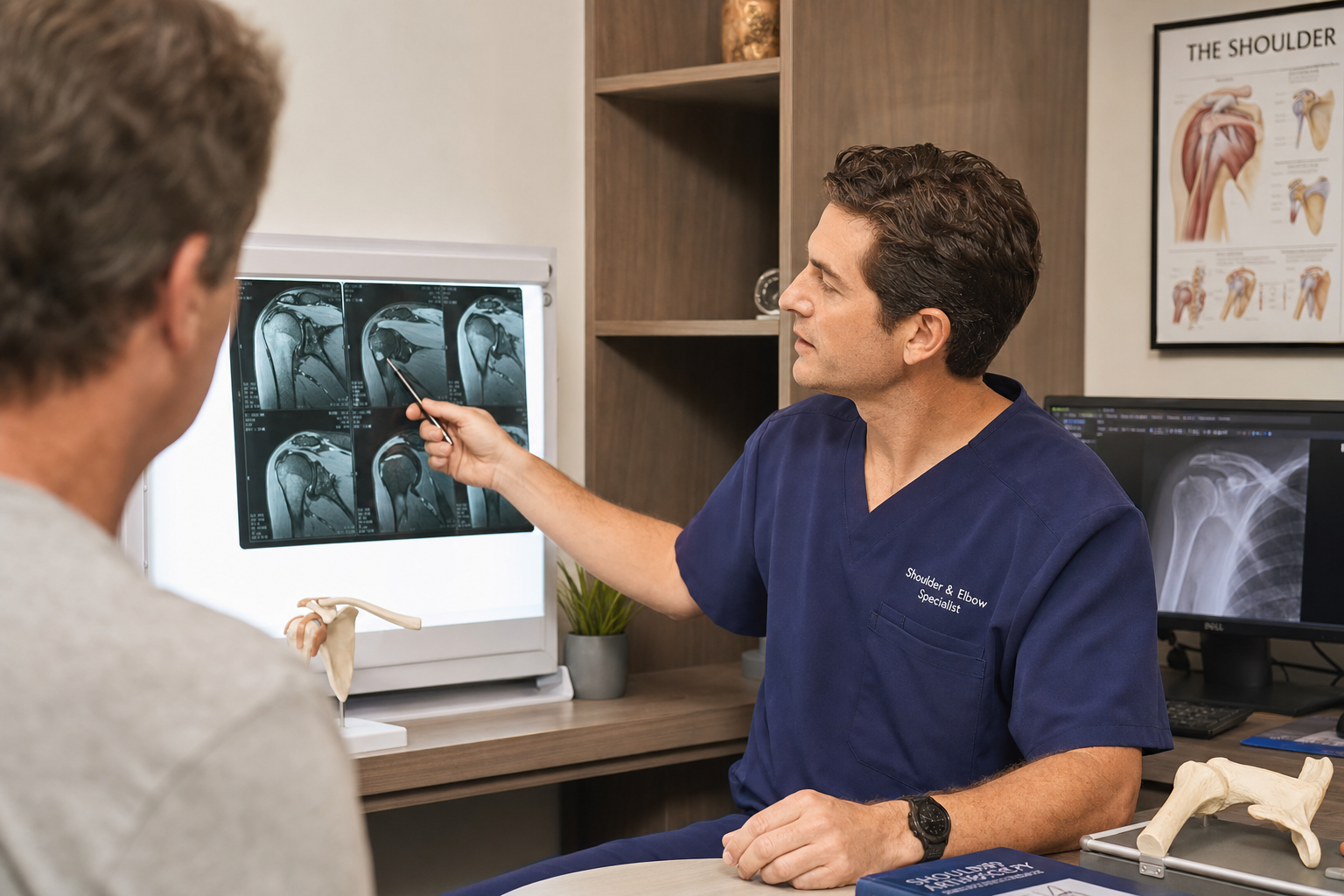
How a Shoulder Specialist Evaluates a Failed Repair
Evaluating a failed rotator cuff repair requires more than a standard office visit. At Varma Shoulder Institute, double-fellowship-trained shoulder surgeon Dr. Amit Varma — who completed fellowships at the Rothman Institute under Dr. Michael Ciccotti and the Andrews Institute under Dr. James Andrews — uses a structured diagnostic approach that includes:
- Detailed history review: Understanding the original tear size, surgical technique used, and the course of rehabilitation helps identify likely failure mechanisms.
- Physical examination: Strength testing, range-of-motion assessment, and provocative maneuvers help localize the problem.
- Advanced imaging: MRI with arthrogram is often the most informative study for evaluating tendon integrity after a prior repair. Standard MRI can be affected by artifact from surgical anchors, so technique matters.
- Review of prior operative reports: Understanding exactly what was done during the original surgery is essential for planning any revision procedure.
This comprehensive evaluation ensures that any treatment recommendation — surgical or non-surgical — is based on a complete and accurate picture of your shoulder’s current condition. To request a second-opinion evaluation, contact our Clermont shoulder team — we offer second opinions within 48 hours.
When Revision Surgery Is Recommended
Revision rotator cuff surgery is not the right answer for every patient with a failed repair. The decision depends on several factors, including the patient’s functional goals, the extent of the retear, tissue quality, and overall health. Revision surgery is generally considered when:
- Imaging confirms a structural retear with sufficient remaining tissue for repair
- The patient has significant functional limitations that affect daily activities or work
- Conservative measures — including physical therapy and injections — have not provided adequate relief
- The patient is medically fit for surgery and committed to the rehabilitation process
Revision surgery is a more technically demanding procedure than the original repair. It requires a surgeon with specific experience in complex shoulder reconstruction. The American Shoulder and Elbow Surgeons (ASES) recognizes revision shoulder surgery as a specialized area requiring advanced training and expertise.
Revision Rotator Cuff Surgery Options
The specific approach to revision rotator cuff surgery depends on what is found during evaluation. Common options include:
- Arthroscopic revision repair: When adequate tendon tissue remains, the torn tendon can be re-anchored to the bone using arthroscopic (minimally invasive) techniques. This is the preferred approach when tissue quality allows.
- Superior capsule reconstruction (SCR): For massive, irreparable tears, SCR uses a graft to reconstruct the superior shoulder capsule and restore joint mechanics.
- Tendon transfer: In select cases where the rotator cuff cannot be repaired, a nearby tendon may be transferred to restore shoulder function.
- Reverse total shoulder replacement: For patients with a massive irreparable tear combined with significant arthritis or pseudoparalysis, reverse shoulder replacement can restore meaningful function. Learn more from the AAOS guide to shoulder joint replacement.
Our team at Varma Shoulder Institute evaluates each patient individually to determine which revision approach — if any — offers the best chance of restoring shoulder function and reducing pain.
What Recovery After Revision Surgery Looks Like
Recovery from revision rotator cuff surgery is typically longer and more demanding than recovery from a primary repair. Patients should expect:
- Immobilization: A sling is usually worn for 4 to 6 weeks, sometimes longer depending on the complexity of the revision.
- Physical therapy: A structured rehabilitation program is essential and typically spans 4 to 6 months or more.
- Gradual return to activity: Light daily activities may resume within weeks, but overhead work and heavy lifting are restricted for an extended period.
- Patience with the process: Tendon-to-bone healing after a revision repair takes time. Rushing the process is one of the most common reasons repairs fail again.
The AAOS overview of shoulder arthroscopy provides helpful context on what arthroscopic shoulder procedures involve and what patients can generally expect during recovery.
When a Second Opinion Makes Sense
If you have been told your rotator cuff repair failed and you are unsure about the recommended next steps, a second opinion is a reasonable and often valuable step. A second opinion is particularly useful when:
- You were told revision surgery is not possible and want to explore all options
- You were recommended revision surgery but want confirmation before proceeding
- Your symptoms do not match the explanation you have been given
- You feel your recovery has stalled and your current provider has not offered a clear path forward
Varma Shoulder Institute provides second opinions for patients throughout Clermont, Orlando, and Central Florida, with appointments available within 48 hours. Dr. Varma will review your imaging, examine your shoulder, and give you a clear, honest assessment of your situation — with no obligation to proceed with treatment at our practice.
Treatment Alternatives if Revision Surgery Is Not the Best Choice
Not every patient with a failed rotator cuff repair is a candidate for revision surgery. In some cases, non-surgical management can meaningfully improve pain and function. Options may include:
- Structured physical therapy: Strengthening the muscles around the shoulder can compensate for a partial or complete retear in some patients.
- Corticosteroid injections: Can reduce inflammation and provide temporary pain relief to support rehabilitation.
- PRP (platelet-rich plasma) injections: Some patients with partial retears or tendon degeneration may benefit from biologic injections, though individual results vary.
- Activity modification: Adjusting work and recreational activities to reduce shoulder load can allow patients to manage symptoms without surgery.
The right non-surgical plan depends on the specific findings in your shoulder. Our team will discuss all realistic options with you based on your imaging and examination results.
A Closer Look: What a Failed Repair Evaluation Involves
This type of scenario illustrates why a detailed evaluation — including updated imaging and a review of the original surgical report — is essential before any revision decision is made. Every patient’s situation is different, and treatment must be individualized accordingly.
Common Mistakes Patients Make After a Failed Repair
Patients dealing with a failed rotator cuff repair often make decisions that can delay recovery or limit their options. Here are the most common mistakes to avoid:
- Waiting too long to seek re-evaluation: Prolonged inactivity or untreated retears can lead to progressive muscle atrophy and fatty infiltration, which reduces the chances of a successful revision repair.
- Assuming nothing can be done: Even complex or massive retears often have surgical or non-surgical options. A specialist evaluation is the only way to know what is possible.
- Returning to heavy activity too soon: Overloading a healing repair is one of the most preventable causes of failure. Follow your rehabilitation protocol carefully.
- Skipping physical therapy: Rehabilitation is not optional after rotator cuff surgery. Patients who skip or abbreviate PT have higher rates of poor outcomes.
- Not seeking a second opinion: If you are uncertain about your diagnosis or treatment recommendation, a second opinion from a fellowship-trained shoulder specialist is a reasonable and often clarifying step.
What to Do Next
If you are experiencing persistent pain, weakness, or limited function after a prior rotator cuff repair, the most important step is to get a thorough evaluation from a shoulder specialist with specific experience in revision surgery. Varma Shoulder Institute provides revision rotator cuff surgery evaluations and second opinions for patients throughout Clermont, Orlando, and Central Florida. Same-week consultation appointments are available, and second opinions can typically be scheduled within 48 hours.
Dr. Varma and our team will review your imaging, examine your shoulder, and give you a clear explanation of what is happening and what your realistic options are — surgical and non-surgical. You deserve a complete picture before making any decision about your shoulder care.
Frequently Asked Questions
How do I know if my rotator cuff repair has failed?
Common signs of a failed rotator cuff repair include persistent shoulder pain that does not improve with time and therapy, significant weakness when lifting or reaching overhead, and a popping or tearing sensation during recovery. An MRI with arthrogram is typically needed to confirm whether a structural retear has occurred.
How common is it for a rotator cuff repair to fail or retear?
Retear rates after rotator cuff repair vary depending on the original tear size, patient age, and tissue quality. Larger tears and older patients tend to have higher retear rates. Your surgeon can give you a more specific assessment based on your individual situation and imaging findings.
Is revision rotator cuff surgery more difficult than the original repair?
Yes. Revision rotator cuff surgery is generally more technically demanding than a primary repair because scar tissue, altered anatomy, and reduced tendon quality all complicate the procedure. It is important to have this surgery performed by a fellowship-trained shoulder specialist with specific experience in revision cases.
How long does recovery take after revision rotator cuff surgery?
Recovery from revision rotator cuff surgery typically takes longer than recovery from a primary repair — often 5 to 6 months or more of structured rehabilitation. Sling immobilization is usually required for 4 to 6 weeks, followed by a progressive physical therapy program.
Can a failed rotator cuff repair be treated without surgery?
In some cases, yes. Patients with lower functional demands or poor tissue quality may achieve meaningful pain relief and function through physical therapy, injections, and activity modification. Whether non-surgical treatment is appropriate depends on the specific findings in your shoulder and your personal goals.
Should I get a second opinion if I think my rotator cuff repair failed?
A second opinion is a reasonable and often valuable step, especially if you are uncertain about your diagnosis or the recommended treatment. Varma Shoulder Institute offers second opinions within 48 hours — call (352) 404-8956 or schedule online to speak with Dr. Varma about your situation.
What imaging is used to evaluate a failed rotator cuff repair?
MRI with arthrogram is generally the most informative imaging study for evaluating a failed rotator cuff repair, as it provides detailed visualization of tendon integrity even in the presence of surgical anchors. Standard MRI, ultrasound, and X-rays may also be used as part of a complete evaluation.
Update Log
- May 2026: Article published covering signs of failed rotator cuff repair, revision surgery options, recovery expectations, and second opinion guidance for patients in Clermont and Central Florida.