

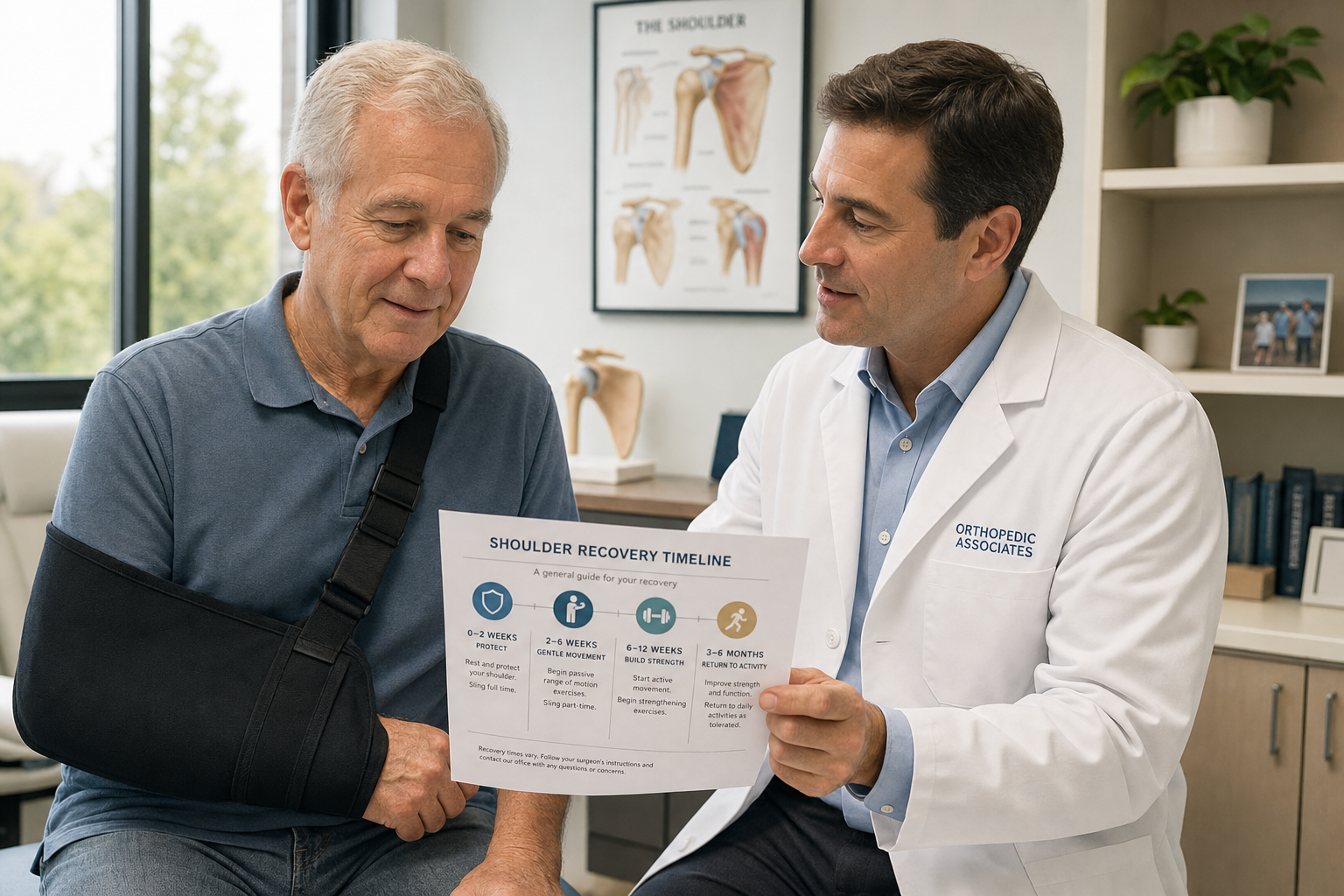
Shoulder Replacement Recovery Timeline
Understanding the shoulder replacement recovery timeline is one of the most important steps Florida retirees can take before committing to surgery. Whether you are considering a total shoulder replacement or a reverse shoulder replacement, knowing what to expect week by week helps you plan your life, your support system, and your return to the activities you love. At Varma Shoulder Institute, we walk every patient through a personalized recovery plan before the first incision is ever made.
Who This Recovery Timeline Is For
This guide is written primarily for Florida retirees and active adults in the Clermont, Orlando, and Central Florida area who are weighing shoulder replacement surgery. If arthritis, a failed rotator cuff, or years of wear have left your shoulder painful and stiff, shoulder arthroplasty may be the most effective path to lasting relief. The recovery process is manageable — but it requires realistic expectations, a reliable support system at home, and a surgical team that communicates clearly.
Whether you are planning around a snowbird season, a family trip, or simply want to get back to morning walks and weekend golf, understanding the recovery arc helps you time your surgery wisely. Our team at Varma Shoulder Institute regularly helps patients coordinate surgery dates around travel plans, caregiving responsibilities, and personal milestones.
For a deeper overview of shoulder replacement as a procedure, the AAOS OrthoInfo guide to shoulder joint replacement is an excellent starting point.
Total vs. Reverse Shoulder Replacement: How Recovery Differs
Not all shoulder replacements follow the same recovery path. The two most common procedures — anatomic total shoulder replacement and reverse total shoulder arthroplasty — have meaningfully different rehabilitation protocols.
In an anatomic total shoulder replacement, the ball and socket are resurfaced in their natural positions. This procedure works best when the rotator cuff is intact. Physical therapy focuses on restoring range of motion and strength in a relatively predictable sequence.
In a reverse total shoulder replacement, the ball and socket positions are switched. This design is used when the rotator cuff is severely damaged or absent, allowing the deltoid muscle to power the arm instead. Because the deltoid must be retrained, reverse shoulder replacement recovery tends to require a longer period of protected motion early on — typically six weeks in a sling — before active strengthening begins.
If you are unsure which procedure is right for your shoulder, schedule a shoulder replacement consultation at Varma Shoulder Institute for a personalized evaluation. Dr. Amit Varma, a double-fellowship-trained shoulder surgeon who completed advanced training at the Rothman Institute and the Andrews Institute, will review your imaging and recommend the approach best suited to your anatomy and activity goals.
Week-by-Week Recovery Timeline
The following timeline reflects general recovery milestones. Individual progress varies based on procedure type, age, overall health, and adherence to physical therapy.
Days 1–3 (Hospital and Home Arrival): Most shoulder replacement patients go home the same day or after one overnight stay. Pain is managed with prescribed medication. The arm is placed in a sling immediately. A physical therapist or nurse will demonstrate pendulum exercises and safe arm positioning before discharge.
Weeks 1–2: Focus is on wound care, swelling management, and gentle pendulum exercises. Sleep in a recliner or with a wedge pillow to keep the shoulder elevated and reduce discomfort. Avoid lifting, reaching, or using the operative arm for any functional tasks.
Weeks 3–6: Passive range-of-motion exercises begin under therapist guidance. The sling remains in place except during therapy and hygiene. Most patients can manage basic self-care tasks — eating, light grooming — with the operative arm by week four.
Weeks 6–12: The sling is typically discontinued. Active-assisted and then active range-of-motion exercises begin. Strength training starts gradually. Many patients notice meaningful improvement in pain and function during this phase.
Months 3–6: Progressive strengthening continues. Most patients return to driving, light recreational activities, and social engagements. Golf, swimming, and overhead activities are typically cleared between months four and six, depending on individual progress.
Beyond 6 Months: Full functional recovery and maximum strength gains continue to develop. Many patients report continued improvement for up to twelve months post-surgery.
Pain Control, Sling Use, Sleep, and Daily Activities
Managing the first six weeks well sets the foundation for the entire recovery. Here is what matters most:
- Pain control: Prescription pain medication is typically used for the first one to two weeks, transitioning to over-the-counter options as comfort improves. Ice applied to the shoulder (with a cloth barrier) for fifteen to twenty minutes several times daily helps manage swelling.
- Sling use: Wear the sling as directed — typically full-time for four to six weeks. Removing it prematurely risks stressing the repair and delaying healing.
- Sleep positioning: Sleeping flat on your back is difficult early in recovery. A recliner chair or a wedge pillow system that keeps the torso elevated at roughly 45 degrees is the most comfortable and safest option for the first several weeks.
- Daily activities: Dressing, bathing, and meal preparation require adaptation. Button-front shirts, slip-on shoes, and pre-cut foods make the first weeks more manageable. Most patients benefit from having a family member or caregiver available for the first two weeks.
For additional guidance on what to expect after shoulder surgery, the AAOS overview of shoulder surgery recovery provides helpful context.
Physical Therapy and Home Exercises: What Matters Most
Physical therapy after shoulder arthroplasty is not optional — it is the engine of recovery. Most patients begin gentle exercises within the first few days of surgery and continue formal therapy for three to four months.
Early therapy focuses on preventing stiffness through passive motion — meaning the therapist or the patient’s other arm moves the operative shoulder through its range. This protects healing tissue while maintaining mobility. As healing progresses, active motion and then strengthening exercises are introduced in a carefully sequenced protocol.
Home exercise compliance between therapy sessions is equally important. Patients who perform their prescribed home exercises consistently tend to regain motion faster and experience fewer setbacks. Our team at Varma Shoulder Institute provides written and illustrated home exercise programs so patients always know exactly what to do between appointments.
The American Shoulder and Elbow Surgeons (ASES) recognizes physical therapy as a cornerstone of successful shoulder arthroplasty outcomes.
Driving, Travel, Golf, Swimming, and Returning to Hobbies
One of the most common questions Florida retirees ask before shoulder replacement is: “When can I get back to my life?” Here are general return-to-activity benchmarks, keeping in mind that Dr. Varma provides individualized clearance based on your specific progress:
- Driving: Most patients can return to driving at six to eight weeks, once the sling is discontinued and reaction time is not impaired by pain or medication. Always confirm clearance with your surgeon before driving.
- Air travel: Short flights are generally possible by six to eight weeks. Longer trips may require additional planning around swelling, positioning, and medication management.
- Golf: Return to golf after shoulder replacement typically occurs between four and six months. A gradual return — starting with chipping and putting before progressing to a full swing — is strongly recommended.
- Swimming: Recreational swimming is usually cleared between four and five months. Competitive or lap swimming may take longer depending on stroke mechanics and shoulder strength.
- Overhead activities and yard work: Light overhead tasks are often possible by three to four months; heavier activities like raking, pruning, or lifting are typically cleared at five to six months.
Warning Signs and When to Call Your Surgeon
Most shoulder replacement recoveries proceed smoothly, but knowing the warning signs of a complication can prevent a minor issue from becoming a serious one. Contact your surgeon promptly if you experience any of the following:
- Fever above 101°F that persists beyond the first 48 hours after surgery
- Sudden increase in pain that is not controlled by prescribed medication
- Redness, warmth, or discharge at the incision site
- Significant swelling in the arm or hand that develops after the first week
- Numbness or tingling that is new or worsening
- A sensation that the shoulder has “shifted” or feels unstable
These symptoms do not always indicate a serious complication, but they warrant prompt evaluation. Do not wait for your next scheduled appointment — call the office directly. VSI patients can reach our team at (352) 404-8956 during business hours.
For a broader reference on shoulder conditions and when to seek care, the AAOS guide to shoulder pain and common shoulder problems is a reliable resource.
How Dr. Varma Helps Retirees Plan a Safer, Smoother Recovery
Varma Shoulder Institute provides total and reverse shoulder replacement for patients throughout Clermont, Orlando, and Central Florida, with same-week consultation appointments available. Dr. Varma, who serves as Chief of Surgery at South Lake Hospital, brings more than a decade of specialized shoulder surgery experience to every case — including complex revisions and cases where prior surgeries have failed.
What sets VSI apart for retirees is the emphasis on pre-surgical planning. Before your procedure, our team reviews your home setup, caregiver availability, travel plans, and activity goals. We coordinate with physical therapists in your area and provide a written recovery roadmap so you are never guessing about what comes next. If you are considering surgery and want a second opinion, we offer second-opinion consultations within 48 hours.
To learn more or to request a shoulder replacement evaluation at Varma Shoulder Institute, call (352) 404-8956 or visit our Clermont office. We accept Aetna, Cigna, Florida Blue/BCBS, UnitedHealthcare, Medicare, Tricare, and self-pay.
A Recovery Example: What the Process Can Look Like
Common Mistakes That Slow Recovery
Even motivated patients can unintentionally set back their recovery. Here are the most common mistakes we see — and how to avoid them:
- Removing the sling too early: The sling protects healing tissue. Discontinuing it before your surgeon clears you — even for short periods — can stress the repair and delay progress.
- Skipping or inconsistently attending physical therapy: Therapy is not optional. Patients who miss sessions or skip home exercises consistently take longer to regain motion and strength.
- Overexerting too soon: Feeling better does not mean the shoulder is fully healed. Attempting to lift, reach overhead, or return to sports before clearance is one of the most common causes of setbacks.
- Poor sleep positioning: Sleeping flat on the operative side or without proper support increases pain and can disrupt healing. Use a recliner or wedge pillow system as directed.
- Delaying the call when something feels wrong: Patients sometimes wait days before reporting a fever, wound change, or sudden pain increase. Early contact with your surgical team almost always leads to better outcomes.
Practical Next Steps
If you are considering shoulder replacement surgery or have already been told you are a candidate, here is how to move forward with confidence:
- Schedule a consultation: Meet with Dr. Varma to review your imaging, discuss procedure options, and ask every question on your list. Same-week appointments are available at Varma Shoulder Institute.
- Plan your home setup: Arrange for a caregiver or family member to assist for the first two weeks. Set up a comfortable recliner or wedge pillow sleeping arrangement before surgery day.
- Identify a physical therapist: Ask our team for a referral or confirm that your preferred therapist has experience with post-arthroplasty rehabilitation.
- Review your insurance: VSI accepts Medicare, Aetna, Cigna, Florida Blue/BCBS, UnitedHealthcare, Tricare, and self-pay. Verify your specific benefits before scheduling surgery.
- Ask about timing: If you have travel plans, family commitments, or a snowbird schedule, discuss timing with Dr. Varma so your surgery date aligns with your recovery window.
Frequently Asked Questions
How long does shoulder replacement recovery take?
Most patients regain meaningful functional use of the shoulder within three to four months, with full recovery and maximum strength gains continuing for up to twelve months. The exact timeline depends on the procedure type, the patient’s overall health, and adherence to physical therapy.
Is reverse shoulder replacement recovery longer than total shoulder replacement?
Reverse shoulder replacement typically requires a longer protected phase in the first six weeks because the deltoid muscle must be retrained to power the arm. However, many patients regain functional use of the arm at a similar overall pace to total shoulder replacement patients.
When can I drive after shoulder replacement surgery?
Most patients are cleared to drive at six to eight weeks, once the sling is discontinued and pain or medication no longer impairs reaction time. Always receive explicit clearance from your surgeon before driving.
When can I return to golf after shoulder replacement?
Return to golf after shoulder replacement typically occurs between four and six months post-surgery. A gradual return starting with putting and chipping before progressing to a full swing is strongly recommended to protect the shoulder.
What are the warning signs of a complication after shoulder replacement?
Warning signs include persistent fever above 101°F, sudden increase in pain, redness or discharge at the incision site, new numbness or tingling, and a sensation of shoulder instability. Contact your surgeon promptly if any of these occur — do not wait for your next scheduled appointment.
Does Varma Shoulder Institute perform shoulder replacement surgery?
Yes. Dr. Amit Varma at Varma Shoulder Institute in Clermont, Florida performs both total and reverse shoulder replacement for patients throughout Central Florida. Same-week consultations are available — call (352) 404-8956 to schedule.
Does Medicare cover shoulder replacement surgery?
Medicare generally covers shoulder replacement surgery when it is medically necessary. Varma Shoulder Institute accepts Medicare, and our team can help verify your specific benefits before scheduling. Contact us at (352) 404-8956 for details.
Update Log
- May 2026: Article reviewed and updated to reflect current rehabilitation protocols for total and reverse shoulder replacement, with expanded guidance for Florida retirees on return-to-activity timelines including golf and swimming.